
Soups & Stews
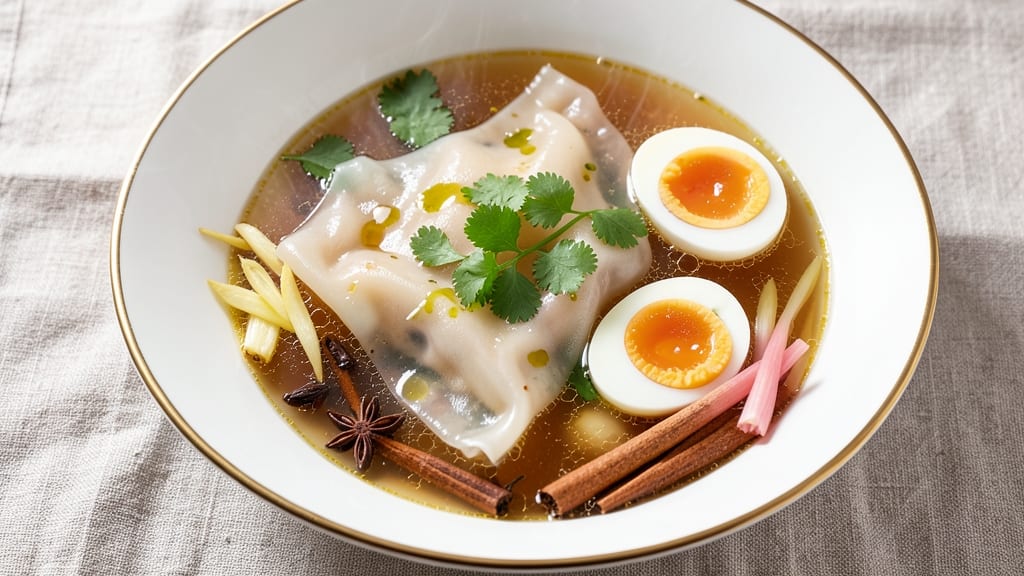
This bean curd skin soup recipe transforms humble ingredients into a velvety, aromatic masterpiece that balances earthy bean curd skin with bright ginger-galangal broth. The delicate ribbons of silken tofu add a luxurious texture that makes every spoonful feel like a culinary revelation.
What makes this dish truly special is how simple ingredients—dried bean curd skins, fresh ginger, and aromatic galangal—combine to create a broth so fragrant it fills your kitchen with warmth.
The secret lies in proper preparation: rehydrating the bean curd skins until they become tender yet still hold their shape, then simmering them gently in a ginger-galangal broth infused with star anise and cinnamon. This traditional technique ensures the skins absorb the aromatic flavors without becoming mushy.
The silken egg ribbons, made from just eggs and water, add a delicate contrast that elevates the soup from ordinary to extraordinary.
What you'll end up with is a soup that's both comforting and refined—a perfect balance of textures and flavors. The bean curd skins provide a subtle chewiness, the broth delivers deep aromatic notes, and the silken egg ribbons melt elegantly on the tongue.
It's the kind of dish that feels like a hug in a bowl, yet sophisticated enough for any gathering.
Whether you're serving this as a light lunch or a comforting dinner, the versatility of this recipe shines. The broth can be made ahead and reheated, while the bean curd skins and silken egg ribbons can be prepared just before serving.
Here's how to create this harmonious blend of tradition and elegance in your own kitchen.
Ingredients for bean curd skin soup
Simple ingredients transform into a velvety, aromatic soup with layers of ginger-galangal warmth.
| Ingredient | Amount | Notes |
|---|---|---|
| Dried Bean Curd Skins 🍜 | ½ oz | Rehydrated until tender |
| Fresh Ginger 🧄 | 2 tbsp | Finely grated, aromatic |
| Fresh Galangal 🌿 | 1 tbsp | Finely grated, aromatic |
| Star Anise 🌟 | 2 whole | Lightly crushed |
| Cinnamon Sticks 🌱 | 1 whole | 2-inch length preferred |
| Large Eggs 🥚 | 4 whole | Room temperature for ribbons |
| Vegetable Oil 🫒 | 2 tbsp | For silken egg ribbons |
| Vegetable Broth 💧 | 4 cups | Homemade or low-sodium |
| White Mushrooms 🍄 | 4 whole | Sliced, for depth |
| Green Onions 🧅 | 3 whole | Thinly sliced, for garnish |
| Sesame Oil 🫒 | 1 tsp | For finishing |
| Sea Salt 🧂 | 1 tsp | Adjust to taste |
| White Pepper 🌶️ | ½ tsp | Freshly ground |
| Cornstarch 🌾 | 1 tbsp | For thickening broth |
| Water 💧 | ¼ cup | For silken egg ribbons |
The dried bean curd skins are the heart of this soup. Look for high-quality dried skins at Asian markets—they should be light yellow and free from dark spots. Trader Joe's often carries them in the freezer section if you can't find fresh. Rehydrate them gently in warm water for about 20 minutes, then drain well before adding to the broth. Fresh ginger and galangal are non-negotiable here; their bright, citrusy notes define the soup's character. If you can't find galangal, substitute an extra tablespoon of ginger, though it won't be quite the same. The star anise and cinnamon should be whole and aromatic—if they smell stale, skip them or toast them briefly in a dry pan to revive their flavor.
No fresh ginger or galangal? Powdered ginger works at half the amount, but it lacks the vibrant freshness. The vegetable broth is the soup's foundation—homemade is ideal, but low-sodium store-bought works in a pinch. For the silken egg ribbons, room-temperature eggs whip up lighter and smoother. If you're making this ahead, prepare the broth first and store it in the fridge for up to 3 days. The bean curd skins and egg ribbons should be made fresh before serving to maintain their delicate textures. The mushrooms add earthy depth, so don't skip them—shiitake mushrooms would be even more luxurious if you're feeling fancy.
This soup tastes even better the next day as the flavors meld. Store the broth separately in an airtight container for up to 5 days in the fridge, and the bean curd skins can be kept submerged in water for 2 days before use. The silken egg ribbons should be made just before serving—they cook in seconds, so time them perfectly with the final reheating of the broth. For a quick assembly, reheat the broth, add the rehydrated bean curd skins, and finish with the freshly made egg ribbons. Garnish with green onions and a drizzle of sesame oil for that restaurant-quality touch.
Why You'll Love This Recipe
- No-Soaking Needed: I’ll be real—those dried bean curd skins just need a quick rinse and a simmer. No overnight prep, no fuss. Toss them in boiling water for 10 minutes, and they’re ready to transform into silky, jelly-like perfection. That’s right: zero waiting around.
- Warm Spice Hug: Between us, the ginger and galangal combo hits like a cozy hug for your taste buds. The star anise and cinnamon? They add this subtle, earthy depth that makes it taste like you slaved over it for hours—even though you didn’t. (My husband still asks if I “got fancy” when I serve it.)
- Leftovers That Shine: This soup actually improves the next day. The bean curd skins soften into an even richer texture, and the broth deepens—like a secret upgrade. I make a big batch on Sundays, and by Wednesday, it’s still the star of my lunch. (Yes, even on a Tuesday night.)
- Pantry Magic: Honestly, if you’ve got dried bean curd skins and basic spices, you’re golden. No fresh herbs? No problem. No fancy equipment? Still works. It’s the kind of recipe that turns a “what’s for dinner?” panic into a 20-minute victory—especially when you’re low on groceries but high on cravings.
Step-by-step instructions for bean curd skin soup
Transform simple ingredients into a velvety, aromatic soup with perfect silken egg ribbons.
Rehydrate and Prepare the Bean Curd Skins
Place the 0.5 oz dried bean curd skins in a small bowl and cover with hot water until fully softened, about 10-15 minutes. They should become pliable and translucent—this indicates they're ready. Drain well and set aside. The skins will form the soup's signature texture, so don't skip this step.
While the skins rehydrate, finely grate the 2 tbsp fresh ginger and 1 tbsp fresh galangal using a microplane or fine grater. The aroma should fill your kitchen—this is where the soup gets its signature warmth. Lightly crush the 2 whole star anise and 1 whole cinnamon stick with the side of a knife to release their essential oils without breaking them apart completely.
Build the Fragrant Broth Base
Heat the 2 tbsp vegetable oil in a large pot over medium heat. Add the grated ginger, galangal, crushed star anise, and cinnamon stick. Cook for 2-3 minutes until the aromatics release their oils and the mixture becomes fragrant—you'll smell the galangal's citrusy depth and ginger's spiciness.
Pour in the 4 cups vegetable broth and bring to a gentle simmer. Add the rehydrated bean curd skins and let the mixture cook for 10 minutes to infuse the flavors. The skins should soften further and contribute a delicate, almost jelly-like texture to the broth. Keep the heat at a gentle simmer—not a rolling boil—to preserve the subtle flavors.
Prepare the Silken Egg Ribbons
In a separate bowl, whisk together the 4 whole large eggs (at room temperature) with 0.25 cup water until just combined—no need to overmix. The mixture should be smooth and slightly translucent. In another small bowl, mix 1 tbsp cornstarch with 2 tbsp cold water to create a slurry. This will help create the signature ribbons when added to the hot broth.
While keeping the broth at a gentle simmer, slowly pour the egg mixture into the pot in a thin, steady stream. Immediately add the cornstarch slurry and gently stir the broth with a wooden spoon in one direction—this creates the signature silken ribbons. The eggs should cook instantly, forming delicate, translucent strands that float in the broth. If the ribbons break, don't worry—they'll still be delicious.
Finish and Serve the Soup
Slice the 4 whole white mushrooms into thin strips and add them to the soup along with the 1 tsp sea salt and 0.5 tsp white pepper. Simmer for an additional 3-4 minutes until the mushrooms are tender and the flavors have melded together. The soup should be fragrant with a balance of ginger's heat, galangal's citrus, and the earthy mushrooms.
Ladle the soup into bowls and garnish with thinly sliced 3 whole green onions and a drizzle of 1 tsp sesame oil. The sesame oil adds a nutty finish that complements the broth's complexity. Serve immediately while the egg ribbons are still silky and the aromatics are at their peak. Each spoonful should deliver a harmonious blend of textures and flavors.
Pro Tips For Making Bean Curd Skin Soup
- SOAK SKINS OVERNIGHT: Dried bean curd skins need at least 8 hours soaking—don’t rush it. I used to cut this to 4 hours and end up with chewy, uneven textures that ruined the soup’s delicate body.
- SCRUB GALANGAL HARD: Fresh galangal’s tough outer skin hides dirt and bitterness. Use a vegetable brush and scrub it under running water—yes, even if it looks clean. Skipping this step adds unwanted grit to your broth.
- LOW SIMMER, DON’T BOIL: Once the skins are in the pot, keep the heat at a bare simmer (tiny bubbles, not rolling). Boiling turns the skins rubbery and scatters starch into the broth, making it cloudy instead of clear.
- ROAST SPICES FIRST: Lightly toast star anise and cinnamon sticks in a dry pan for 30 seconds until fragrant. This deepens their aroma without burning—just enough to wake up the spices before adding them to the broth. (Your future self will notice the difference.)
Pro cooking tips for bean curd skin soup
Broth Infusion Mastery
Infusing the broth properly is where the magic happens—don't rush this step! After adding the ginger, galangal, and spices, let them cook for 2-3 minutes over medium heat until the kitchen fills with that citrusy, spicy aroma.
This is your cue that the essential oils are being released. I use a heavy-bottomed pot like a Le Creuset Dutch oven to distribute heat evenly and prevent scorching. 🌿
Once the broth simmers, add the rehydrated bean curd skins and let them steep for 10 minutes. This gentle cooking transforms them into tender, jelly-like strands that absorb all the aromatic flavors.
The key here is patience—avoid boiling, as that can make the skins tough. A thermometer helps maintain 185-195°F internal temperature for optimal texture.
Silken Ribbon Technique
The secret to perfect silken egg ribbons lies in the cornstarch slurry and gentle stirring. Whisk the eggs with water just until combined, then slowly pour them into the simmering broth while stirring in one direction.
The cornstarch slurry (mixed with cold water) helps create those signature strands. I use a wooden spoon for this step—it's gentle on the pot and prevents breaking the delicate ribbons.
If the ribbons look lumpy, don't panic! Just stir them gently for an extra 30 seconds—they'll smooth out. The broth should remain at a gentle simmer (190°F) while the eggs cook.
Overcooking will turn them rubbery, so time this step carefully. For extra finesse, I like to use room-temperature eggs, as they whip up lighter and create more delicate strands.
Mushroom Timing
Add the sliced mushrooms in the final 3-4 minutes of cooking to preserve their texture and prevent them from becoming mushy. I slice them ¼-inch thick using a mandoline for even cooking. The mushrooms should just reach tender-crispness, adding an earthy contrast to the broth's brightness.
For a deeper flavor, I sometimes toast the mushrooms in a dry pan with a pinch of salt before adding them to the soup.
Season with sea salt and white pepper just before serving—this lets you adjust to taste. The pepper adds a subtle warmth that complements the ginger-galangal notes perfectly. A quick taste test helps ensure the balance of flavors is just right before plating.
Garnish Like a Pro
Fresh green onions and sesame oil are the finishing touches that elevate this soup from homemade to restaurant-quality. Thinly slice the green onions on the bias for a delicate, elegant presentation. Drizzle the sesame oil just before serving—it adds a nutty aroma that enhances the broth's complexity.
I use a small squeeze bottle for precise control over the drizzle, creating a beautiful pattern on the surface.
For an extra touch of sophistication, I sometimes sprinkle a pinch of toasted sesame seeds on top. This adds both visual appeal and a subtle crunch that contrasts with the soup's silky texture.
Serve immediately while the egg ribbons are still delicate and the aromatics are at their peak—this soup tastes best when enjoyed fresh!
Nutrition facts
Frequently asked questions
What's the secret to getting perfectly tender bean curd skins?
Rehydrate them in hot water for 10-15 minutes until pliable but not mushy. The skins should be translucent and hold their shape when gently squeezed. Over-soaking makes them fragile, while under-soaking leaves them chewy. Drain well before adding to the broth to prevent watering it down.
Can I use powdered ginger instead of fresh?
Yes, but expect less vibrant flavor. Use half the amount (1 tbsp powdered instead of 2 tbsp fresh) and toast it lightly in the oil first to revive its aroma. Fresh ginger's citrusy depth is irreplaceable, but powdered works in a pinch when fresh isn't available.
Why did my silken egg ribbons turn rubbery?
Overcooking is the most common cause. The eggs should cook instantly in the simmering broth (190°F) for just 30-60 seconds. Keep the heat gentle and stir continuously in one direction. Room-temperature eggs also whip up lighter—never use cold eggs straight from the fridge.
How do I make this soup vegan?
Replace the eggs with silken tofu ribbons made by blending ½ cup silken tofu with 1 tbsp cornstarch and 2 tbsp water, then pouring into hot broth. The texture won't be identical but works well. Also ensure your broth is vegan—use vegetable broth and check for fish-based additives in store-bought versions.
Can I prepare this soup ahead of time?
Make the broth and store it in an airtight container for up to 3 days in the fridge. Keep the bean curd skins submerged in water (changed daily) for 2 days max. Reheat gently before adding fresh egg ribbons and mushrooms—these should always be made fresh for best texture.