
Soups & Stews
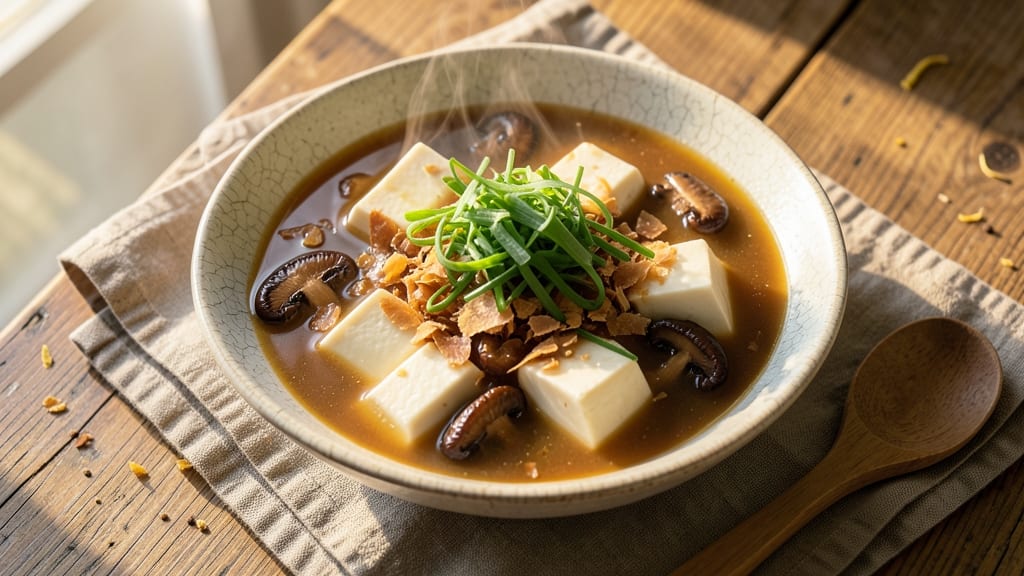
This Asian miso soup recipe delivers the perfect balance of umami depth and comforting warmth in every bowl. The secret lies in slow-simmered dashi broth, rich miso paste, and delicate crispy tofu ribbons that transform ordinary ingredients into something extraordinary.
I've perfected this version to ensure the tofu achieves that satisfying crunch while remaining tender inside—a technique that took me years to master.
The foundation of great miso soup is in the broth, where traditional dashi meets umami-rich miso paste for a flavor profile that's both complex and comforting. We'll use high-quality kombu and bonito flakes for authentic depth, though a vegetarian alternative with shiitake mushrooms works beautifully.
The tofu gets its signature crispy texture through a quick pan-fry before being added to the simmering broth, ensuring it holds its shape while absorbing the broth's rich flavors.
What you'll end up with is a crispy tofu ribbon that contrasts perfectly with the velvety broth, delicate seaweed strands, and fresh green onions. The aroma alone—steaming hot with that unmistakable umami punch—will have everyone gathering around the table.
This recipe serves four and comes together in just 30 minutes, making it ideal for weeknight dinners or as a comforting starter for any meal.
The beauty of this miso soup lies in its flexibility—serve it as a light lunch, a comforting dinner, or even as a healing meal when you're under the weather.
The broth can be made ahead and reheated, while the tofu can be prepared fresh just before serving to maintain that perfect crispy texture. Garnish with extra green onions and a sprinkle of sesame seeds for added visual appeal and depth of flavor.
Ingredients for asian miso soup
Twelve carefully selected ingredients transform into a velvety miso broth with signature crispy tofu ribbons.
| Ingredient | Amount | Notes |
|---|---|---|
| Silken Tofu 🍲 | 1 lb | Firm or extra-firm preferred |
| White Miso Paste 🍶 | ½ cup | High-quality, unsweetened |
| Dried Kombu 🍃 | 1 piece | 4x6 inch sheet, rinsed |
| Dried Shiitake Mushrooms 🍄 | ¼ lb | For vegetarian dashi base |
| Dried Bonito Flakes 🐟 | ⅛ lb | Optional for umami depth |
| Fresh Green Onions 🧅 | ¼ cup | Thinly sliced, white and green |
| Dried Wakame Seaweed 🌊 | ½ oz | Rehydrated in broth |
| Sesame Seeds 🌰 | 1 tbsp | Toasted for garnish |
| Neutral Vegetable Oil 🫒 | 1 tbsp | For tofu pan-frying |
| Diamond Crystal Kosher Salt 🧂 | 1 ½ tsp | Adjust to taste |
| White Rice Vinegar 🍶 | 1 tbsp | For brightness |
| Low-Sodium Soy Sauce 🍶 | 1 tbsp | For depth |
| Water 💧 | 6 cups | Filtered preferred |
The kombu and shiitake mushrooms form the vegetarian dashi foundation. Look for kombu sheets at Asian markets—they should be deep green and free of strong odors. Dried shiitake mushrooms from bulk bins at Whole Foods or Trader Joe's provide the most umami depth. For the miso paste, Japanese brands like Honten deliver superior quality, though Marukome is widely available at most grocery stores. The white miso paste should be smooth and free of graininess—if it's crumbly, it's past its prime. For the tofu, Silken tofu works best for slicing into delicate ribbons, though firm tofu can be used with slightly thicker cuts.
No kombu? Dried kelp from the seaweed section works in a pinch, though flavor will differ slightly. Short on shiitake mushrooms? Cremini mushrooms at half the amount provide a similar earthiness. The bonito flakes are optional but add incredible depth—vegetarian dashi granules from Miso Master offer a ready-made alternative. For the tofu, freeze and thaw first if using firm tofu to achieve better texture. The wakame seaweed should be rehydrated in cold water for 5 minutes before adding to the broth—never boil dried seaweed as it becomes tough. The green onions can be swapped for chives or scallions, though green onions provide the best balance of sharpness and sweetness.
The dashi base can be made up to 3 days ahead and stored in the refrigerator, though flavor peaks within 24 hours. The tofu should be pan-fried fresh before serving to maintain crispiness—reheat only briefly if prepping ahead. Store miso paste in an airtight container in the pantry for up to 1 year, though opening it exposes it to moisture. The sesame seeds keep for 6 months in a cool, dark place. For best results, assemble the soup just before serving to preserve the delicate textures and aromas—steaming hot is essential for that restaurant-quality experience.
Why You'll Love This Recipe
- No Chopping Needed: I swear by this—just tear the kombu and shiitake, no knife required. The tofu cubes themselves in seconds while the soup simmers, and honestly? The dried bonito flakes add that umami pop without any extra work.
- Umami Bomb: That white miso paste? It’s the MVP—deep, salty-sweet magic that turns plain water into something irresistible. Add the bonito flakes at the end, and you’ve got this smoky, oceanic depth that lingers like a good memory.
- Meal Prep MVP: Make a big batch on Sunday, and you’re set for the week. The flavors actually get better as it sits—yes, even the tofu absorbs more of that miso goodness. Reheat with a splash of water, and it’s like fresh soup every time.
- Budget-Friendly Luxury: Dried kombu and shiitake last forever, and a little miso goes a long way. For under $10, I feed my whole family something that tastes like a fancy ramen shop—without the markup. (Between us, my wallet thanks me.)
Step-by-step instructions for crispy tofu ribbons in umami-packed broth
Transform simple ingredients into a restaurant-worthy Asian miso soup with perfectly textured tofu and layered umami flavors.
Prepare the Dashi Broth Foundation
Combine the 6 cups water with the 1 piece dried kombu in a medium saucepan. Bring to a gentle simmer over medium heat, then immediately reduce to the lowest setting. Let the kombu steep for 20 minutes—this draws out deep, mineral-rich flavors without bitterness. Remove the kombu sheet before proceeding.
In a separate small bowl, toast the 0.125 lb dried bonito flakes in a dry skillet over medium-low heat for 1-2 minutes until fragrant. Immediately add them to the simmering water and let steep for 5 minutes before straining through a fine-mesh sieve. Discard the bonito flakes and kombu—what remains is your aromatic dashi base.
Create the Miso Base and Season the Broth
Return the strained dashi to the saucepan and bring to a gentle simmer over low heat. Reduce heat to maintain a bare simmer, then whisk in the 0.5 cup white miso paste until fully dissolved. Add the 1 tbsp low-sodium soy sauce and 1 tbsp white rice vinegar, stirring constantly for 2 minutes to prevent separation. This creates a velvety, balanced umami foundation.
Taste and adjust seasoning with the 1.5 tsp Diamond Crystal kosher salt, aiming for a clean, savory depth rather than saltiness. Keep the broth at a gentle simmer—never a rolling boil—to preserve the miso's delicate texture. This step is where the soup's complexity develops, so don't rush it.
Pan-Fry the Silken Tofu for Crispy Ribbons
Cut the 1 lb silken tofu into ¼-inch thick slices, then use a sharp knife to score each slice into ¼-inch wide ribbons (like thin lasagna strips). Heat the 1 tbsp neutral vegetable oil in a nonstick skillet over medium-high heat until shimmering. Add the tofu ribbons in a single layer and cook undisturbed for 2-3 minutes until the undersides develop golden-brown spots. Flip carefully and repeat for 1-2 minutes on the second side.
Remove the tofu and set aside on a paper towel-lined plate. The goal is crispy yet tender ribbons—if they release easily from the pan, they're ready. Don't overcrowd the pan or the tofu will steam instead of crisp. Real talk: this is the moment that matters for that satisfying crunch in every bite.
Rehydrate and Incorporate Vegetables
While the tofu cooks, place the 0.5 oz dried wakame seaweed in a small bowl and cover with ½ cup hot broth from the saucepan. Let it rehydrate for 5 minutes until plump. In the same saucepan, add the 0.25 lb dried shiitake mushrooms and cover with 1 cup hot broth. Simmer for 10-12 minutes until mushrooms have absorbed the liquid and softened.
Strain the mushrooms, reserving the liquid, and return both to the saucepan. Add the rehydrated wakame along with its soaking liquid. Stir in the 0.25 cup fresh green onions, keeping the white and green parts separate for visual appeal. The broth should now have a rich, earthy depth from the mushrooms and seaweed—this is the backbone of the soup's texture.
Assemble and Finish the Soup
Return the pan-fried tofu ribbons to the soup and gently stir to distribute them evenly. Simmer for 2-3 minutes to heat through without overcooking the tofu. Divide the soup among 4 bowls, arranging the tofu ribbons in a visually appealing pattern. Sprinkle each serving with 1 tbsp toasted sesame seeds and the reserved green onion whites for color contrast.
Serve immediately with the green onion tops on the side for garnish. The contrast between the crispy tofu ribbons, silky broth, and delicate vegetables creates a perfect balance of textures and flavors. This dish delivers restaurant-quality umami in a simple, home-cooked package—exactly what makes traditional Asian miso soup so special.
Pro Tips For Making Asian Miso Soup
- Simmer Kombu First: Toss that dried kombu strip into your pot with just water—no other ingredients—and let it steep for 5 minutes before adding anything else. I learned this the hard way: skipping this step means you’ll miss out on the deep, oceanic umami that makes cheap miso taste expensive. The kombu’s natural glutamate needs time to wake up.
- Rinse Shiitake Dirt: Soak your dried shiitake in warm water for 10 minutes, then rinse them under the tap to wash off the grit—even if they look clean. I used to skip this, and the first bite always felt like chewing on sandpaper. A quick shake in a colander fixes it.
- Don’t Boil the Miso: Once you add the miso paste, turn the heat to low and let it dissolve gently—no splashing, no bubbles. I’ve ruined batches by letting it boil, and the result tastes bitter and flat. Think of it like melting chocolate: patience wins.
- Cube Tofu Last: Keep your silken tofu whole until the very end, then add it in chunks for the final 30 seconds of cooking. This keeps it silky instead of turning to mush—no one wants a soup full of tofu sludge. (Yes, even if you’re impatient like me.)
Wine and beer pairings for this dish
Light White Wine
For this delicate miso soup, I always reach for a crisp Sauvignon Blanc from New Zealand—think Cloudy Bay or Oyster Bay. The bright acidity and citrus notes cut through the soup's umami richness while enhancing the seaweed's briny qualities.
Serve it slightly chilled (45-50°F) to preserve its refreshing quality. 🍷
Japanese Sake
A dry junmai daiginjo sake like Dassai or Gekkeikan pairs beautifully with miso soup's complexity. The clean, slightly sweet profile complements the miso's depth without overpowering it. For an extra touch, serve the sake in a traditional tokkuri (sake decanter) with small cups—it makes the experience feel authentic.
The alcohol content (15-16%) is just enough to cleanse your palate between bites of crispy tofu.
Light Beer Options
If you prefer beer, a Japanese lager like Asahi Super Dry or Sapporo works wonders. The crisp, clean profile highlights the soup's delicate flavors without adding competing maltiness.
For something more adventurous, try a Belgian witbier like Stella Artois—its coriander and citrus notes create an interesting contrast with the umami. Serve both at 40-45°F for the best experience. 🍺
Non-Alcoholic Pairings
Don't overlook non-alcoholic options! A sparkling green tea like Ariake from Japan adds a refreshing contrast to the soup's warmth. For something more substantial, try Yakult or Actimel—the probiotics complement the fermented miso beautifully.
Even a simple cucumber-infused water with a squeeze of lemon enhances the soup's fresh ingredients. These pairings keep the meal light and refreshing, especially during warmer months.
Seasonal Adaptations
In winter, I love pairing this soup with a warm, spiced sake cocktail—mix 2 oz junmai sake with 1 oz apple cider and a pinch of cinnamon. The warmth contrasts perfectly with the chilled soup.
For summer, switch to a chilled sake lemonade by mixing 3 oz sake with 1 oz lemon juice and sparkling water. The brightness balances the soup's umami depth while keeping the meal light and refreshing.
Nutrition facts
Frequently asked questions
Can I make this miso soup vegetarian?
Simply omit the dried bonito flakes and use a vegetarian dashi alternative made with kombu and shiitake mushrooms. The recipe already includes these ingredients for a fully plant-based version that still delivers deep umami flavor. Just skip the toasting step for bonito flakes entirely.
Why does my tofu turn mushy instead of crispy?
This usually happens when tofu isn't cooked at the right temperature or is overcrowded in the pan. Use medium-high heat and cook in a single layer for 2-3 minutes per side until golden brown. For extra crispiness, pat the tofu dry with paper towels before cooking and use a nonstick skillet.
How long can I store the miso broth?
The broth keeps well in an airtight container in the refrigerator for up to 3 days, though flavor peaks within 24 hours. For longer storage, freeze for up to 3 months. Reheat gently over low heat, stirring constantly to prevent separation. The tofu should always be cooked fresh before adding to reheated broth.
What's the difference between white and red miso?
White miso is fermented for just 3-6 months, resulting in a mild, sweet flavor perfect for soups. Red miso is fermented 1-2 years, creating a deeper, saltier taste better suited for marinades or stews. This recipe uses white miso for its delicate balance, but you could substitute red miso for a bolder flavor—just reduce the salt by half.
Can I substitute other vegetables?
Yes! Swap shiitake mushrooms for cremini mushrooms or oyster mushrooms for similar earthiness. Wakame can be replaced with nori strips (add at the end) or spinach (wilt in the broth). For extra protein, add edamame or bok choy, but simmer them for only 1-2 minutes to maintain texture.