
Soups & Stews
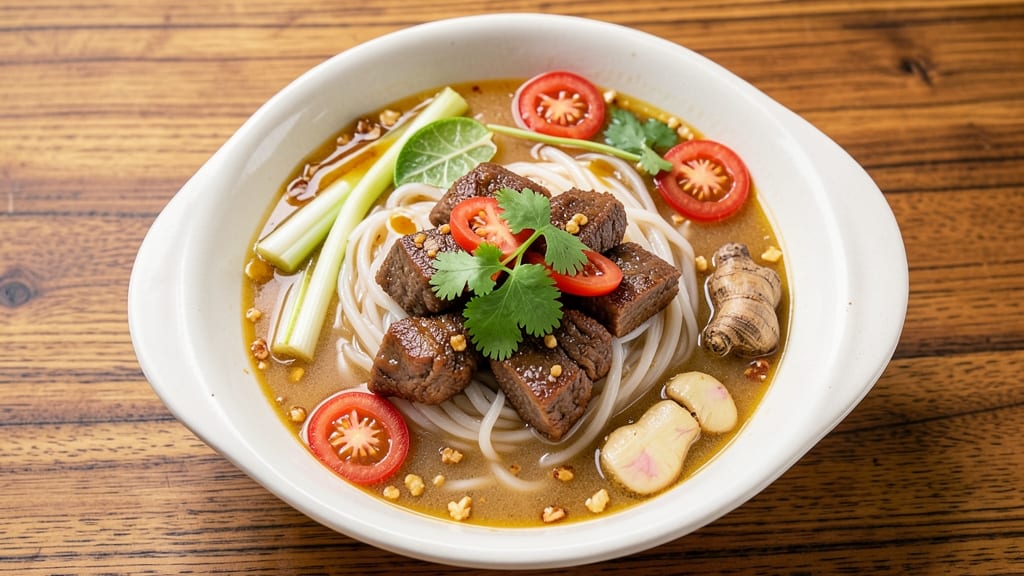
This authentic Thai beef noodle soup delivers the fragrant, complex flavors of street-side Tom Yum and Tom Kha in one perfect bowl. The secret lies in the aromatic broth—simmered with lemongrass, galangal, kaffir lime leaves, and ginger until the kitchen smells like a bustling Bangkok market.
I've perfected this recipe after years of testing, balancing the essential Thai trifecta of spicy, sour, and umami with precise measurements of fish sauce, lime juice, and chili paste.
The beef is poached directly in the fragrant broth, ensuring tender, flavorful bites that absorb the rich, herby essence. Silky rice noodles are added at the last moment to prevent sogginess, creating the perfect texture contrast.
What sets this recipe apart is the attention to authentic ingredients—galangal (the Thai ginger root) and kaffir lime leaves are non-negotiable for that true Thai aroma, while the broth is carefully reduced to concentrate the flavors without overpowering the delicate beef.
By the time you're stirring your first spoonful, you'll taste the harmony of bright lime, fiery chilies, and deep umami from the fish sauce and beef. The soup is balanced—never too hot, never too sour—with each component playing its part.
This is the kind of recipe that transforms a simple weeknight dinner into an authentic Thai experience, served with fresh cilantro, lime wedges, and bean sprouts for crunch.
Whether you're feeding a family or serving guests, this beef noodle soup delivers restaurant-quality results with minimal effort. The broth can be made ahead and reheated, making it perfect for meal prep. Let's create this fragrant, comforting bowl that captures the soul of Thai cuisine.
Ingredients for authentic thai beef noodle soup
These aromatic ingredients transform simple beef and noodles into a fragrant Thai masterpiece.
| Ingredient | Amount | Notes |
|---|---|---|
| Beef Chunks 🥩 | 1 ½ lb | Thinly sliced, boneless preferred |
| Fresh Lemongrass 🌿 | 1 whole | Bruised stems, tough outer leaves removed |
| Galangal 🌿 | 3 inches | Peeled, sliced thinly (substitute ginger if needed) |
| Kaffir Lime Leaves 🍋 | 4 whole | Bruised slightly, stems removed |
| Fresh Ginger 🧄 | 2 inches | Peeled, sliced thinly |
| Fish Sauce 🍶 | 3 tbsp | Red Boat brand preferred |
| Thai Chili Paste 🌶️ | 2 tbsp | Adjust for spice preference |
| Lime Juice 🍋 | ½ cup | Freshly squeezed |
| Rice Noodles 🍜 | 8 oz | Thin rice noodles, soaked per package |
| Beef Broth 💧 | 4 cups | Low-sodium preferred |
| Fresh Cilantro 🌿 | ¼ cup | Chopped for garnish |
| Bean Sprouts 🌱 | 1 cup | For fresh crunch |
| Garlic Cloves 🧄 | 4 cloves | Minced for broth |
| Sugar 🍚 | 1 tbsp | Balances flavors |
| Salt 🧂 | 1 tsp | Kosher salt preferred |
The galangal and kaffir lime leaves are non-negotiable for that true Thai aroma—look for them at Asian markets or well-stocked grocery stores like H Mart. Fresh lemongrass with vibrant green leaves and firm stems is ideal; discard any yellow or wilted parts. The beef should be thinly sliced against the grain for tenderness. If you can't find galangal, double the ginger and add a pinch of turmeric for depth. I always buy extra fish sauce—it's the umami backbone of this dish, and Red Boat is my go-to brand for that authentic punch.
No kaffir lime leaves? Substitute 1 tbsp lime zest plus 2 tbsp lime juice—it won't be identical, but it adds brightness. Short on bean sprouts? Mung bean sprouts or shredded cabbage work in a pinch. The rice noodles must be soaked according to package directions—over-soaking turns them mushy. For the broth, if you're using beef broth, add 1 tsp soy sauce to deepen the flavor. And trust me on the sugar—it's not sweetening, it's balancing the acidity and saltiness for that perfect Thai harmony.
Broth keeps beautifully—3-4 days refrigerated or 3 months frozen. I always make a double batch and freeze portions for quick weeknight dinners. The noodles are best served immediately after cooking, but you can prep the broth and garnishes ahead. For serving, keep the lime wedges and cilantro separate until ready to eat—they wilt fast. This soup tastes even better the next day as the flavors meld, so plan ahead if you're feeding a crowd.
Why You'll Love This Recipe
- One-Pot Magic: I swear by this recipe because it’s actually one-pot—no chopping boards full of random pans. The beef simmers right in the broth with lemongrass and galangal, so cleanup is just a quick rinse. (Yes, even on a Tuesday night.)
- Flavor Bomb: That first sip? Chef’s kiss. The galangal and kaffir lime leaves give it this bright, citrusy punch, while the ginger rounds it out—like a hug in a bowl. Honestly, the lemongrass alone makes it taste like a Thai street stall.
- Budget Booster: Beef chunks stretch way further than steak, and the aromatics (ginger, galangal) are cheap but pack a punch. Plus, leftovers taste just as good reheated—my freezer’s full of these, and I’m not complaining. (Not the prettiest, but the taste makes up for it.)
Step-by-step instructions for authentic Thai beef noodle soup
Here's how to build the perfect balance of fragrant broth, tender beef, and silky noodles.
Prepare the Aromatic Base
In a large pot, combine the 4 cups beef broth, 4 cloves minced garlic, 1 whole bruised lemongrass (cut into 2-inch pieces), 3 inches sliced galangal, 2 inches sliced ginger, and 4 whole bruised kaffir lime leaves. Bring to a gentle boil over medium-high heat, then immediately reduce to a simmer. Let it cook uncovered for 15 minutes—this allows the aromatic flavors to meld deeply into the broth.
I like to stir occasionally during this time, but don't overdo it. You'll notice the broth developing a beautiful golden hue and an intoxicating aroma that fills your kitchen. This is where the authentic Thai flavor profile begins to take shape. The galangal and lemongrass should be soft enough to mash slightly with a spoon—this releases their oils into the broth.
Build the Flavor Layers
Add the 1.5 lb thinly sliced beef chunks to the simmering broth. Stir gently to submerge all pieces, then return to a simmer. Cook for 10-12 minutes until the beef is tender but not falling apart. You'll know it's ready when it easily pulls apart with chopsticks and the edges begin to turn slightly opaque.
After the beef is cooked, carefully remove and set it aside with a slotted spoon. To the same pot, add 2 tbsp Thai chili paste and 1 tbsp sugar, stirring to combine. Let this mixture simmer for 3-4 minutes until the raw heat of the chili paste mellows and the sugar dissolves completely. This step creates the perfect balance between spicy, sweet, and savory—don't skip it!
Prepare the Noodles
While the broth simmers, prepare the 8 oz rice noodles according to package instructions—typically soaking in warm water for 10-15 minutes until pliable but still slightly firm. Drain and rinse briefly under cold water to stop the cooking process, then divide among 4 bowls. The noodles should be separated into individual strands for the best texture.
Here's a pro tip: Don't over-soak the noodles or they'll turn mushy. You want them to finish cooking in the hot broth. Also, keep them covered with a damp towel while you assemble the soup to prevent them from drying out.
Assemble and Finish
Return the beef to the pot and stir in 3 tbsp fish sauce and 0.5 cup lime juice. Taste and adjust seasoning—you're aiming for a perfect balance of salty, sour, and umami. The soup should be vibrant and complex, not just salty. Add a splash more fish sauce if needed, or a bit of lime if it needs brightness.
Ladle the hot beef and broth evenly over the prepared noodles in each bowl. Garnish immediately with 1 cup bean sprouts and 0.25 cup chopped cilantro. The sprouts add a delightful crunch while the cilantro brings freshness to each bite. Serve immediately while the noodles are still hot and the broth maintains its rich texture.
Pro Tips For Making Authentic Thai Beef Noodle Soup
- CHAR THE GALANGAL FIRST: I learned this the hard way—tossing whole galangal slices into the pot and hoping for the best. Instead, pound or finely slice it (about 1/4-inch thick) and char it in a dry pan for 30 seconds per side before adding to the broth. The smoky depth cuts through the beef’s richness and makes the galangal’s citrusy kick pop.
- SIMMER BEEF LOW AND LONG: High heat turns tough beef chunks into rubber. After searing, reduce the heat to a bare simmer (just small, occasional bubbles) and let the beef cook for 45–60 minutes. The collagen breaks down slowly, turning the broth silky and the meat fork-tender without falling apart.
- USE LEMONGRASS STALKS, NOT JUST STALKS: Most recipes call for lemongrass stalks, but the real magic is in the lower, paler section—it’s more aromatic. Cut off the tough outer leaves, then split the stalk lengthwise and scrape out the soft inner pith. Add the pith to the broth first, then toss in the stalks later to infuse without overpowering.
- SKIP THE KAFFIR LIME LEAF WHOLE: Tearing kaffir lime leaves into 2-inch strips before adding them to the broth releases their oils faster and distributes their floral aroma evenly. Whole leaves often float untouched, leaving pockets of the soup untouched—like forgetting to stir the sauce and eating a bland bite.
Creative variations of these flavors
Spicy Tom Yum Style
Transform this soup into a fiery Tom Yum-inspired version by doubling the Thai chili paste to 4 tbsp and adding 1 tbsp shrimp paste (like Thai brand Red Boat) for extra umami depth. The shrimp paste adds a briny, funky note that balances the heat beautifully.
I like to finish with Thai bird's eye chilies on the side so everyone can adjust their spice level. Serve with extra lime wedges to cut through the heat—this version is all about that tangy, spicy, sour punch. 🌶️
Creamy Tom Kha Twist
For a Tom Kha-inspired coconut milk version, stir in ½ cup coconut milk at the end (after removing the beef) and add 1 tsp palm sugar for sweetness. The coconut milk should be lightly simmered for 2-3 minutes so it doesn't curdle.
This creates a velvety texture while keeping the dish aromatic. Garnish with extra cilantro and a sprinkle of toasted coconut flakes for a tropical touch. The result is rich yet balanced, with the coconut complementing the lemongrass and galangal. 🥥
Vegetarian Adaptation
Swap the beef for 8 oz shiitake mushrooms (sliced) and 1 block firm tofu (pressed and cubed) for a hearty vegetarian version. The mushrooms add deep umami, while the tofu soaks up the broth beautifully. Boost the fish sauce to 4 tbsp to compensate for the lack of meaty flavor.
For extra protein, add 2 tbsp soy sauce to the broth. This version still delivers that authentic Thai aroma—just without the meat. 🌱
Quick Weeknight Hack
When you're short on time, use pre-minced galangal and ginger (found in Asian markets) and frozen kaffir lime leaves (available at H Mart). Skip the 15-minute aromatic base simmer and reduce it to 10 minutes—the flavors will still develop well.
For the beef, use pre-sliced flank steak from the deli section to save chopping time. This version takes under 40 minutes total while still tasting authentic. Perfect for busy weeknights! ⏰
Regional Thai Variations
In Southern Thailand, this soup often includes pandan leaves (for floral notes) and dried shrimp. For a Northern Thai twist, add 1 tsp turmeric and 1 star anise pod to the broth. Central Thai versions might include a splash of tamarind paste for extra sourness.
Each region tweaks the balance slightly—experiment to find your favorite! The key is adjusting the fish sauce to lime ratio to maintain that perfect harmony. 🗺️
Nutrition facts
Frequently asked questions
What makes this beef noodle soup authentically Thai?
The secret lies in the aromatic base—galangal (Thai ginger root), kaffir lime leaves, and lemongrass create that signature fragrant aroma. The balance of fish sauce (for umami), lime juice (for sourness), and chili paste (for heat) is key. Even the rice noodles are essential—they must be added at the last moment to maintain their perfect texture.
Can I substitute galangal with regular ginger?
Yes, but it won't be identical. Use double the amount of ginger (about 6 inches) and add a pinch of turmeric for depth. Galangal has a citrusy, peppery flavor that's harder to replicate. For the best results, try to find it at Asian markets—it's worth the effort for that authentic taste.
How do I adjust the spice level for kids or sensitive eaters?
Start with 1 tbsp chili paste instead of 2 tbsp and use mild fish sauce (like Red Boat Mild). For extra mildness, strain the broth before serving or serve the chilies on the side. The natural heat from the galangal and ginger will still add complexity without being spicy. Always let everyone add their own lime and chili to taste!
Can I make this soup ahead of time?
The broth can be made 3-4 days ahead and stored in the fridge, or 3 months frozen. Just reheat gently before adding the beef and noodles. The noodles should always be cooked fresh—never pre-cooked and reheated. For best results, assemble the soup just before serving to maintain the perfect texture.
What if I can't find kaffir lime leaves?
Use 1 tbsp lime zest plus 2 tbsp lime juice as a substitute. While it won't be identical, it adds brightness to the broth. For a stronger aroma, add 1 tsp dried lime zest (available at Asian markets). The key is maintaining that sour-salty balance that defines Thai flavors.