
Soups & Stews
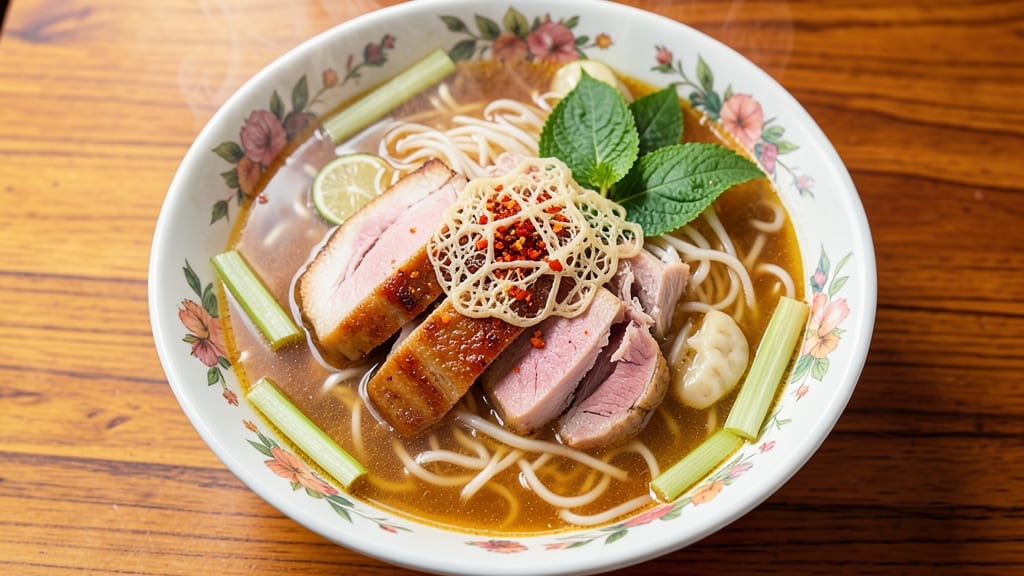
This authentic Thai boat noodle soup recipe delivers the fragrant, complex flavors of street-side kitchens in Bangkok—where every spoonful balances sweet, sour, salty, and umami in perfect harmony. 🌟 The secret lies in the broth: simmering lemongrass, galangal, and kaffir lime leaves for hours until their aromas infuse deeply into the pork or chicken stock.
Unlike lighter soups, this version uses thick rice noodles that soak up the rich broth while maintaining their silky texture.
What sets this recipe apart is the clarified broth technique, a traditional method that removes impurities for crystal-clear results without sacrificing depth.
The pork balls (or chicken/tofu for vegetarian versions) are poached in the broth until tender, absorbing layers of flavor, while the garnishes—bean sprouts, fresh herbs, lime, and chili—add brightness and texture.
Each component is carefully balanced to ensure no single element overpowers the others, just like the masters do in Thailand.
By the time you serve this dish, you'll have a bowl of restaurant-quality boat noodle soup that's fragrant enough to fill your kitchen, with noodles that glide through the broth and toppings that add satisfying crunch and tang.
The broth should be rich but not heavy, aromatic yet clean, and every bite should deliver that perfect harmony of flavors that makes this dish legendary.
Perfect for weeknight dinners or special occasions, this recipe scales beautifully for crowds while maintaining authenticity. The key is patience—letting the broth develop its depth and the noodles achieve that signature silky texture. Once you taste the difference between this homemade version and anything store-bought, you'll never go back.
Ingredients for authentic thai boat noodle soup
Fragrant aromatics meet silky noodles in this restaurant-quality Thai boat noodle feast.
| Ingredient | Amount | Notes |
|---|---|---|
| Fresh Lemongrass Stalk 🌿 | 1 whole | Bruised and cut into 2-inch pieces |
| Galangal Root 🌿 | 1 piece | About 3 oz, peeled and sliced |
| Kaffir Lime Leaves 🍋 | 4 whole | Torn into large pieces |
| Pork Shoulder 🥩 | 1 ½ lb | Cut into 1-inch cubes for broth |
| Pork Belly 🥓 | 1 lb | Cut into 1-inch cubes for meatballs |
| Rice Noodles 🍜 | 8 oz | Thick, flat rice noodles (sen lek) |
| Fish Sauce 🍶 | 2 tbsp | Red Boat brand preferred |
| Palm Sugar 🍯 | 2 tbsp | Or light brown sugar in a pinch |
| Soy Sauce 🥫 | 1 tbsp | Dark soy for color |
| Bean Sprouts 🌱 | 1 cup | Fresh, for garnish |
| Fresh Thai Chili 🌶️ | 4 whole | Sliced into thin rings |
| Fresh Cilantro 🌿 | ¼ cup | Chopped for garnish |
| Lime Wedges 🍋 | 2 whole | For serving |
| Vegetable Oil 🫒 | ½ cup | For frying pork balls |
| Salt 🧂 | 1 tsp | Adjust to taste |
The broth's soul starts with fresh lemongrass, galangal, and kaffir lime leaves—the holy trinity of Thai flavors. Find these at Asian markets (or well-stocked grocery stores' international sections)—Thai Town markets have the freshest galangal, but the frozen kind works too if you're in a rush. Bruise the lemongrass with the side of your knife to release those citrusy oils, and peel the galangal's purple skin with a spoon. Kaffir lime leaves should be fragrant and slightly oily—if they smell musty, skip them. For the pork, look for well-marbled shoulder at the butcher counter, and ask for belly cut into 1-inch cubes if they don't already have it prepped. The difference between good and legendary broth? Simmering low and slow for at least 2 hours—no rushing this step.
No galangal? Substitute ginger at half the amount, but you'll lose that piney, citrusy depth. Red Boat fish sauce is non-negotiable for authenticity (the cheap stuff tastes like cleaning fluid), but if you're vegetarian, vegan fish sauce works. Palm sugar is ideal, but light brown sugar caramelizes beautifully too—just reduce the simmer time by 15 minutes. For the pork balls, keep them small (about 1-inch diameter) so they cook through without falling apart. Bean sprouts should be crisp—soak them in ice water for 10 minutes before using if they're limp. Thai chilies vary wildly in heat—taste one first and adjust accordingly. Cilantro is a must for garnish, but if you hate it, swap in more Thai basil.
Broth keeps 3 days refrigerated or 3 months frozen—make extra, you'll want seconds. Noodles should be soaked in hot water for 5-7 minutes before serving (they'll finish cooking in the broth). Pork balls reheat beautifully—just warm them in the broth for 5 minutes. Store garnishes separately: keep bean sprouts and herbs in damp paper towels in the fridge for 3 days max, and lime wedges in a sealed container. Freeze broth in ice cube trays for quick single-serving batches later—just thaw and reheat before adding fresh aromatics.
Why You'll Love This Recipe
- One-Pot Magic: I swear by this—simmer everything in a single pot, and you’re done. The lemongrass and galangal infuse the broth while you prep the noodles, so no messy sauces or extra bowls. Honestly, my lazy Sundays thank me.
- Umami Bomb: That pork shoulder and belly? Slow-cooked until tender, then crisped just enough to bite into—it’s the kind of rich, savory depth that makes you want to slurp the bowl clean. The kaffir lime leaves add a citrusy whisper that balances it all perfectly.
- Leftovers That Shine: This soup actually tastes better the next day, especially if you crisp up the pork again. I’ll be real: I make a big batch on Sunday, and by Wednesday, it’s still my go-to. (Yes, even on a Tuesday night.)
- Budget-Friendly Luxury: Pork shoulder and belly stretch across multiple meals, and the aromatic herbs (lemongrass, galangal) cost pennies compared to pre-made pastes. It’s the kind of dish that feels fancy but won’t break the bank—my wallet and taste buds agree.
Step-by-step instructions for authentic Thai boat noodle soup
Here's how to build this iconic Thai street food—layer by fragrant layer.
🔥 Step 1: Build the Lemongrass-Galangal Broth
In a large stockpot, combine the 1 whole Fresh Lemongrass Stalk (bruised and cut), 1 piece Galangal Root (peeled and sliced), and 4 whole Kaffir Lime Leaves (torn). Add the 1.5 lb Pork Shoulder (cubed) and cover with 8 cups water. Bring to a boil over high heat, then immediately reduce to low heat and simmer uncovered for 1 hour.
Here's the thing—you want the broth to develop deep, aromatic layers. Skim off any foam that rises to the surface during the first 20 minutes of simmering. The broth should reduce slightly, becoming more concentrated with flavor. When it smells like an aromatic explosion of lemongrass and galangal, you're on track.
🍳 Step 2: Prepare the Pork Belly Meatballs
While the broth simmers, heat 0.5 cup Vegetable Oil in a wok over medium-high heat. Add the 1 lb Pork Belly (cut into 1-inch cubes) and fry until golden brown on all sides—about 4-5 minutes. Transfer to a plate and set aside.
In a small bowl, mix the fried pork with 1 tbsp Soy Sauce and 1 tsp Salt. Roll into 1-inch meatballs—they should be compact but not too tight. The soy sauce will help bind them while adding that signature umami depth. Keep these warm while you finish the broth.
🥘 Step 3: Season and Finish the Broth
Strain the broth through a fine-mesh sieve into a clean pot, discarding the solids. Return the broth to medium heat and add 2 tbsp Fish Sauce and 2 tbsp Palm Sugar. Stir until the sugar dissolves completely—this should take about 2 minutes. Taste and adjust seasoning: you want a balance of salty, sweet, and funky.
The broth should now smell like a bustling Bangkok street market. Keep it at a gentle simmer—you'll be adding the noodles and meatballs just before serving. If you're making this ahead, let the broth cool completely before refrigerating for up to 3 days.
🍲 Step 4: Assemble the Noodle Bowls
Bring a large pot of water to a boil and cook the 8 oz Rice Noodles for 3-4 minutes until just tender but still slightly chewy. Drain and rinse briefly with cold water to stop the cooking process. Divide the noodles among 4 bowls.
Ladle the hot broth over the noodles until each bowl is about ¾ full. Add 2-3 pork belly meatballs to each bowl and let them warm through in the broth. The noodles should soften further from the hot liquid—this is where they get their signature silky texture.
🌿 Step 5: Garnish and Serve with Confidence
Top each bowl with ¼ cup Bean Sprouts, 1 Fresh Thai Chili (sliced), and 1 tbsp Fresh Cilantro. Serve immediately with the 2 whole Lime Wedges on the side—this bright citrus cut through the rich broth is non-negotiable for authenticity.
Here's the pro move: have everyone squeeze lime into their own bowls. The acidity transforms the dish from good to extraordinary. The sprouts add crunch, the chili brings heat, and the cilantro finishes with freshness. Every bite should deliver that perfect harmony of textures and flavors that makes this dish legendary.
Pro Tips For Making Authentic Thai Boat Noodle Soup
- CHAR THE MEAT LOW: Char pork belly and shoulder over direct flame until blackened in spots—this builds deep, smoky umami that no slow-cooked broth can replicate. I used to skip this, thinking it was just for show, but those crispy patches melt into the broth and make the whole dish taste richer.
- SLICE GALANGAL THIN: Cut the galangal root paper-thin (⅛-inch or less) so it infuses flavor without turning the broth bitter. Thick slices sit like rocks and ruin the texture—my first batch had me fishing out chunks after 45 minutes of simmering.
- SIMMER LEMONGRASS HALF-BURIED: Tuck the lemongrass stalks halfway into the broth, not floating on top, so they release oils gradually. Floating stalks just steep like tea and leave the broth bland—this way, the heat breaks down the fibers properly.
- SALT THE BROTH LATE: Hold off on salting until the very end, or the pork will release too much moisture and dilute the broth. Add just a pinch of salt when the meat is tender, then taste and adjust—this keeps the broth concentrated and balanced. (Yes, even if you’re impatient like me.)
Flavor customization for this recipe
Spice Level Control
Thai chilies can vary wildly in heat—some are barely noticeable while others pack serious fire. I always taste one first before slicing all four. For mild heat, remove the seeds and slice thinly.
For extra kick, keep the seeds in and add a pinch of cayenne pepper (about ¼ tsp) to the broth. If you're serving kids or sensitive eaters, set aside a few slices for them to add at the table. 🌶️
Sweet-Savory Balance
The perfect boat noodle broth balances sweet, salty, and umami. Adjust the 2 tbsp palm sugar to taste—start with 1 tbsp if you prefer less sweetness. For extra depth, add ½ tsp white pepper to the broth during the final simmer.
I also like adding 1 tsp oyster sauce for a richer umami punch that pairs beautifully with the fish sauce. Taste as you go!
Vegetarian Adaptations
For a plant-based version, swap pork for extra-firm tofu (pressed and cubed) or shitake mushrooms. Use vegan fish sauce (like Red Boat Vegan) and add 1 tbsp soy sauce extra for umami.
For meatball texture, mix ½ cup cooked lentils into the tofu before shaping. Garnish with fried shallots for a crispy finish that mimics the pork's texture. 🌱
Regional Variations
Northern Thai versions use dried shrimp (about 2 tbsp) in the broth for a briny depth, while Southern styles add turmeric (about ½ tsp) for earthy warmth. For a Bangkok-style twist, stir in 1 tsp shrimp paste (kapi) during the final simmer.
Each region adjusts the balance—Northern broths are lighter, Southern ones bolder. Experiment to find your favorite!
Extra Richness Options
Want an even deeper flavor? Add 1 cup coconut milk to the broth during the final 10 minutes of simmering—it creates a creamy contrast. For a smoky note, char ½ cup shallots in a dry pan until blackened, then add to the broth.
I also love adding 1 star anise pod during the initial simmer for subtle warmth that disappears beautifully. 💫
Texture Enhancements
For extra crunch, add 2 tbsp crushed peanuts to each bowl before serving. Or try quick-pickled red onions (slice ½ red onion thin, soak in ¼ cup rice vinegar with 1 tsp sugar for 15 minutes). The acidity brightens the dish while adding a refreshing bite.
Nutrition facts
Frequently asked questions
Why is the broth so important in authentic Thai boat noodle soup?
The broth carries the soul of this dish—it's where all the complex flavors come together. The combination of lemongrass, galangal, and kaffir lime leaves creates that signature aromatic profile, while the long simmering process develops deep umami from the pork. Unlike lighter soups, this broth is rich but balanced, with just enough sweetness from palm sugar to complement the salty fish sauce. Skimping on the broth preparation will make your soup taste flat and one-dimensional.
Can I make this soup without galangal? What's the best substitute?
Yes, but you'll lose some authentic depth. Use ginger at half the amount (about ½ inch sliced) as a substitute—it adds warmth but lacks galangal's piney, citrusy notes. For a closer match, combine ginger with a pinch of white pepper (about ¼ tsp). If you can't find galangal at all, try turmeric (⅛ tsp) for earthy undertones, though it won't replicate the exact flavor. Always source the freshest aromatics you can find.
How do I prevent the noodles from becoming mushy when adding hot broth?
This is all about timing and technique! First, cook the rice noodles just until they're al dente (about 3-4 minutes in boiling water), then rinse briefly with cold water to stop cooking. When assembling bowls, add the hot broth gradually—start with about ½ cup per bowl to warm the noodles, then add more as needed. The noodles will finish cooking perfectly in the hot liquid without becoming soggy. Never boil the noodles too long initially, or they'll lose their signature silky texture.
What's the secret to making the pork balls tender and flavorful?
The magic happens in two key steps: proper frying and seasoning. Fry the pork belly cubes until they're golden brown on all sides (about 4-5 minutes10 minutes before serving.
Can I make this soup ahead of time? How should I store it?
The broth can be made 3 days ahead and stored in the refrigerator, or 3 months in the freezer. For best results, store the broth separately from the meatballs and noodles. When ready to serve, reheat the broth gently, then cook fresh noodles and warm the meatballs in the broth for 5-10 minutes. Garnishes should always be added fresh—bean sprouts, herbs, and lime should be prepped just before serving to maintain their crispness and brightness.