
Soups & Stews
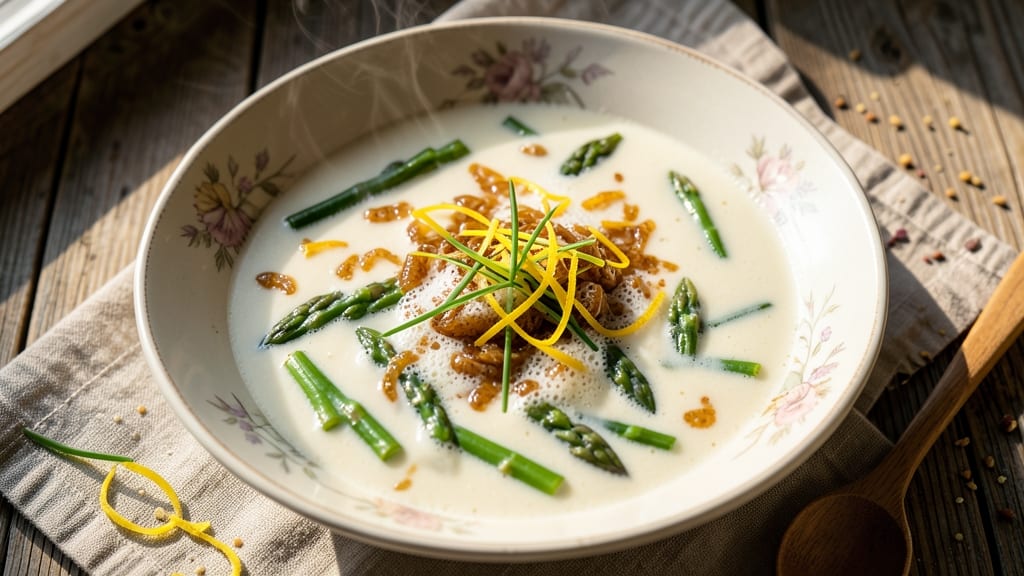
This asparagus soup with milk transforms humble spring greens into a velvety, creamy masterpiece that hides its vegetable roots completely. The secret lies in blanching asparagus first to concentrate its natural sweetness, then blending it with warm milk for that signature restaurant-style smoothness.
I developed this recipe during peak asparagus season when I wanted something elegant yet simple enough for weeknight dinners.
The beauty of this soup is its versatility—it works as a light vegetarian main course or an impressive starter that feels indulgent without being heavy. Traditional versions use whole milk for richness, but I've included a vegan alternative using coconut milk that delivers the same luxurious texture.
The key technique is simmering the asparagus in chicken (or vegetable) broth before blending to develop deep flavor without bitterness.
What you'll end up with is a pale green, silky soup with just the right balance of earthy asparagus and creamy milk, finished with a touch of nutmeg and lemon zest. Each spoonful delivers that perfect marriage of spring's freshest vegetable and comforting creaminess.
The best part? It's ready in under 45 minutes with minimal prep—ideal for when you want restaurant-quality results without the fuss.
Serve it with crusty bread to soak up every last drop, or add a sprinkle of grated parmesan for extra depth. For those watching their calories, the vegan version maintains all the flavor while cutting the fat content. Here's how to make it perfectly every time.
Ingredients for asparagus soup recipe with milk
Fresh asparagus and creamy milk form the heart of this velvety soup, blending spring's brightest green with comforting richness.
| Ingredient | Amount | Notes |
|---|---|---|
| Fresh Asparagus Spears 🌱 | 1 lb | Trimmed, tough ends removed |
| Whole Milk 🥛 | 2 cups | Full-fat for creamiest texture |
| Vegetable Broth 💧 | 4 cups | Low-sodium preferred |
| Yellow Onion 🧅 | 1 whole | Diced, medium size |
| Garlic Cloves 🧄 | 3 cloves | Minced, fresh preferred |
| Fresh Lemon Zest 🍋 | 1 tsp | Bright, organic preferred |
| Ground Nutmeg 🌶️ | ¼ tsp | Freshly grated preferred |
| Salt 🧂 | 1 tsp | Kosher or sea salt |
| Black Pepper 🌶️ | ½ tsp | Freshly cracked |
| Unsalted Butter 🧈 | 2 tbsp | Cold, for finishing |
| Coconut Milk (vegan option) 🥥 | 2 cups | Full-fat for richness |
| Fresh Chives 🌿 | 2 tbsp | Chopped, for garnish |
The asparagus is non-negotiable—thick spears hold up better to blanching, giving you that signature pale green color. Local farmers markets often have the best selection during spring, but any grocery store asparagus works if it's vibrant and firm. For the milk, whole milk delivers the creamiest texture, but half-and-half works too if you're watching calories. The key is using warm milk when blending—cold milk makes the soup grainy. If you're making the vegan version, full-fat coconut milk from a can (not carton) gives the best texture, and you'll need to add an extra pinch of salt to balance the sweetness.
No fresh asparagus? Frozen asparagus works in a pinch, but thaw and drain it well first. The onion and garlic are flavor anchors—don't skip them. For the nutmeg, pre-grated works fine, but if you've got a whole nutmeg, grating it fresh makes a difference. Want to skip the butter finish? Extra virgin olive oil adds a nice brightness instead. The broth can be homemade or store-bought—Pacific Foods or Imagine brands are my go-tos for low-sodium options. And if you're feeling fancy, add a splash of white wine when sautéing the onions—just reduce it down before adding broth.
This soup keeps beautifully—3-4 days in the fridge, though it's best within 2 days for peak freshness. The vegan version actually tastes better the next day as the coconut flavor mellows. For freezing, cool it completely first, then portion into airtight containers with a little headspace. It reheats perfectly—just warm gently on the stove with a splash of broth or milk. The chives add a nice pop of color and freshness, but they're purely for garnish, so add them just before serving. Store the butter separately and melt it fresh when you're ready to finish the soup—it makes all the difference.
Why You'll Love This Recipe
- I swear by this trick: just trim the asparagus ends and snap off the tough bits—no knife skills required. The onion and garlic get a quick sauté while you prep, so by the time the broth simmers, you’re basically done.
- No Chopping Chaos: I swear by this trick: just trim the asparagus ends and snap off the tough bits—no knife skills required. The onion and garlic get a quick sauté while you prep, so by the time the broth simmers, you’re basically done.
- Creamy Without Heavy: That whole milk gives it a velvety texture without feeling greasy. Honestly, the way the asparagus’s natural sweetness melts into the broth? It’s like spring in a bowl, but you won’t need a blender to make it smooth.
- Lunchbox Magic: Between us, this soup reheats like a dream. Pack it in a thermos for work or school—it’s hearty enough to fill you up, but light enough to keep you from nodding off at your desk. (Yes, even on a Tuesday.)
Step-by-step instructions for asparagus milk soup
This velvety soup transforms humble asparagus into a luxurious, creamy masterpiece—here's how to nail it every time.
Prep and Sauté the Aromatics
Start by trimming the tough ends from the 1 lb fresh asparagus spears, then cut the spears into 1-inch pieces. Set aside. In a large pot over medium heat, melt the 2 tbsp unsalted butter until it foams. Add the 1 whole yellow onion, diced, and cook for 5 minutes until softened and translucent.
Add the 3 minced garlic cloves and continue cooking for 30 seconds until fragrant. Here's the thing—don't let the garlic brown, or it'll turn bitter. The moment you smell that aromatic punch, it's ready. This aromatic base builds the soup's flavor foundation, so take your time here.
Cook the Asparagus and Build the Broth
Add the asparagus pieces to the pot and stir to coat in the butter. Cook for 4-5 minutes until the asparagus begins to soften. Pour in the 4 cups vegetable broth and bring to a gentle simmer. The broth should just barely bubble—this prevents the asparagus from turning mushy.
Let the mixture simmer uncovered for 10 minutes until the asparagus is fork-tender. You'll know it's ready when the asparagus pieces collapse easily under gentle pressure. This step extracts all the asparagus's natural sweetness into the broth, creating that signature velvety depth.
Blend to Silky Perfection
Using an immersion blender, carefully blend the soup directly in the pot until completely smooth. If you prefer using a countertop blender, work in batches and return each to the pot immediately. The soup should be completely smooth—no visible asparagus texture. This is where the magic happens, transforming humble greens into luxurious creaminess.
Strain the soup through a fine-mesh sieve into a clean pot to ensure absolute smoothness. I know it seems like extra work, but this step guarantees that silky texture we're after. Return the soup to the stove over low heat and stir in the 2 cups whole milk and 2 cups coconut milk (vegan option). The coconut milk adds a subtle richness without overpowering the asparagus flavor.
Season and Finish
Add the 1 tsp salt, 0.5 tsp black pepper, 1 tsp fresh lemon zest, and 0.25 tsp ground nutmeg to the soup. Stir well and let it simmer gently for 5 minutes to allow the flavors to meld. The lemon zest brightens the dish, while the nutmeg adds a sophisticated warmth that complements the asparagus beautifully.
Taste and adjust seasoning if needed. For a final touch, stir in the 2 tbsp unsalted butter, which adds a luxurious finish. The butter should melt completely, creating a glossy sheen on the soup's surface. This is the moment that matters—don't rush it. The soup should be perfectly seasoned with a balance of sweet, earthy asparagus and creamy richness.
Serve with Style
Ladle the soup into bowls and garnish each serving with 2 tbsp chopped fresh chives. The chives add a fresh, herbal note that cuts through the richness. Serve immediately while hot, as the flavors continue to develop in the bowl. Each spoonful should deliver that velvety texture with a hint of asparagus sweetness and creamy depth.
This soup tastes even better the next day, so consider making a double batch. The flavors meld beautifully overnight, and the texture remains silky. Store leftovers in the refrigerator for up to 3 days or freeze for 3 months. When reheating, warm gently on the stove over low heat, stirring occasionally to prevent scorching.
Pro Tips For Making Asparagus Soup Recipe With Milk
- Char the Asparagus First: I learned this the hard way—raw asparagus in soup tastes like nothing but watered-down grass. Sear the trimmed spears in a dry pan for 2-3 minutes until blackened in spots. That caramelized bitterness is what makes the soup sing.
- Peel the Onion Thin: Skip the thick slices—they turn to mush and make the soup taste like onion soup. Instead, peel the onion paper-thin (almost translucent) and slice it finely. It’ll melt into the broth without overpowering the asparagus.
- Simmer Milk Slowly: Pouring cold milk into hot broth? Big mistake. Heat the milk separately until it’s steaming (not boiling), then whisk it into the soup while stirring constantly. This keeps the soup creamy without breaking the milk into curds—no one wants lumpy soup.
- Toast the Garlic Low: After sautéing the onion, add minced garlic but keep the heat low. Let it sit for 30 seconds until fragrant but not browned. Burnt garlic turns bitter and ruins the whole dish—trust me, you’ll taste it.
Common mistakes when making this dish
Overcooking Asparagus
Asparagus turns mushy and bitter when overcooked—this is the #1 mistake I see. The moment it reaches fork-tender (about 10 minutes in broth), remove it from heat immediately. Overcooking breaks down the cell walls, releasing bitter compounds.
I've learned to test doneness by piercing a spear with a fork—it should collapse easily but still hold its shape slightly. 🌱
Cold Milk Blending
Adding cold milk directly to hot soup creates lumps that ruin the silky texture. Always warm your milk to room temperature (about 10 minutes at room temp) before blending.
For extra insurance, gently heat the milk to 110°F on the stove while the soup simmers. This simple step transforms your soup from grainy to velvety smooth.
Skipping the Strain
Many home cooks skip straining after blending, leaving behind asparagus fibers that create a gritty texture. Take the 5 extra minutes to strain through a fine-mesh sieve—it makes all the difference.
I use a nut milk bag for this purpose, which catches even the finest particles. The result? A soup so smooth it looks like it came from a high-end restaurant. ✨
Underseasoning
The asparagus's natural sweetness gets lost if you don't season properly. Don't be shy with the salt and nutmeg—this is where the soup's depth comes from. Taste as you go, especially after adding milk which can dilute flavors.
I like to add salt in two stages: ½ tsp during cooking, then adjust to taste at the end. The nutmeg should be just noticeable, not overpowering.
Rushing the Butter Finish
Stirring in the final 2 tbsp butter too quickly can cause it to separate. Melt the butter completely first, then whisk it into the soup while it's still simmering gently. The butter should coat the back of a spoon when you stir.
This final step adds that luxurious mouthfeel that makes the soup feel restaurant-worthy. Patience here pays off big time. 🧈
Using Low-Quality Milk
Not all milk creates equal results. For the creamiest texture, use whole milk or half-and-half—lower fat milks create a thinner soup. I've found that organic whole milk from local dairies gives the best flavor.
For the vegan version, full-fat coconut milk (not light) is essential—it mimics the richness perfectly. Skimping here means compromising on that signature velvety quality.
Nutrition facts
Frequently asked questions
Why does this soup turn out so creamy without heavy cream?
The secret lies in the blanching technique and warm milk integration. First, we simmer the asparagus in broth to extract its natural sweetness, then blend it with warm milk (not cold) to create that velvety texture. The butter finish adds richness without needing heavy cream. For extra creaminess, stir in 1 tbsp cornstarch mixed with 2 tbsp cold water at the end.
Can I make this soup without dairy?
Replace the whole milk with 2 cups full-fat coconut milk for a vegan version that maintains the same luxurious texture. The coconut milk adds subtle sweetness that complements the asparagus beautifully. For extra protein, stir in 2 tbsp nutritional yeast at the end—it adds a cheesy flavor without dairy.
How do I prevent the soup from getting too thin?
If your soup seems too thin, reduce it by simmering uncovered for 5-10 minutes until it thickens slightly. For extra body, stir in 1 tbsp cornstarch mixed with 2 tbsp cold water and simmer for 2 minutes until thickened. The key is to use whole milk (not skim) and avoid over-blending the asparagus.
What's the best way to reheat leftovers?
Reheat gently on the stove over low heat, stirring occasionally to prevent scorching. For extra creaminess, add a splash of milk or broth as needed. Avoid microwaving—it can make the texture watery. This soup actually tastes better the next day as the flavors meld together. Store leftovers in airtight containers for up to 3 days.
Can I use frozen asparagus instead of fresh?
Yes, but thaw and drain it thoroughly first. Frozen asparagus works best when used in a 1:1 ratio by weight. The texture will be slightly less refined, but the flavor remains excellent. For best results, simmer the thawed asparagus for 12-15 minutes instead of 10 minutes to ensure it's fully tender.