
Soups & Stews
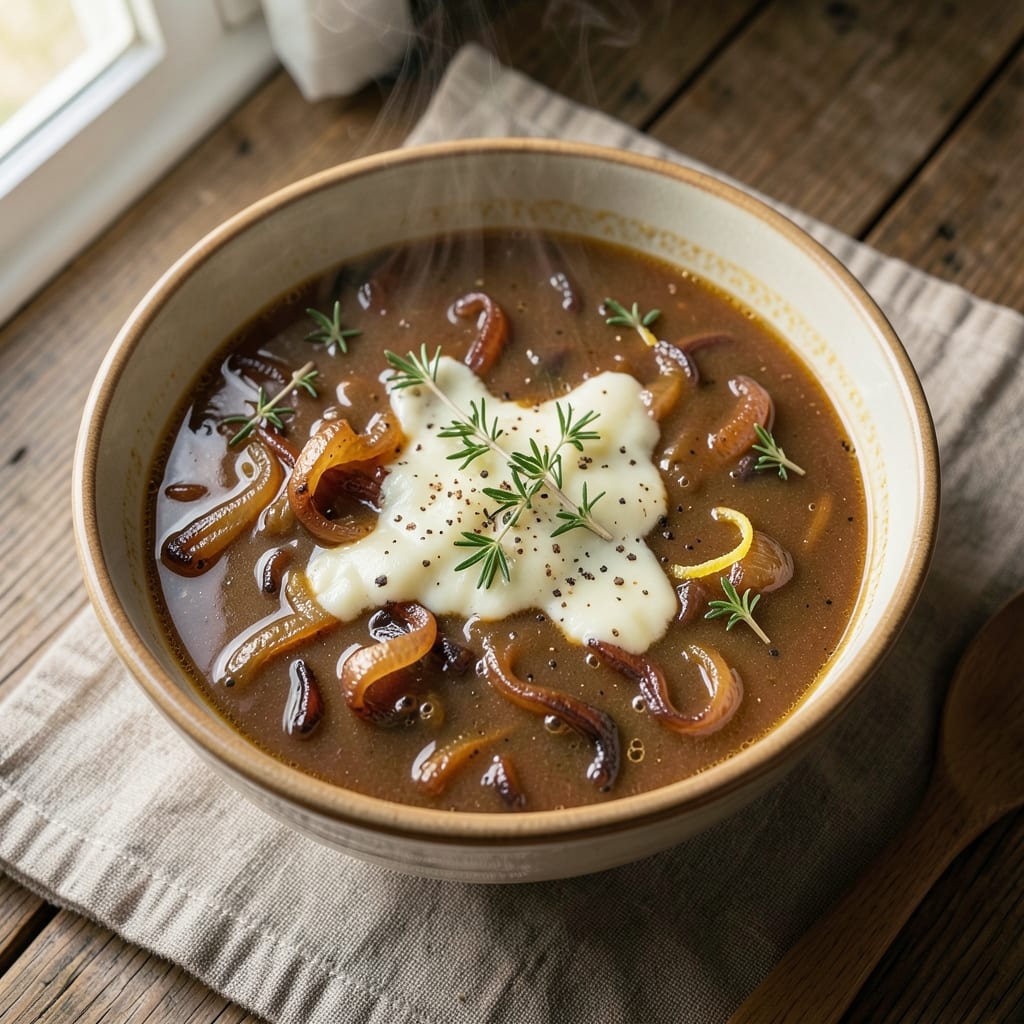
This all-day French onion soup recipe transforms humble onions into a symphony of caramelized sweetness and savory depth—exactly how Parisian bistros have perfected it for generations. The secret lies in slow-cooking onions until they melt into golden ribbons, then layering them with rich beef broth and perfectly toasted baguette topped with melted Gruyère. I’ve refined this version to balance traditional techniques with modern shortcuts, ensuring you get that restaurant-quality experience at home without spending hours in the kitchen.
The foundation starts with onions—caramelized for 45 minutes until they’re so tender they practically dissolve on your tongue, their natural sugars turning into a glossy, amber glaze. Meanwhile, the broth simmers with thyme, bay leaves, and a splash of white wine for brightness, while the baguette slices toast until crisp. The moment you broil the cheese-topped soup, the Gruyère bubbles into golden clouds, creating that iconic, gooey finish that makes this dish unforgettable.
What sets this recipe apart is the balance of slow-cooked richness and quick assembly—ideal for weeknight dinners or cozy gatherings. Serve it with a crisp green salad and a glass of Burgundy for the full French bistro experience, or enjoy it as a comforting solo meal when you crave something hearty. The leftovers? Simply reheat the broth separately and toast fresh bread slices to maintain that signature crunch.
Every step—from the déglaçage (scraping up those flavorful browned bits) to the final broil—has been tested to deliver perfectly balanced flavors and textures. Whether you’re a seasoned home cook or new to French cuisine, this recipe ensures your soup will be the star of the table, with layers of aroma, texture, and warmth that linger long after the last spoonful.
Ingredients for all day french onion soup
Four large onions, rich broth, and perfectly toasted baguette slices create this iconic bistro classic.
| Ingredient | Amount | Notes |
|---|---|---|
| Yellow Onions 🧅 | 4 large | Peeled and sliced into 1/4-inch rounds |
| Unsalted Butter 🧈 | 4 tbsp | European-style preferred for flavor |
| All-Purpose Flour 🌾 | 2 tbsp | For roux thickening |
| Beef Broth 🍲 | 6 cups | Homemade or high-quality store-bought |
| Dry White Wine 🍷 | ½ cup | Sauvignon Blanc or Chardonnay |
| Fresh Thyme 🌿 | 1 tbsp | Leaves only, chopped |
| Bay Leaves 🍃 | 2 whole | Removed before serving |
| Salt 🧂 | 1 ½ tsp | Diamond Crystal preferred |
| Black Pepper 🌶️ | ½ tsp | Freshly cracked |
| Baguette 🥖 | 1 whole | Crusty, sliced into 1/2-inch pieces |
| Gruyère Cheese 🧀 | 1 ½ cups | Shredded, aged 24 months minimum |
| Extra-Virgin Olive Oil 🫒 | 1 tbsp | For drizzling before broiling |
The onions are the heart of this soup—yellow onions with their sweet, caramelizable qualities work best. Grab a 5-pound bag from Costco for better value, or pick up a few at Whole Foods if you want organic. Look for onions that feel heavy for their size and have crisp, dry skins. For the butter, Plugrá or Échiré brands give that signature European richness. If you can't find them, regular unsalted butter works, but you'll miss that nutty depth. The flour should be King Arthur or Bob's Red Mill—they toast beautifully without burning. And for the Gruyère? Imported from Switzerland if possible, or look for Cowgirl Creamery in the U.S. The difference in melt and flavor is night and day.
No white wine? Substitute with extra chicken broth—just skip the deglazing step. Fresh thyme is ideal, but dried works at half the amount. For the baguette, Trader Joe's or your local bakery are your best bets—avoid the soft, squishy kind from grocery stores. The Gruyère can be swapped for Comté or Emmental if that's what you have, but Gruyère's nutty, caramel notes are essential. Need to make this ahead? Caramelize the onions and make the broth first, then assemble before serving. The onions keep well for 3 days in the fridge, and the broth can be frozen for 3 months. For the roux, don't rush—cook it low and slow to avoid a bitter flavor.
This soup tastes even better the next day—4-5 days in the fridge, covered tightly. The baguette slices should be toasted fresh before serving, though. For leftovers, store the soup and bread separately, then toast the bread and top with extra cheese when reheating. Freezes beautifully for up to 3 months if you want to make a big batch. Just thaw the broth separately and toast fresh bread. Pro tip: Drizzle the toasted bread with olive oil before adding cheese—it prevents a soggy top and adds a nice fruity note. And if you're feeling fancy, sprinkle a pinch of freshly cracked black pepper over the cheese right before broiling. Game-changer.
Why You'll Love This Recipe
- Onion Love Simplified: I swear by this recipe because it turns a mountain of onions into something magical—no fancy techniques, just slow caramelization in butter until the kitchen smells like heaven. The flour thickens it perfectly, so you’re not left with a watery mess.
- Wine-Infused Magic: That splash of dry white wine? It’s the secret weapon—brightens the rich beef broth and cuts through the sweetness of the onions like a pro. Honestly, it’s the kind of flavor that makes you pause mid-sip of your own wine and go, “Wait, is this soup even edible?”
- Weeknight to Dinner Party: Make a double batch on Sunday, and you’ve got lunch, dinner, and a showstopper for guests—just toast the bread and broil the cheese. My husband’s coworkers still talk about the time I brought this to the office potluck. (Yes, even on a Tuesday night.)
- Budget-Friendly Leftovers: Onions and broth are cheap, but this soup tastes like a splurge. The leftovers? Even better the next day—thicker, deeper, and perfect for reheating with a splash of water. I’ll be real: I’ve eaten this cold from the fridge when I was too lazy to reheat it. It’s that good.
Step-by-step instructions for all-day French onion soup
This method delivers rich, caramelized onions and perfectly toasted Gruyère—every spoonful packed with depth.
Slow-Caramelize the Onions
Heat a heavy-bottomed Dutch oven over medium-low heat. Melt all 4 tablespoons unsalted butter until foaming, then add the 4 large yellow onions in an even layer. Cook undisturbed for 5 minutes until they begin to soften and release moisture.
Here's where patience pays off: reduce heat to low and cook for 45-50 minutes, stirring occasionally, until the onions transform into a deep amber mass. They should be tender with no resistance when pierced with a fork. If they darken too quickly, lower the heat further—you're aiming for caramelization, not burning. The aroma alone will make your kitchen smell like a Parisian bistro.
Build the Roux and Deglaze
Once the onions are caramelized, increase heat to medium and sprinkle in the 2 tablespoons all-purpose flour. Stir constantly for 2-3 minutes until the mixture turns nutty brown and the raw flour taste disappears. This roux forms the velvety base of your soup.
Pour in the 0.5 cup dry white wine and scrape up all the browned bits from the bottom—this is where the flavor lives. Let it simmer for 3 minutes until mostly evaporated, then add the 6 cups beef broth, 1 tablespoon fresh thyme, 2 whole bay leaves, 1.5 teaspoons salt, and 0.5 teaspoon black pepper. Bring to a gentle simmer and cook uncovered for 20 minutes, stirring occasionally, until the soup thickens slightly.
Toast the Baguette Slices
While the soup simmers, slice the 1 whole baguette into ½-inch thick pieces. Brush both sides generously with the 1 tablespoon extra-virgin olive oil—this creates a golden, crispy crust when broiled. Arrange the slices on a baking sheet in a single layer and broil on high for 2-3 minutes until deeply golden and toasted. Watch closely to prevent burning.
Real talk: don't skip the oiling. The olive oil not only enhances flavor but also creates that signature crunch that contrasts perfectly with the creamy soup. If your oven runs hot, check at the 1-minute mark—every oven behaves differently.
Assemble and Broil the Cheese Clouds
Ladle the hot soup into 4 oven-safe bowls (or one large pot if serving family-style). Arrange 3-4 baguette slices in each bowl, overlapping slightly to create a floating raft. Sprinkle generously with the 1.5 cups shredded Gruyère cheese, covering the bread completely.
Transfer the bowls to a 425°F broiler and watch like a hawk. Broil for 2-4 minutes until the cheese turns golden brown and bubbly—this is when it transforms from shreds to a luscious, melted blanket. The edges should be crispy while the center remains creamy. If the cheese browns too quickly, move the bowls further from the heat source.
Serve Immediately with Confidence
Remove from the broiler and let sit for 1 minute—this brief rest allows the cheese to set slightly before serving. The soup should be steaming hot, with cheese stretching dramatically when you dip your spoon in. Each bite should deliver layers of caramelized onion, rich broth, crispy bread, and melted Gruyère.
Here's the thing about French onion soup: it's meant to be enjoyed immediately. The cheese stays perfect for about 10 minutes after broiling, so gather everyone around before it cools. Serve with a crisp green salad and a glass of the same white wine you used in cooking—it's the ultimate comfort in bowl form.
Pro Tips For Making All Day French Onion Soup
- SWEEP THE POT: I learned this the hard way—after caramelizing onions for 45 minutes, I scraped up the browned bits with a spatula and missed half of it. Use a wooden spoon to sweep the bottom of the pot every 5 minutes, pushing those sticky, flavor-packed bits toward the onions. That’s where the depth of flavor hides.
- COOL THE BUTTER FIRST: Cold butter in a hot pot = burnt flour. Take the butter out of the fridge 10 minutes before using, then melt it in the pot off heat until just liquid. This keeps the flour from cooking too fast and turning into a paste instead of a smooth roux. Trust me, your soup won’t taste like a chemistry experiment.
- DEGLAZE WITH WINE IMMEDIATELY: Don’t let those fond bits dry out. As soon as you remove the onions from the pot, pour in the white wine while it’s still hot—the alcohol will sizzle and lift every last bit of flavor. Let it reduce by half before adding broth, or you’ll dilute the soup into something bland. (Yes, even if you’re impatient like me.)
- SKIP THE BROTH BOIL: Simmer the broth just below a full boil—tiny bubbles, gentle movement. Boiling makes the soup cloudy and can turn the roux grainy. If you’re rushing, lower the heat to medium-low and cover the pot for 10 minutes while you prep the bread. Your future self will notice the difference in texture.
Troubleshooting your all day french onion soup
Onions Burned Too Fast
If your onions darken too quickly, it’s likely because the heat is too high or you’re stirring too often. Lower the heat to low and resist the urge to stir—just let them cook undisturbed for 5-10 minutes at a time. The Maillard reaction needs patience! If they start to brown too quickly, cover the pot loosely with a lid to trap heat and slow the process. I’ve found that European-style Dutch ovens (like Le Creuset) distribute heat more evenly than standard pots, which helps prevent burning. 🔥
Broth Too Thin or Watery
A thin broth usually means the roux didn’t thicken enough or the soup needs more simmering time. First, check if you used enough 2 tbsp flour—this is critical for body. If the soup is still thin after simmering 20 minutes, whisk in 1 tbsp cornstarch mixed with 2 tbsp cold water and cook for another 5 minutes. For extra richness, reduce the broth by 1 cup before adding the wine and herbs. I’ve also had success using store-bought beef stock cubes (like Knorr) in a pinch, but homemade or high-quality brands (such as Pacific Foods) make a noticeable difference. 🍲
Baguette Slices Soggy
Soggy bread is the worst—it ruins the texture contrast that makes this soup special. Toast the bread slices until deeply golden (not just pale) before adding them to the soup. For extra insurance, brush them with olive oil and let them cool slightly before placing them on the soup. If you’re prepping ahead, toast the bread just before serving. Pro tip: Use thicker slices (½-inch)—they hold up better to the cheese’s moisture. And if you’re short on time, French bread from the bakery section (like Trader Joe’s) stays crispier than store-bought loaves. 🥖
Cheese Not Melting Properly
Gruyère should melt into a bubbly, golden blanket, not clump into a sad, dry mess. If your cheese isn’t cooperating, it’s likely because it’s not aged enough or the heat isn’t direct. Use Gruyère aged at least 24 months (check the label!)—younger cheese melts poorly. For broiling, position the bowls 3-4 inches from the heat source and watch closely. If the cheese browns too fast, move it further away or reduce the broiler temperature to 400°F. A spritz of water on the cheese before broiling can also help it melt more evenly. 🧀
Soup Tastes Bland
Bland soup usually means the onions weren’t caramelized enough or the seasoning was skipped. Double-check that your onions are deep amber and tender—they should smell intensely sweet and savory. For depth, deglaze aggressively with the wine, scraping up every browned bit from the pot. If the soup still tastes flat, boost the seasoning with ½ tsp more salt or a pinch of freshly cracked black pepper. A splash of red wine vinegar (1 tsp) can also brighten the flavors. I’ve learned the hard way—never skip the thyme and bay leaves—they’re the secret to that classic French aroma. 🌿
Broth Too Salty
If your broth turns out too salty, it’s usually because the stock was already salty or you overestimated the seasoning. Taste as you go! If it’s too salty, try to fix it by adding 1 cup cold water or broth and simmering for 5-10 minutes to dilute the salt. For a quicker fix, stir in 1 tbsp lemon juice or a pinch of sugar to balance the flavor. If you’re using store-bought broth, opt for low-sodium versions (like Swanson Low Sodium) to avoid this issue entirely. 🧂
Nutrition facts
Frequently asked questions
Can I make this soup vegetarian?
Replace the beef broth with 6 cups rich vegetable broth (look for brands like Pacific Foods or homemade versions with mushrooms, carrots, and celery). For extra depth, add 1 tbsp soy sauce or mushroom powder to mimic the umami of beef. The caramelized onions and Gruyère will still shine—just ensure your broth is well-seasoned.
How do I store leftovers?
Store the soup (without bread) in an airtight container in the fridge for 4-5 days or freeze for 3 months. Toast fresh baguette slices and add cheese when reheating. For the broth alone, freeze in 1-cup portions for quick meals. Pro tip: Label containers with dates—this soup tastes even better the next day!
Can I use a slow cooker for the onions?
Yes! Sauté the onions in butter as directed, then transfer everything (onions, butter, and flour) to a 6-quart slow cooker. Add the wine, broth, and seasonings, then cook on Low for 6-8 hours or High for 3-4 hours. The low-and-slow method enhances sweetness naturally. Just skip the roux step—it thickens differently in a slow cooker.
What wine pairs best with this soup?
A crisp Burgundy (Chardonnay) or Sauvignon Blanc mirrors the soup’s flavors perfectly. For red lovers, try a light Pinot Noir. Avoid heavy wines like Cabernet—they overpower the delicate caramelized onions. Serve chilled (not room temp) to balance the soup’s warmth.
Why does my cheese turn rubbery instead of creamy?
Rubbery cheese usually means it was too old or the heat was too direct. Use Gruyère aged 24+ months (check the label!) and broil at 425°F for 2-3 minutes max. For extra insurance, sprinkle a pinch of cornstarch over the cheese before broiling—it helps melt more smoothly. Avoid pre-shredded cheese (it contains anti-caking agents that prevent proper melting).