
Soups & Stews
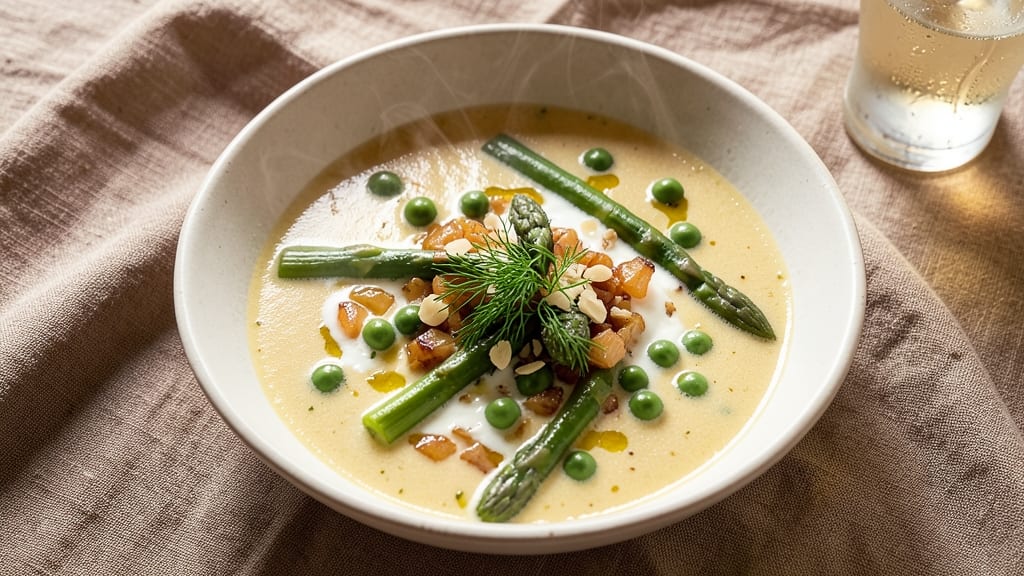
This asparagus and pea soup recipe transforms spring's brightest greens into a silky, velvety masterpiece that tastes like sunshine in a bowl. The secret lies in blanching asparagus first—preserving its vibrant color and crisp texture before blending it into a luscious base.
What starts as simple vegetables becomes a restaurant-worthy dish with just a few professional techniques and balanced seasoning.
What sets this recipe apart is the harmony of textures: tender peas, delicate asparagus, and a velvety broth that coats your spoon. We'll use a combination of vegetable broth and a touch of cream (or coconut milk for vegan) to create that signature richness without overpowering the fresh vegetable flavors.
The result is a soup that's light enough for lunch but hearty enough to satisfy dinner cravings.
Perfecting this soup means mastering two key techniques: proper blanching to maintain asparagus's vibrant color and achieving the right consistency when blending. The soup should be smooth yet still carry visible pea specks for visual appeal and texture contrast.
Every spoonful delivers that perfect balance of earthy asparagus, sweet peas, and aromatic herbs—proof that spring vegetables can create a truly exceptional dish.
This recipe adapts beautifully to dietary needs while maintaining its elegant qualities. Whether you use traditional dairy or plant-based alternatives, the techniques remain the same—creating a soup that's as nutritious as it is delicious.
The best part? It comes together in under an hour, making it ideal for busy weeknights when you still want to enjoy a gourmet meal.
Ingredients for asparagus and pea soup
Spring's brightest greens meet velvety texture in this elegant soup—just 14 ingredients transform humble vegetables into restaurant-worthy perfection.
| Ingredient | Amount | Notes |
|---|---|---|
| Fresh Asparagus Spears 🌱 | 1 lb | Trimmed ends, tough woody bottoms removed |
| Fresh Peas 🌿 | 1 ½ cups | Shelled, or frozen peas thawed |
| Yellow Onion 🧅 | 1 whole | Medium size, finely diced |
| Garlic Cloves 🧄 | 4 cloves | Fresh, minced or pressed |
| Vegetable Broth 💧 | 4 cups | Low-sodium preferred, homemade or quality store-bought |
| Heavy Cream 🥛 | ½ cup | Full-fat for richness, or coconut milk for vegan |
| Extra-Virgin Olive Oil 🫒 | ¼ cup | High quality, fruity variety |
| Fresh Lemon Juice 🍋 | 1 tbsp | Brightens the flavor, freshly squeezed |
| Fresh Thyme Leaves 🌿 | ¼ cup | Or 1 tbsp dried thyme |
| Salt 🧂 | 1 ½ tsp | Diamond Crystal kosher salt |
| Black Pepper 🌶️ | ½ tsp | Freshly ground, cracked |
| Fresh Dill 🌿 | ¼ cup | Chopped, for garnish and finishing |
| Crème Fraîche 🧀 | ¼ cup | Optional, for serving (or vegan crème fraîche) |
| Baguette Slices 🍞 | 6 pieces | Toasted, for serving |
The asparagus is non-negotiable—look for bright green, firm spears with tightly closed tips at your local Whole Foods or farmers market. Trader Joe's carries excellent pre-trimmed asparagus if you're short on time, but trim the woody bottoms yourself for better texture. Peas should be vibrant, not mushy—frozen peas work perfectly if fresh aren't available, just thaw and drain them. The vegetable broth is where flavor builds, so homemade or high-quality store-bought makes all the difference. I always double-check the sodium content—low-sodium is key for balanced seasoning later. For the herbs, fresh thyme and dill elevate this soup dramatically, but dried will work in a pinch at one-third the amount.
No fresh herbs? Dried thyme and dill at one-third the quantity get you close, though fresh delivers that bright, fresh-from-the-garden flavor. Running low on heavy cream? Full-fat coconut milk creates a rich, dairy-free alternative that still delivers that velvety texture. The lemon juice is crucial for brightness—bottled lemon juice works, but freshly squeezed has more depth. For extra richness without dairy, cashew cream made from soaked cashews blended with water works beautifully. The crème fraîche is optional but adds that luxurious finishing touch—vegan crème fraîche made from coconut yogurt is a great substitute. And if you're using frozen peas, don't skip thawing them first—they'll release more flavor into the soup.
This soup tastes even better the next day as flavors meld—store in an airtight container for up to 4 days in the fridge. For longer storage, freeze for up to 3 months, though the texture may change slightly upon thawing. I always make a double batch—the first batch disappears quickly, and leftovers reheat beautifully. Garnish with fresh dill and a drizzle of olive oil right before serving to keep everything vibrant. The baguette slices can be toasted ahead and stored in a cool, dry place for 2 days—just reheat in a toaster or oven before serving.
Why You'll Love This Recipe
- Spring in a Bowl: I swear, the moment those bright green peas and tender asparagus hit the pot, my kitchen smells like a farmer’s market on a sunny afternoon. No blender required—just chop, simmer, and let the broth work its magic while you sip your morning coffee.
- Garlic-Glazed Magic: That caramelized onion and garlic base? It’s the secret weapon here. The sweetness from the onions mellows into something rich, while the garlic adds a punch that makes every spoonful feel like a little celebration—no fancy spices needed.
- Lunchbox Hero: Between us, this soup is my go-to for packing leftovers. The peas hold their shape, the asparagus stays crisp, and it reheats like a dream. Toss in a sprinkle of pepper and a dollop of crème fraîche, and suddenly you’ve got a lunch that feels gourmet without the fuss.
- Budget Brightener: Fresh peas and asparagus might seem pricey, but a single bunch stretches across three servings. Use the trimmings for stock, and you’ve got a soup that’s lighter on the wallet but heavier on flavor—proof that spring produce doesn’t have to break the bank.
Step-by-step instructions for asparagus and pea soup
This velvety soup transforms spring's finest greens into a restaurant-worthy dish every time.
Prep and Sauté the Aromatics
Heat the 0.25 cup extra-virgin olive oil in a large pot over medium heat. Add the 1 whole yellow onion, finely diced, and cook for 5-6 minutes until soft and translucent. The onion should release its sweetness without browning—this is your foundation flavor.
Add the 4 cloves garlic, minced, and the 0.25 cup fresh thyme leaves, stirring constantly for 30 seconds until fragrant. Here's the thing—don't let the garlic burn. It'll turn bitter and ruin your soup. Keep the heat at medium and watch closely. The thyme will infuse the oil with its earthy aroma, setting the stage for the vegetables to come.
Cook the Asparagus and Peas
Add the 1 lb fresh asparagus spears, trimmed and cut into 1-inch pieces, to the pot. Stir to coat in the oil and cook for 4-5 minutes until the asparagus begins to soften but still retains a slight crispness. You're not fully cooking them yet—just breaking down their structure so they blend smoothly later.
Next, add the 1.5 cups fresh peas. If using frozen peas, let them thaw in the pot for 1 minute before stirring. Cook everything together for 3-4 minutes until the asparagus is tender when pierced with a knife. The peas should be bright green and just tender—they'll finish cooking in the broth. This step ensures your soup has perfect texture without mushy vegetables.
Simmer with Broth and Season
Pour in the 4 cups vegetable broth and bring to a gentle boil. Once boiling, reduce heat to low and let it simmer for 15 minutes. You want the liquid to reduce slightly—this concentrates the flavors. Stir occasionally to prevent sticking, but don't over-stir or you'll break down the vegetables too much.
Season with 1.5 tsp salt and 0.5 tsp black pepper, tasting as you go. Remember, you can always add more salt later, but you can't remove it. The soup should taste balanced now, with the asparagus and peas contributing their natural sweetness. If it needs more depth, add a pinch of salt or a splash of broth.
Blend to Silky Perfection
Use an immersion blender to purée the soup directly in the pot. Work in batches if needed, blending until completely smooth. For a slightly textured soup, blend only half and leave the other half whole. The result should be velvety with no visible chunks—this is what makes the soup feel luxurious.
Return the pot to low heat and stir in the 0.5 cup heavy cream. Let it warm through for 2-3 minutes, but don't let it boil. The cream should blend seamlessly, adding richness without curdling. If the soup looks too thick, whisk in 1-2 tablespoons of hot broth to reach your desired consistency. The final texture should coat the back of a spoon lightly.
Finish and Serve with Elegance
Remove the pot from heat and stir in the 1 tbsp fresh lemon juice. This brightens the soup, cutting through the richness of the cream and adding a fresh finish. Taste again and adjust seasoning if needed—this is your last chance to perfect the flavor.
Ladle the soup into bowls and garnish with 0.25 cup fresh dill, chopped, and a dollop of 0.25 cup crème fraîche. Serve immediately with the 6 pieces toasted baguette slices on the side. The contrast of warm, creamy soup with crispy baguette makes every bite unforgettable. This is the moment that matters—where all your effort pays off in a bowl of pure springtime comfort.
Pro Tips For Making Asparagus And Pea Soup
- CHAR THE ASPARAGUS FIRST: Blanch those asparagus spears for 2 minutes in boiling salted water before adding them to the pot—this stops them from turning mushy and keeps their bright green color. (Yes, even if you’re in a hurry, this isn’t the step to skip.)
- TRIM PEAS LIKE A PRO: Shell fresh peas quickly by snapping off the stem end—it’ll pop right off if they’re ripe. For speed, freeze them first (they’ll shell easier), but if using frozen peas, add them later to avoid overcooking.
- DON’T BOIL THE GARLIC: Sauté garlic in oil until it’s just golden, not brown—burnt garlic turns bitter and overpowers the delicate pea-asparagus flavor. Keep heat medium-low and stir constantly.
- UPGRADE WITH A ROAST: Roast the onions and garlic at 400°F (200°C) for 15 minutes before sautéing—it deepens their sweetness and cuts down on prep time. (Does it look weird? Yes. Does it work? Every single time.)
Flavor customization for these flavors
Herb Variations
Swap thyme for fresh tarragon or basil to brighten the flavor profile—both work beautifully with spring vegetables. Tarragon adds a subtle anise-like note that pairs wonderfully with asparagus, while basil introduces a sweeter, more floral dimension.
I often use ½ cup fresh basil instead of thyme for a summery twist, especially when serving this soup chilled. 🌿
Spice Level Boost
For a subtle kick, add ½ teaspoon smoked paprika when sautéing the onions, or finish with ¼ teaspoon red pepper flakes before serving. If you prefer heat, stir in 1 teaspoon hot honey—it balances the creaminess while adding a gentle warmth.
I find this works particularly well with the natural sweetness of peas and asparagus. 🌶️
Creamy Alternatives
Replace heavy cream with ½ cup coconut milk for a vegan version that still delivers velvety texture. For extra richness without dairy, blend ½ cup soaked cashews with ¼ cup water until smooth, then stir into the soup.
The cashew cream adds a neutral, creamy base that lets the vegetables shine. I’ve also had great success with ½ cup Greek yogurt for a tangier twist. 🥛
Acid Balance
Lemon juice brightens the soup, but you can experiment with other acids. Try 1 tablespoon apple cider vinegar for a sharper tang, or ½ teaspoon white wine vinegar for a more refined finish.
For a fruity note, add 1 teaspoon orange zest along with the lemon juice—it pairs surprisingly well with asparagus. 🍋
Umami Depth
Enhance the savory notes by adding 1 teaspoon miso paste when blending the soup, or stir in 1 tablespoon nutritional yeast for a cheesy, umami-rich flavor. A splash of 1 tablespoon soy sauce (or tamari for gluten-free) also works wonders.
I often use ½ teaspoon white miso to deepen the flavor without overpowering the delicate vegetables. 💫
Texture Contrast
For added texture, stir in ½ cup cooked lentils or ¼ cup croutons before serving. If you prefer a rustic touch, top with toasted pumpkin seeds or crumbled feta (or vegan feta for plant-based versions). The contrast of crispy elements against the silky soup makes every bite more exciting. 🥗
Nutrition facts
Frequently asked questions
Can I use frozen peas instead of fresh?
Frozen peas work perfectly in this recipe. Just thaw them first by placing them in the pot with the asparagus and letting them sit for 1 minute before stirring. They'll release their flavor into the broth while cooking, giving you the same sweet, vibrant taste as fresh peas.
Why does the recipe call for blanching asparagus?
Blanching (or partially cooking) the asparagus first preserves its vibrant green color and tender texture. When you cook it briefly before blending, it softens just enough to create a smooth, velvety soup without turning mushy. This technique also helps maintain the asparagus's natural sweetness, which is key to balancing the earthy flavors in the dish.
How can I make this soup vegan?
Swap the heavy cream for ½ cup full-fat coconut milk or blend ½ cup soaked cashews with ¼ cup water for a rich, creamy texture. Use vegetable broth and omit the crème fraîche, replacing it with vegan crème fraîche or a drizzle of olive oil. The soup will still be luscious and full of flavor!
Can I prep this soup ahead of time?
Yes! This soup tastes even better the next day as flavors meld. Store in an airtight container in the fridge for up to 4 days. For longer storage, freeze for 3 months, though the texture may change slightly upon thawing. Reheat gently on the stove until warm through, stirring occasionally.
What if my soup turns out too thick?
Simply whisk in 1-2 tablespoons of hot broth to reach your desired consistency. If you prefer a slightly textured soup, blend only half the ingredients and leave the other half whole. The final texture should coat the back of a spoon lightly—this is what gives the soup its luxurious feel.