
Soups & Stews
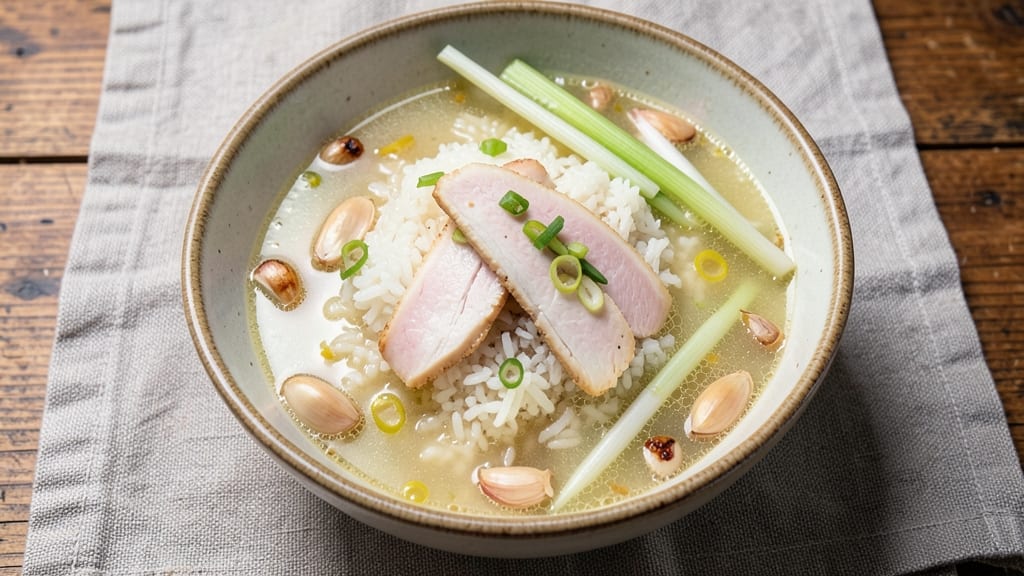
This Asian rice soup recipe transforms simple ingredients into a fragrant, comforting bowl of silky rice ribbons and aromatic broth.
The secret lies in simmering ginger, lemongrass, and garlic until their flavors meld into a fragrant base, then blending just enough to create a velvety texture without losing the dish's rustic charm.
Perfect for chilly evenings or when you crave a light yet satisfying meal, this soup adapts effortlessly to Thai, Japanese, or Chinese influences by swapping proteins and herbs.
With tender rice that dissolves into delicate strands and a broth rich enough to stand alone, this recipe delivers restaurant-quality results at home. The technique is straightforward: parboil rice until partially cooked, then simmer it in the broth until it reaches that signature ribbon-like consistency.
Add your choice of protein—chicken, shrimp, or tofu—and finish with fresh herbs for brightness. It’s the kind of dish that feels both indulgent and nourishing, all in one bowl.
Ingredients for asian rice soup
Fragrant ginger, lemongrass, and jasmine rice create the soul of this velvety Asian-inspired soup.
| Ingredient | Amount | Notes |
|---|---|---|
| Jasmine Rice 🍚 | 1 cup | Uncooked, long-grain preferred |
| Fresh Ginger 🧄 | ½ cup | Thinly sliced, peeled |
| Lemongrass Stalks 🌿 | 4 whole | Bruised, bottom 3 inches only |
| Garlic Cloves 🧄 | 6 cloves | Minced, fresh preferred |
| Chicken Breast 🍗 | 1 lb | Boneless, skinless, diced |
| Vegetable Broth 💧 | 4 cups | Low-sodium, homemade or store-bought |
| Coconut Milk 🥥 | ½ cup | Full-fat, canned |
| Fish Sauce 🍶 | 1 tbsp | Red Boat preferred |
| Lime Juice 🍋 | 2 tbsp | Freshly squeezed |
| Fresh Cilantro 🌿 | ¼ cup | Chopped, stems removed |
| Green Onions 🧅 | 3 whole | Thinly sliced, white and green parts |
| Sesame Oil 🫒 | 1 tsp | Toasted, for finishing |
| Salt 🧂 | 1 tsp | Diamond Crystal preferred |
| White Pepper 🌶️ | ½ tsp | Freshly ground |
The aromatic base—ginger, lemongrass, and garlic—demands quality ingredients for true depth of flavor. Fresh ginger should be vibrant and firm, with no soft spots, while lemongrass stalks must be bright green and flexible. For the best results, source these from an Asian market or specialty grocer like H Mart or Trader Joe's, where they're often fresher than mainstream supermarkets. The jasmine rice should be long-grain and unbroken—avoid pre-cooked or instant varieties, as they won't achieve the signature ribbon texture. If using chicken, opt for boneless, skinless breast cut into even pieces for consistent cooking.
No fresh lemongrass? Substitute with 1 tbsp lemongrass paste (available at Asian markets) or double the ginger and garlic. Running low on fish sauce? Soy sauce or Worcestershire sauce (ensure vegetarian if needed) works in a pinch, though the umami profile will differ slightly. For the coconut milk, stick with full-fat for richness—Thai Kitchen brand is widely available and reliable. The vegetable broth can be homemade (simmer carrots, celery, and onion) or store-bought, but avoid high-sodium options. Fresh herbs like cilantro and green onions are ideal, but dried herbs at half the amount will suffice if needed. The sesame oil should be toasted—look for Kadoya brand at specialty stores for authentic flavor.
Prep the ginger and lemongrass first—their aromatics will infuse the broth as it simmers. Store fresh ginger in the freezer (peeled and sliced) to preserve its potency for up to 3 months. Lemongrass keeps well in the fridge for 1 week wrapped in a damp towel. The finished soup reheats beautifully—simmer gently to maintain its silky texture. For meal prep, portion into airtight containers and refrigerate for up to 4 days or freeze for 3 months. The rice ribbons will soften further when reheated, so adjust broth consistency accordingly.
Why You'll Love This Recipe
- One-Pot Magic: I swear by this recipe when I’m too tired to wash pots—just toss everything in one pot, stir occasionally, and boom. No chopping boards to clean, no multiple pans, just the faintest aroma of lemongrass filling my kitchen by the end.
- Herb-Packed Punch: That first spoonful of soup? It’s like a flavor explosion—ginger’s sharp kick, garlic’s warmth, and lemongrass’s citrusy whisper all dancing together. The chicken stays juicy, and the jasmine rice soaks up every last drop like a sponge.
- Lunchbox Hero: Between us, this soup is my go-to for meal prep. It reheats beautifully, keeps for days in the fridge, and even travels well in a thermos. Pack it for work or school—it’s the kind of thing that makes you the popular one.
- Budget-Friendly Comfort: A single chicken breast and a handful of pantry staples stretch into three or four servings. Honestly, it’s the kind of recipe that makes me feel like I’m feeding a crowd without breaking the bank. Plus, the leftovers taste just as good the next day.
Step-by-step instructions for fragrant ginger-lemongrass rice soup
Transform simple ingredients into a restaurant-worthy rice soup with vibrant aromatics and silky texture.
Prepare the Aromatic Base
In a large pot, combine the 4 whole lemongrass stalks (bruised) and 0.5 cup fresh ginger (thinly sliced) with 4 cups vegetable broth. Bring to a gentle simmer over medium heat for 10 minutes, allowing the flavors to meld. The broth should develop a pale golden hue and emit a fragrant steam.
Add the 6 cloves minced garlic and simmer for another 2 minutes until the garlic becomes translucent but doesn't brown. This step builds the foundation of your soup's complex aroma profile. I like to taste the broth at this stage to ensure the ginger and lemongrass flavors are developing properly—this is where you catch any potential bitterness from overcooking the aromatics.
Cook the Chicken and Rice
Add the 1 lb diced chicken breast to the simmering broth. Cook for 8-10 minutes until the chicken is just cooked through—it should reach 165°F internally but remain tender. Remove the chicken with a slotted spoon and set aside.
In the same pot, add the 1 cup jasmine rice and stir gently to distribute it evenly. Pour in 0.5 cup coconut milk and 1 tbsp fish sauce, then add 1 tsp salt and 0.5 tsp white pepper. The rice should begin to absorb the liquid immediately, forming delicate ribbons as it cooks. Simmer uncovered for 15 minutes, stirring occasionally to prevent sticking. The rice should be tender but still slightly firm—it will finish cooking in the final simmer.
Finish with Bright Flavors
Return the cooked chicken to the pot and stir in 2 tbsp lime juice. The acidity brightens the dish and balances the richness of the coconut milk. Simmer for an additional 5 minutes to allow the flavors to meld completely. The soup should now have a vibrant, fragrant aroma with a perfect balance of savory, citrusy, and herbal notes.
Remove from heat and stir in 1 tsp toasted sesame oil, 0.25 cup chopped cilantro, and 3 whole sliced green onions. The sesame oil adds a nutty depth, while the herbs provide fresh contrast. Let the soup sit for 5 minutes to allow the sesame oil to infuse fully—this resting period ensures all flavors are harmonized before serving.
Adjust Texture and Serve
Taste the soup and adjust seasoning if needed—add more fish sauce for saltiness or lime juice for acidity. The consistency should be silky but not watery, with the rice forming delicate strands. If the soup is too thick, add 2-3 tablespoons of hot water to reach your preferred consistency.
Serve immediately in deep bowls, garnished with additional cilantro and green onions. The soup should be aromatic, with each spoonful delivering layers of ginger, lemongrass, coconut, and citrus. The chicken should be tender and flavorful, perfectly complementing the silky rice and fragrant broth.
Pro Tips For Making Asian Rice Soup
- TOAST THE RICE FIRST: I used to skip this, but now I always dry-toast jasmine rice in a hot pot for 1-2 minutes before adding liquid—it deepens the nutty flavor and prevents that bland, mushy texture. Just keep an eye on it; burned rice ruins everything.
- SLICE GINGER THINLY: Thick chunks of ginger sit like rocks in your soup. Instead, julienne it paper-thin or grate it—this way, it infuses the broth properly without needing to chew. (Yes, even if you’re impatient like me.)
- POACH CHICKEN LOW AND SLOW: Dumping raw chicken into boiling water turns it rubbery. Start with cold broth, bring it to a simmer (gentle bubbles, not a boil), then add the chicken. It’ll stay juicy and shred easily—no one wants dry meat in their soup.
- STRAIN LEMONGRASS AFTER SOAKING: Bruised lemongrass stalks bleed bitterness. Instead of chopping them whole, split them lengthwise, soak in warm water for 10 minutes to soften, then strain out the fibrous bits before adding back the infused liquid. Your soup will taste bright, not grassy.
Make-ahead tips for this dish
Broth Prep Ahead
Make the aromatic broth 2 days in advance for deeper flavor development. Simmer the ginger, lemongrass, and garlic in broth, then strain and refrigerate. Store in an airtight container—the flavors intensify as they sit.
When ready to cook, simply reheat the broth before adding rice and protein. This shortcut saves 30 minutes of active prep time while enhancing complexity. 🌿
Rice Cooking Shortcut
Parboil the jasmine rice for 5 minutes before adding to the soup. Drain and set aside—this jump-starts the cooking process, reducing simmering time by 10 minutes.
For extra convenience, use pre-cooked rice (like sushi rice) and simmer it in the broth for just 8-10 minutes to achieve the ribbon texture. Just be sure to add a splash of water if it thickens too quickly. 🍚
Protein Prep Strategy
Cook the chicken completely separate from the soup and store it in the fridge for up to 3 days. Reheat gently in the microwave or stovetop before adding it back to the soup.
For shrimp or tofu, marinate them in 1 tbsp fish sauce + 1 tbsp lime juice for 15 minutes before cooking—this infuses flavor ahead of time. The protein stays fresher longer and reheats perfectly. 🍗
Freezer-Friendly Assembly
Assemble the soup without the fresh herbs and freeze in single-serving portions. Store in quart-sized freezer bags with 1 inch headspace to prevent ice crystals. When ready to eat, thaw overnight in the fridge, then reheat on the stovetop with 2-3 tablespoons of water to restore silky texture.
Add fresh cilantro and green onions just before serving. This method keeps soup flavorful for up to 3 months. ❄️
Herb Garnish Hack
Chop all fresh herbs (cilantro and green onions) and store them in a small airtight container with a damp paper towel in the fridge. They’ll stay vibrant for 5-7 days, ready to garnish whenever you reheat the soup.
For extra freshness, freeze herbs in ice cube trays with water—thaw and drain before using. This keeps them crisp and flavorful longer than storing whole. 🌿
Reheating Perfection
Reheat soup on low-medium heat with the lid slightly ajar to prevent over-thickening. If using leftover rice, add 1-2 tablespoons of water per serving to maintain that signature ribbon texture. For microwave reheating, cover with a damp paper towel and heat in 30-second intervals, stirring between each.
The gentle heat preserves the delicate rice strands and prevents a gummy consistency. 🔥
Nutrition facts
Frequently asked questions
Can I make this soup without coconut milk?
For a lighter version, replace the ½ cup coconut milk with ½ cup more vegetable broth and add 1 teaspoon soy sauce for depth. For creaminess without dairy, try ¼ cup cashew cream (blended soaked cashews + water) or 2 tablespoons cream cheese stirred in at the end. The texture will be slightly different but still delicious.
Why is my rice turning mushy instead of forming ribbons?
Overcooking or insufficient stirring causes mushiness. Simmer the rice uncovered for exactly 15 minutes on medium-low heat, stirring gently every 2-3 minutes to prevent sticking. If your rice is still firm after 15 minutes, add ¼ cup hot water and simmer 5 more minutes. The key is patience—rice needs time to break down into strands, not boil into mush.
What's the best way to adapt this for a vegetarian version?
Swap the chicken for firm tofu (pressed and cubed) or shiitake mushrooms (sliced). Marinate the tofu in 1 tbsp soy sauce + 1 tbsp lime juice for 15 minutes before cooking. For extra protein, add ½ cup edamame or ½ cup chickpeas. Boost umami with 1 tsp miso paste stirred into the broth. The rice ribbon technique works perfectly with these alternatives!
Can I use instant rice for this recipe?
Not ideal—instant rice lacks the starch needed for ribbon formation. For quick results, use pre-cooked sushi rice (found in Asian markets) and simmer it in the broth for 8-10 minutes. If you must use instant rice, cook it separately until just tender, then add to the broth for 5 minutes—the texture will be softer but still flavorful. The authentic ribbon effect requires long-grain jasmine rice.
How do I make this soup spicier?
Add heat with 1-2 teaspoons of chili paste (like sambal oelek) or ½ teaspoon of chili flakes to the broth while simmering. For depth, include 1-2 slices of fresh chili (like Thai bird's eye) with the ginger. Finish with a drizzle of chili oil or extra lime juice to brighten the heat. Start with small amounts—you can always add more!