
Soups & Stews
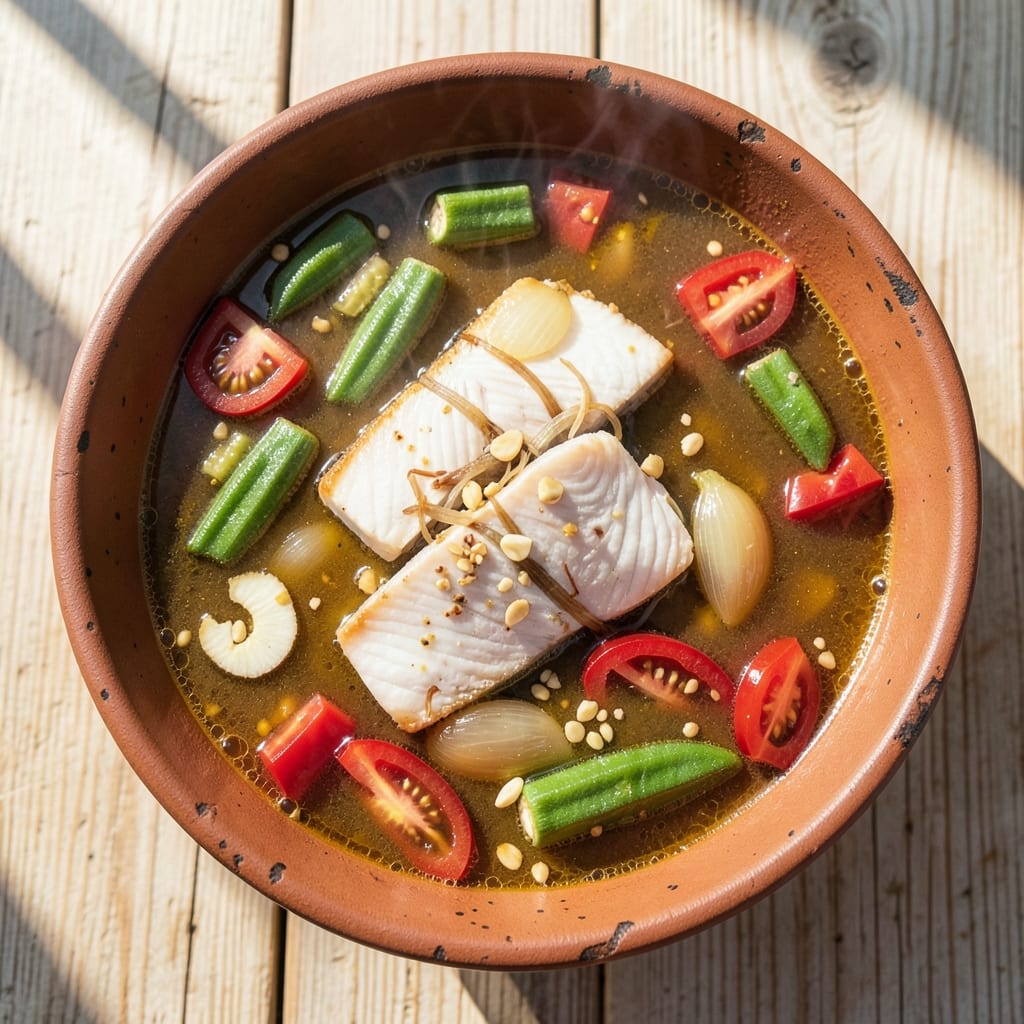
This African fish soup recipe transforms simple ingredients into a deeply flavorful, aromatic dish that tastes like home. The secret lies in the okra gel, which thickens the broth into a velvety consistency while preserving the natural richness of tomatoes, peppers, and spices. I developed this recipe after years of perfecting the balance between bold West African flavors and a comforting, hearty texture.
The dish begins with a fragrant base of onions, garlic, and ginger, which form the foundation for the spiced tomato broth. Palm oil adds a signature depth, while fresh leafy greens like spinach or collards bring vibrant color and nutrition. The fish—traditionally tilapia or mackerel—cooks just until tender, absorbing the complex flavors without falling apart.
What makes this soup truly special is how the ingredients work together: the okra creates that signature thick yet silky broth, the peppers add a subtle heat, and the blend of spices (nutmeg, thyme, and bay leaves) creates layers of warmth. Each spoonful delivers a perfect harmony of textures and flavors that make this more than just a meal—it’s an experience.
Serve with steamed rice or fufu to soak up every last drop of that rich, aromatic broth. The recipe scales beautifully for gatherings, and leftovers taste even better the next day as the flavors meld further. Let’s bring the soul of West African cooking to your kitchen.
Ingredients for african fish soup
Pantry staples meet West African spices for a soup that balances hearty texture with delicate flavors.
| Ingredient | Amount | Notes |
|---|---|---|
| Fresh Okra 🍆 | 1 cup | Sliced into 1/2-inch pieces |
| Yellow Onions 🧅 | 1 whole | Diced, about 1.5 cups |
| Roma Tomatoes 🍅 | 4 whole | Chopped, about 2 cups |
| Garlic Cloves 🧄 | 4 cloves | Minced, about 1 tbsp |
| Fresh Ginger 🌿 | 1 tbsp | Grated, packed |
| Red Bell Peppers 🌶️ | 1 whole | Diced, about 1 cup |
| Scotch Bonnet Peppers 🌶️ | 1 whole | Seeds removed, finely chopped |
| Palm Oil 🫒 | ¼ cup | For rich flavor base |
| Fresh Spinach 🌿 | 4 cups | Chopped, packed |
| White Fish Fillets 🐟 | 1 ½ lb | Tilapia or mackerel preferred |
| Dried Thyme 🌿 | 1 tsp | Or 1 tbsp fresh |
| Bay Leaves 🌿 | 2 whole | For aromatic depth |
| Ground Nutmeg 🌿 | ½ tsp | Freshly grated preferred |
| Salt 🧂 | 1 tsp | Kosher or sea salt |
| Black Pepper 🌶️ | ½ tsp | Freshly ground |
The okra is non-negotiable—it creates that signature silky thickness without overpowering. Look for firm, bright green pods at the grocery store's produce section, or order online from specialty markets like African & Caribbean Foods. Fresh ginger and garlic should smell vibrant, not musty. For the fish, tilapia or mackerel work best—they stay tender while absorbing flavors. Palm oil adds that signature depth, so don't substitute with regular vegetable oil. The Scotch bonnet pepper is key for authentic heat; if unavailable, use half a habanero.
No palm oil? Olive oil or coconut oil will work in a pinch, though the flavor profile shifts slightly. Fresh thyme is ideal, but dried works at one-third the amount. The spinach can be swapped for collards or kale if you prefer. For the tomatoes, San Marzano if you want sweetness, or any ripe Roma tomatoes from the store. The nutmeg should be freshly grated—pre-ground loses potency fast. If you can't find Scotch bonnet, jalapeno with seeds removed gives a milder heat. The bell peppers can be any color, but red adds natural sweetness.
This soup tastes even better the next day as flavors meld. Store in an airtight container in the fridge for up to 4 days. For longer storage, freeze portions for 3 months. I always make a double batch—it reheats beautifully and makes perfect lunches. The okra and spinach can be prepped ahead and stored separately in the fridge for 2 days before cooking. The broth base keeps for 5 days refrigerated, so you can prep components separately for convenience.
Why You'll Love This Recipe
- One-Pot Wonder: I swear by this soup because it’s all in one pot—no fussing with multiple dishes. The okra thickens the broth naturally as it simmers, so I just chop, toss, and let it work its magic while I prep rice or clean up.
- Ginger-Garlic Magic: That fresh ginger and garlic combo? Chef’s kiss. The ginger’s sharp bite cuts through the richness of the fish, while the garlic mellows into this deep, savory warmth. Honestly, the aroma alone makes me forget about takeout.
- Leftovers That Shine: This soup begs to be made ahead—it tastes even better the next day as the flavors meld. I freeze portions for lazy Mondays, and reheating it with a splash of water keeps it creamy and delicious. No sad, rubbery leftovers here.
- Budget-Friendly Feast: Okra and tomatoes stretch this recipe far without breaking the bank, and fish fillets (or even canned sardines) keep costs low. Between us, I’ve fed six people for under $15 with this—and they’ll ask for seconds.
Step-by-step instructions for African fish soup with okra gel magic
This traditional West African dish delivers a velvety okra-thickened broth packed with smoky heat and fresh seafood.
Develop the Flavor Base with Palm Oil and Aromatics
Heat the 0.25 cup palm oil in a large pot over medium heat until shimmering but not smoking. Add the diced yellow onions and cook for 3-4 minutes until soft and translucent. This step builds the rich, nutty foundation that defines African fish soups.
Add the minced garlic cloves, grated ginger, and diced red bell peppers. Stir constantly for 2 minutes until the garlic becomes fragrant and the ginger loses its raw bite. The Scotch bonnet peppers should be added last—toss in the finely chopped Scotch bonnet and cook for just 30 seconds to preserve its heat without burning it. Too long, and you'll lose that bright, fiery character.
Build the Tomato Sauce and Incorporate Okra
Add the chopped Roma tomatoes and 1 tsp salt to the pot. Cook for 8-10 minutes on medium-high heat until the tomatoes break down into a thick, glossy sauce. Use a wooden spoon to scrape the bottom of the pot frequently—this releases all those flavorful browned bits that make the difference between good and exceptional.
Stir in the sliced okra, dried thyme, bay leaves, ground nutmeg, and black pepper. The okra will begin to release its natural gelling agents almost immediately, thickening the sauce. Simmer for 5 minutes until the okra softens and the sauce becomes noticeably thicker. This is where the magic happens—the okra transforms from a vegetable to a thickening agent, creating that signature West African broth consistency.
Add Spinach and Prepare the Fish
Reduce heat to low and stir in the chopped spinach. Cook for 2-3 minutes until the spinach wilts completely. The heat should be gentle enough to preserve the vibrant green color while still allowing it to incorporate fully into the sauce. Remove the pot from heat and let it rest for 2 minutes—this brief pause allows the flavors to meld before adding the fish.
While the soup rests, pat the white fish fillets dry with paper towels and season lightly with salt and black pepper. The fish should be completely dry to prevent the soup from turning cloudy when it's added. Keep the fillets at room temperature until you're ready to add them back to the pot.
Finish the Soup with Perfectly Cooked Fish
Return the pot to medium-low heat and carefully add the fish fillets. The soup should be simmering gently—if it's too vigorous, the fish will cook unevenly and may break apart. Cook for 4-5 minutes until the fish is opaque throughout and flakes easily with a fork. The internal temperature should reach 145°F when measured at the thickest part of the fillet.
Remove the pot from heat immediately once the fish is cooked. Let the soup rest for 3-5 minutes before serving—this allows the fish to finish setting and the flavors to fully integrate. The broth should be thick enough to coat the back of a spoon but still have a silky, velvety texture. Taste and adjust seasoning if needed, adding a pinch more salt or a dash of nutmeg to balance the flavors.
Pro Tips For Making African Fish Soup
- Simmer Okra Low and Slow: Fresh okra turns into mush if you boil it—this soup relies on its texture. Once the okra hits the pot, keep the heat at a bare simmer (small bubbles, occasional swirls) and let it cook for 10-12 minutes. I learned this the hard way after ending up with a gluey mess that ruined the whole dish.
- Slice Ginger Like a Pro: Peeling and chopping ginger is tedious, but this recipe needs it fresh. Use a microplane or the finest side of a box grater—no need to dice. This way, it blends seamlessly into the sauce without chunks, and you’ll actually use the whole root instead of wasting half of it.
- Don’t Rush the Tomato Base: Skipping the 5-minute sweat with onions and tomatoes is a shortcut that backfires. Cook them until the tomatoes collapse and the oil separates slightly—this deepens the flavor and removes excess acidity. I used to skip this, and the soup always tasted flat until I realized why.
- Add Fish Late, Keep It Whole: Whole fish (like tilapia or mackerel) should go in after the okra and tomatoes have simmered for at least 15 minutes. If you add it too early, the broth will turn cloudy, and the fish won’t stay tender. Use a fish basket or foil pouch to keep it intact—no one wants to fish for bones.
Best sauces and condiments for this african fish soup
Okra Gel Magic
The star of this soup is the okra, which creates a naturally thickened, velvety broth without needing flour or cornstarch. When cooked, okra releases mucilage—a natural thickening agent—that transforms the soup into a luxurious, spoon-thick consistency. I always use fresh okra for the best texture, but if you're in a pinch, dried okra works too—just soak it in warm water for 30 minutes first. 🍆
Spiced Tomato Base
The tomato sauce is the flavor backbone, and it needs time to develop. Cook the tomatoes until they break down completely—this releases their natural sugars and deepens their flavor. I like to add a pinch of sugar (about ½ tsp) if the tomatoes are overly tart, but it’s optional. The key is patience: 8-10 minutes of simmering ensures the sauce is rich and balanced, not acidic. 🍅
Palm Oil Depth
Don’t skip the palm oil—it’s what gives this soup its signature richness and nutty aroma. If you can’t find it, red palm oil (more common in specialty stores) is even better, but olive oil or coconut oil can substitute in a pinch. Just remember, the flavor will be slightly different—less smoky, more neutral. Heat the oil slowly to avoid burning, which can turn bitter. 🫒
Heat Control with Scotch Bonnet
The Scotch bonnet pepper adds a bright, fruity heat that’s essential to the dish. If you’re sensitive to spice, reduce it to ½ pepper or remove the seeds. For a milder kick, jalapeño works, but it lacks the same depth of flavor. Always cook the pepper for just 30 seconds—any longer, and it’ll turn bitter. The goal is to infuse heat, not overpower. 🌶️
Fresh Herbs Finish
Finish the soup with fresh spinach or collards, which add vibrant color and a fresh, earthy note. I like to stir them in just before serving so they stay bright and crisp. If using dried herbs, add them with the okra—dried thyme and bay leaves are non-negotiable for that authentic West African flavor. A sprinkle of fresh cilantro or parsley on top adds a bright finish. 🌿
Fish Selection Tips
Choose firm, white fish like tilapia, mackerel, or snapper—they hold up well in the broth without falling apart. Avoid delicate fish like cod, which can turn mushy. Pat the fish completely dry before adding it to the soup to prevent the broth from getting cloudy. Season lightly with salt and pepper right before cooking so it doesn’t overpower the broth. 🐟
Nutrition facts
Frequently asked questions
Can I substitute palm oil in this African fish soup?
Yes, but expect a different flavor profile. Use red palm oil if available for the closest match, or olive oil or coconut oil as alternatives. Heat the oil slowly to avoid burning, which can make the soup taste bitter. The palm oil adds signature richness and nutty aroma that's hard to replicate.
What fish works best for this recipe?
Choose firm white fish like tilapia, mackerel, or snapper—they hold up well in the broth. Avoid delicate fish like cod, which can turn mushy. Pat the fish completely dry before adding to prevent cloudy broth. For extra flavor, use fish with a slight natural oiliness.
How do I adjust the heat level in this soup?
For milder heat, reduce the Scotch bonnet pepper to half or remove seeds. For a milder alternative, use jalapeño instead. Always cook peppers for just 30 seconds to preserve their bright, fruity heat without bitterness. Never skip the pepper entirely—it's essential for authentic flavor.
Can I make this soup ahead of time?
Store in an airtight container in the fridge for up to 4 days. The flavors actually improve as they meld. For longer storage, freeze portions for 3 months. Reheat gently on low heat, stirring occasionally. The okra thickens further when reheated, so you may need to add a splash of water if it becomes too thick.
What should I serve with this African fish soup?
Pair with steamed rice, fufu, or boiled yams to soak up the rich broth. For a complete meal, add a side of fried plantains or cassava leaves. The starchy sides balance the soup's hearty texture and vibrant flavors. In West Africa, this soup is often served with garri or pounded yam for extra indulgence.