
Soups & Stews
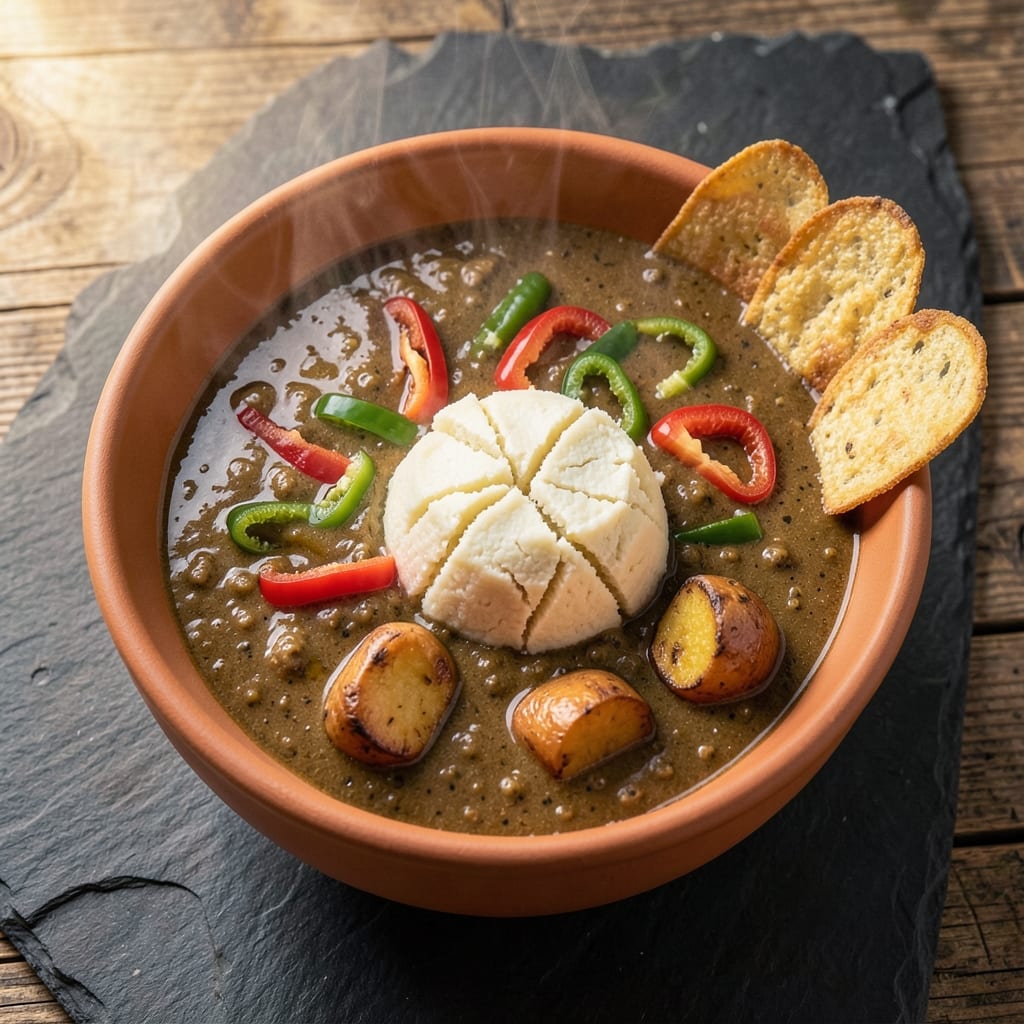
This African Egusi Soup and Fufu recipe brings the heart of West African cuisine to your kitchen, where rich, nutty egusi soup meets silky fufu for a meal that’s both comforting and deeply satisfying. The egusi—ground melon seeds—creates a velvety base packed with vegetables, while fufu delivers that signature stretchy, dough-like texture that makes every bite unforgettable. What makes this dish special is how the two components balance each other: the earthy, slightly bitter depth of the soup contrasts perfectly with the neutral, smooth fufu.
The beauty of this recipe lies in its simplicity and tradition. The egusi soup simmers for about 45 minutes, allowing flavors to meld into a harmonious blend of umami and warmth, while the fufu requires just 15 minutes of active work—boiling, pounding, and kneading until it reaches that ideal, dough-like consistency. No special tools are needed beyond a heavy pot for the soup and a mortar and pestle (or food processor) for the fufu. The result? A meal that feels like a hug, perfect for gatherings or a cozy night in.
What you’ll achieve is a bowl of egusi soup so rich and aromatic it’ll have everyone reaching for seconds, paired with fufu that’s light yet substantial enough to hold its shape. The soup’s deep color and nutty aroma come from slow-cooked vegetables and spices, while the fufu’s smooth texture is achieved through careful kneading—no lumps, just pure, velvety perfection. This is the kind of dish that turns ordinary meals into memorable experiences, rooted in tradition yet approachable for home cooks.
Whether you’re serving this for a family dinner or a special occasion, the combination of egusi soup and fufu is a celebration of West African flavors. The soup can be made ahead and reheated, while the fufu is best served fresh—warm, stretchy, and ready to soak up every last drop of that flavorful broth. Let’s bring this soul food harmony to your table.
Ingredients for african egusi soup and fufu
Six servings of soulful West African harmony—ground egusi, vibrant vegetables, and silky fufu await.
| Ingredient | Amount | Notes |
|---|---|---|
| Ground Egusi Seeds 🌱 | 1 cup | Store-bought or freshly ground |
| Vegetable Oil 🫒 | ½ cup | For sautéing vegetables |
| Sweet Potatoes 🍠 | 2 medium | Peeled and cubed |
| Green Bell Peppers 🌶️ | 2 whole | Chopped into strips |
| Red Bell Peppers 🌶️ | 1 whole | Chopped into strips |
| Onions 🧅 | 2 whole | Chopped, yellow or white |
| Tomatoes 🍅 | 4 whole | Chopped, Roma preferred |
| Cassava Tubers 🥔 | 2 lb | Peeled and cut into chunks |
| Fish Stock 💧 | 4 cups | Vegetable stock substitute |
| Fresh Ginger 🌿 | 1 inch | Grate finely for soup |
| Garlic Cloves 🧄 | 6 cloves | Minced for flavor |
| Dried Shrimp 🦐 | ¼ cup | Optional for umami |
| Thyme Leaves 🌿 | ½ cup | Fresh or dried |
| Salt 🧂 | 1 ½ tsp | Adjust to taste |
| Black Pepper 🌶️ | ½ tsp | Freshly ground |
| Locust Beans 🌱 | ½ cup | Soaked and pounded |
The egusi seeds are the heart of this dish. Look for ground egusi at African markets or specialty stores—it should smell nutty and fresh, not stale. Costco or Amazon often carry pre-ground egusi, but if you find whole seeds, grind them yourself for maximum flavor. The cassava tubers need to be fresh, firm, and free of sprouts—Caribbean or Latin markets usually have the best selection. For the sweet potatoes, choose vibrant orange ones; their natural sweetness balances the earthy egusi. The dried shrimp (if using) should be plump and slightly oily—Asian grocery stores often carry them in small bags.
No fish stock? Vegetable stock works perfectly—just add a dash of soy sauce for umami depth. Fresh ginger and garlic are non-negotiable here; their bright flavors cut through the richness of the egusi. Short on locust beans? Substitute extra cassava or plantains for texture. The bell peppers can be swapped for any colorful variety—red, yellow, or orange all work, but green adds a nice contrast. For the fufu, if you can't find cassava, yuca or green plantains make great substitutes. The key is to pound everything until it's completely smooth—no lumps allowed!
This soup tastes even better the next day as flavors meld. Store in airtight containers for 4-5 days in the fridge, or freeze for up to 3 months. The fufu must be served fresh—it loses its stretchy texture when reheated. Make a double batch of soup and freeze half; pair it with freshly made fufu for an authentic experience. For leftovers, reheat the soup gently on the stove, adding a splash of water or stock to restore its velvety texture.
Why You'll Love This Recipe
- No Chopping Chaos: I swear by this recipe when I’m too tired to dice a million veggies—just toss in whole sweet potatoes and bell peppers, and the oil does the work for you. The egusi melts into that velvety soup all on its own, so you’re basically hands-off after the initial stir.
- Umami Bomb: That nutty, earthy punch from the ground egusi? It’s like a flavor explosion in every spoonful, especially when it’s simmered with the sweetness of the roasted peppers. Honestly, I’ve had people ask what brand of stock I’m using—they just think it’s some fancy secret.
- Leftovers That Shine: This soup begs to be reheated, and the fufu? Even better the next day when it’s slightly firmer and soaks up the extra flavor. I’ll make a double batch on Sundays—half for dinner, half for lazy weeknight lunches with zero guilt.
- Pocketbook Hero: Ground egusi is a steal compared to other protein-heavy soups, and sweet potatoes stretch further than you’d think. Between us, I’ve fed six people for under $10 with this—plus, the fufu turns scraps of yam or plantain into something luxurious. Budget win.
Step-by-step instructions for West African egusi soup and fufu
This soul-warming dish brings together rich egusi soup and smooth cassava fufu—perfect harmony in every bite.
Prepare the Vegetable Base
Heat the 0.5 cup vegetable oil in a large pot over medium heat. Add the 2 chopped onions and sauté for 3-4 minutes until translucent and fragrant. Stir in the 6 minced garlic cloves and 1 inch finely grated fresh ginger, cooking for 1 minute until aromatic.
Add the 2 chopped green bell peppers, 1 chopped red bell pepper, and 4 chopped tomatoes. Cook uncovered for 8-10 minutes, stirring occasionally, until the vegetables soften and the tomatoes release their juices. This foundational step builds the soup's vibrant flavor profile.
Build the Soup with Egusi and Locust Beans
Reduce heat to low and gradually whisk in the 1 cup ground egusi seeds, ensuring no lumps form. Cook for 5 minutes, stirring constantly, until the mixture thickens slightly. Add the 0.5 cup soaked and pounded locust beans and 0.25 cup dried shrimp, stirring well to combine.
Pour in the 4 cups fish stock and bring to a gentle simmer. Stir in the 0.5 cup thyme leaves, 1.5 teaspoons salt, and 0.5 teaspoon black pepper. The soup should bubble gently—this is where the magic happens as flavors meld together.
Cook the Sweet Potatoes and Cassava
Add the 2 peeled and cubed sweet potatoes and 2 pounds peeled and chunked cassava tubers to the simmering soup. Increase heat to medium-low and cook uncovered for 30-35 minutes, stirring occasionally, until the vegetables are tender when pierced with a fork.
Here's the thing—don't rush this step. The cassava needs time to soften completely, while the sweet potatoes should be fork-tender but still hold their shape slightly. If the soup thickens too much, add a splash of water to maintain the perfect consistency.
Prepare the Fufu Dough
While the soup simmers, prepare the fufu by boiling the remaining 2 pounds cassava tubers (if not already used) until very tender, about 20-25 minutes. Drain well and mash the cassava into a smooth, dough-like consistency using a potato masher or your hands.
For extra smoothness, I like to press the mashed cassava through a fine-mesh strainer to remove any fibrous bits. The fufu should be pliable but not sticky—adjust with a bit of warm water if needed. This step creates the signature smooth, stretchy texture that pairs perfectly with the rich soup.
Assemble and Serve
Once the soup reaches a thick, velvety consistency and the vegetables are tender, taste and adjust seasoning if needed. Ladle the hot soup into bowls and serve immediately alongside the freshly prepared fufu. The contrast between the hearty soup and the smooth, doughy fufu is what makes this dish truly special.
For serving, I like to use two hands—one to scoop the fufu into the soup and the other to dip pieces directly. This traditional method ensures every bite captures both components perfectly. Enjoy this comforting West African classic that's as satisfying as it is flavorful!
Pro Tips For Making African Egusi Soup And Fufu
- Toast the Egusi First: I learned this the hard way—skipping the quick toast in hot oil makes the soup taste raw. Heat the egusi in oil for 30 seconds until it smells nutty (yes, even if you’re impatient like me), then add water. This removes the bitter edge and thickens the soup properly.
- Peel Sweet Potatoes Wet: Dry peeling leaves bits stuck to the knife and skin. Wet the sweet potatoes first, then peel—it’s faster and cleaner. For fufu, I slice them into even chunks (about 2 inches) so they cook through without turning mushy.
- Simmer, Don’t Boil: After adding water to the egusi, let it simmer gently for 20 minutes. Boiling too hard scatters the soup and burns the oil. A low, steady simmer keeps the texture smooth and the flavors rich—no one wants a bitter, oily mess.
- Prep Peppers Last: Chop green and red bell peppers just before adding them to the soup. They soften fast and lose their bright color if tossed in too early. A quick dice (no need for fancy cuts) works—just make sure they’re uniform so they cook evenly.
Health benefits of this african egusi soup and fufu
Protein-Packed Plant Power
This egusi soup is a vegetarian protein powerhouse, thanks to the ground melon seeds which contain all nine essential amino acids. A 1-cup serving delivers about 12 grams of protein, making it an excellent plant-based option for muscle repair and satiety. The locust beans add another 5 grams of protein per ½ cup, creating a complete protein profile without meat. 💪
Rich in Healthy Fats
The egusi seeds are loaded with heart-healthy fats, including monounsaturated and polyunsaturated fats that support cholesterol balance. These fats also enhance nutrient absorption from the vegetables, making this soup not just flavorful but also metabolically beneficial. The cassava in fufu provides additional fiber, helping to slow digestion and maintain steady blood sugar levels.
Fiber-Rich Vegetable Boost
With sweet potatoes, bell peppers, tomatoes, and cassava, this dish packs a fiber punch—about 8 grams per serving. Fiber supports digestive health, promotes gut bacteria balance, and helps regulate cholesterol levels. The combination of soluble and insoluble fiber keeps you feeling full longer while maintaining steady energy levels throughout the day. 🌱
Antioxidant and Vitamin Powerhouse
The vibrant vegetables in this soup provide a colorful array of antioxidants and vitamins. Sweet potatoes deliver vitamin A (great for vision and immunity), while bell peppers contribute vitamin C (immune support and collagen production). The ginger and garlic add anti-inflammatory benefits, reducing oxidative stress in the body.
Mineral Density for Vitality
This dish is surprisingly rich in essential minerals. The egusi seeds provide magnesium (muscle and nerve function) and zinc (immune support), while the cassava offers potassium (heart health) and calcium (bone strength). Even the locust beans contribute iron, making this a mineral-dense meal that supports overall vitality. Perfect for anyone looking to boost their nutrient intake naturally!
Nutrition facts
Frequently asked questions
Can I make this egusi soup without dried shrimp?
The dried shrimp adds umami depth, but it's optional. For a vegetarian version, simply omit it and increase the thyme to 1 teaspoon for extra flavor. You can also add a dash of soy sauce or a pinch of smoked paprika to compensate for the missing savory notes. The soup will still be delicious and rich.
How do I get my fufu perfectly smooth?
The key is thorough pounding and straining. After boiling and mashing the cassava, press it through a fine-mesh strainer or food mill to remove all lumps. For extra smoothness, some cooks add 1 tablespoon of warm water at a time while kneading—this helps bind the dough without making it sticky. Work quickly to prevent the starch from cooling and hardening.
What if I can't find cassava for the fufu?
No problem! Use green plantains or yuca (tapioca) as substitutes—they work equally well. For plantains, boil until very soft, then mash and strain. Yuca needs to be peeled and boiled for 20 minutes before mashing. Both alternatives will give you that signature stretchy texture, though cassava has the most neutral flavor.
Can I prepare the soup ahead of time?
Yes, this soup actually tastes better the next day! Store it in an airtight container in the fridge for 4-5 days or freeze for up to 3 months. When reheating, add a splash of water or stock to restore its velvety texture. The fufu, however, must be made fresh—it loses its stretchy consistency when reheated.
Why does my egusi soup taste bitter?
Bitterness usually comes from overcooking the egusi or using stale seeds. Always cook the egusi on low heat for just 5 minutes after adding it to the pot. For extra flavor, toast the egusi seeds lightly in a dry pan for 2 minutes before grinding. Fresh, high-quality egusi should smell nutty and fresh—never rancid or stale.