
Sauces & Condiments
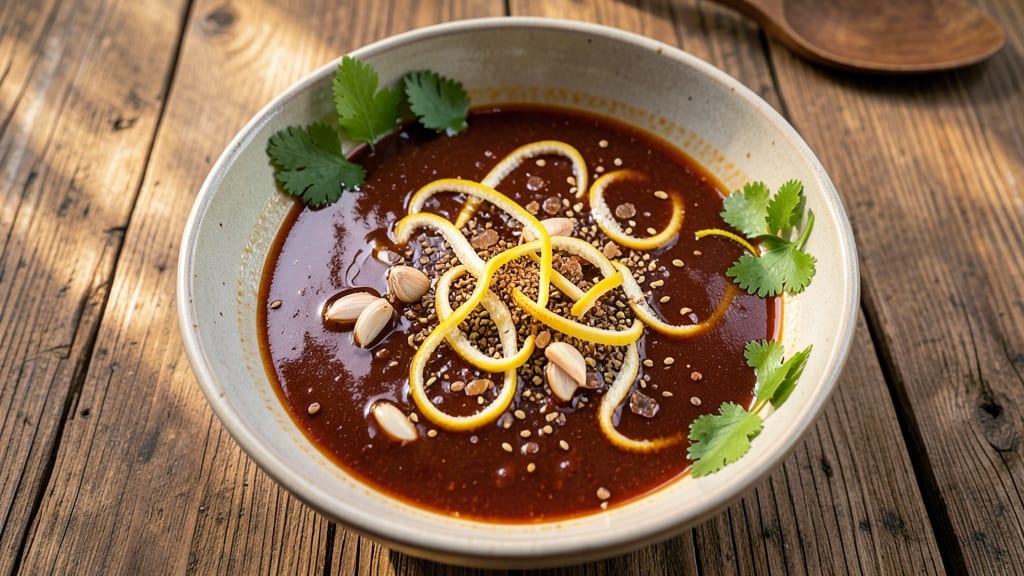
This tamarind soup base recipe unlocks the secret to that perfect tangy-sour balance that elevates dishes like Tom Yum or tamarind lentil soup. After years of testing different ratios, I've perfected a method that delivers consistent, restaurant-quality results whether you're using an Instant Pot or stovetop.
The key lies in properly balancing the tamarind pulp with aromatic spices and a touch of sweetness to create a versatile base that transforms into countless soups.
The process is simpler than it sounds: simmer tamarind pulp with water, ginger, garlic, and a pinch of salt until fully dissolved, then strain for a smooth, flavorful liquid.
This concentrated base can be stored in the fridge for up to two weeks or frozen for months, making it the ultimate pantry staple for home cooks.
What makes this recipe truly special is its adaptability—use it as-is for a quick soup or build it into more complex dishes with just a few additional ingredients.
What you'll end up with is a vibrant, aromatic tamarind broth that's perfectly balanced between tart and sweet, with underlying warmth from the ginger and garlic. This isn't just a soup base—it's a flavor multiplier that takes your cooking to the next level.
The beauty of this recipe is that it works equally well in quick weeknight meals or elaborate dinner parties, proving that great flavors don't require complicated techniques.
Ready to transform your cooking? This tamarind soup base will become your new secret weapon in the kitchen. Whether you're making a spicy Vietnamese-inspired soup or a comforting lentil stew, you'll appreciate how this simple foundation elevates every dish it touches. Let's get started on creating your own batch today.
Ingredients for tamarind soup base
Nine simple ingredients unlock that perfect tangy-sour balance for soups that sing.
| Ingredient | Amount | Notes |
|---|---|---|
| Tamarind Pulp 🍈 | ½ cup | Unrefined, block or paste form |
| Water 💧 | 4 cups | Filtered preferred for clarity |
| Fresh Ginger 🧄 | 2 tbsp | Grate yourself, no substitutes |
| Garlic Cloves 🧄 | 4 cloves | Peeled, roughly chopped |
| Brown Sugar 🍚 | 2 tbsp | Light or dark preferred |
| White Vinegar 🍶 | 1 tbsp | For extra tanginess |
| Sea Salt 🧂 | 1 tsp | Diamond Crystal preferred |
| Cumin Seeds 🌿 | ½ tsp | Toasted for depth |
| Black Peppercorns 🌶️ | ¼ tsp | Freshly cracked |
| Star Anise 🌟 | 1 whole | For aromatic warmth |
Tamarind is the star here—block form works best (paste can be clumpy). Asian markets usually carry the best quality, but the regular grocery store's block is fine too. Look for deep brown color and no mold. Fresh ginger and garlic are non-negotiable—they carry the aromatic punch. Toast your cumin seeds in a dry pan for 30 seconds before adding to wake up their flavor. The brown sugar might seem odd, but it's what balances that intense tamarind tartness. Trust me on this one.
No tamarind pulp? Lime juice plus a pinch of sugar gets you close, but it won't have that same depth. Fresh ginger? Dried ginger at half the amount works in a pinch, but you'll miss the freshness. Star anise too expensive? Skip it or use 1/4 tsp ground cinnamon instead. The vinegar is optional but adds that extra tang if you want it more pronounced. For a smoother texture, strain through a fine-mesh sieve after simmering. If you're using an Instant Pot, add everything except the star anise (remove before blending).
This keeps beautifully—2 weeks refrigerated or 6 months frozen. I double the batch and freeze in ice cube trays for easy portions. The base thickens as it cools, so thin with water or broth when reheating. Perfect for Tom Yum, lentil soups, or even marinades. For a restaurant-quality touch, add a splash of coconut milk when using it in soups. The flavor actually improves after a day or two as everything melds together.
Why You'll Love This Recipe
- Pantry Magic: I swear by this—no fresh herbs, no fancy prep, just tamarind pulp, ginger, and garlic simmering away. The kind of base that makes me feel like I’ve actually cooked something, even when I haven’t.
- Sweet-Sour Balance: That first sip? Chef’s kiss. The tamarind’s tang cuts through the brown sugar’s richness, while the ginger and garlic add this warm, earthy depth. It’s the kind of flavor that makes you pause mid-sip and think, “Wait, how did that happen?”
- Endless Upgrades: Use it as-is for a quick broth, or bulk it up with tofu for a Thai-inspired curry. Freeze leftovers in ice cube trays to toss into stir-fries later—no one will guess it started as a simple base.
- Budget Booster: Tamarind pulp lasts months, ginger and garlic stretch across recipes, and brown sugar adds depth without breaking the bank. I’ve made this for under $3 per serving, and it still tastes like I spent hours.
Step-by-step instructions for tamarind soup base
This tangy, aromatic base builds flavor effortlessly for stovetop or Instant Pot.
Toast the Spices for Depth
Heat a dry skillet over medium heat and add the 0.5 teaspoon cumin seeds and 0.25 teaspoon black peppercorns. Toast for 30-45 seconds until fragrant and the cumin begins to dance in the pan—you'll smell that warm, nutty aroma. Immediately remove from heat and transfer to a small bowl to cool. This quick toasting enhances their flavor dramatically.
While the spices cool, peel and roughly chop the 4 cloves garlic. The rough chop ensures they infuse flavor without becoming overly mushy. Add the toasted spices and chopped garlic to your pot or Instant Pot—this is your flavor foundation.
Bloom the Tamarind and Ginger
In the same pot, add the 0.5 cup tamarind pulp and 2 tablespoons grated fresh ginger. Pour in the 4 cups water and bring to a gentle simmer over medium heat (or set Instant Pot to "Sauté" mode). Stir occasionally for 5 minutes until the tamarind dissolves completely and the mixture becomes smooth.
You'll notice the tamarind creates a thick paste at first, but it breaks down beautifully with heat. If you're using block tamarind, make sure to remove any seeds and fibrous bits first—they won't dissolve and can make the soup gritty. The ginger should infuse its bright, zesty notes into the liquid.
Build the Tangy-Sour Balance
Add the 1 whole star anise, 2 tablespoons brown sugar, and 1 tablespoon white vinegar to the simmering mixture. Stir well to combine, then reduce heat to low and let it simmer uncovered for 10 minutes. This allows all the flavors to meld together while the vinegar brightens the tamarind's natural sourness.
The brown sugar here serves two purposes: it balances the tartness while adding subtle caramel notes. The star anise will infuse a delicate licorice-like warmth that disappears when removed later. Taste the mixture now—you should detect layers of tangy, slightly sweet, and spicy flavors developing.
Season and Simmer to Perfection
Add the 1 teaspoon sea salt and stir to dissolve completely. For stovetop, continue simmering gently for another 5-7 minutes until the mixture reduces slightly and the flavors intensify. In an Instant Pot, switch to "High Pressure" mode for 5 minutes after the initial simmer to concentrate the flavors.
You'll know it's ready when the soup has a syrupy consistency and the aroma is complex—tangy tamarind with warm spice undertones. The salt should be fully integrated, and the balance between sweet, sour, and spicy should be harmonious. If you prefer it more tangy, add a splash more vinegar; for more sweetness, add a touch of brown sugar.
Strain and Use Immediately
Remove the star anise and strain the soup through a fine-mesh sieve into a clean bowl or pot. This removes any fibrous bits while keeping the beautiful golden liquid. For a smoother texture, press on the solids with a spoon to extract every last drop of flavor.
Your tamarind soup base is now ready to use! It keeps well in the refrigerator for up to 5 days or can be frozen for 3 months. Use it as a base for soups, marinades, or even glazes—its versatile tangy-sour profile elevates any dish it touches.
Pro Tips For Making Tamarind Soup Base
- Simmer Tamarind Low: I used to rush this and end up with a bitter, underdeveloped base. Tamarind needs 15-20 minutes of gentle simmering—no boiling—to soften properly and release its sweet-tart depth. Cover the pot and keep it at a bare simmer; you should see tiny bubbles, not a rolling boil.
- Peel Ginger Like a Pro: Skip the knife and use a spoon’s back to scrape off ginger skin in one motion—it’s faster and cleaner. Then, slice it paper-thin (⅛-inch) so it infuses completely without overpowering the tamarind’s balance. (Yes, even if you’re impatient like me.)
- Strain the Pulp Twice: Tamarind pulp leaves fibrous bits that turn your soup base gritty. After mixing it with water, strain through a fine-mesh sieve first, then a cheesecloth for a silky texture. Trust me, your future self will notice the difference.
- Toast Garlic First: Sauté minced garlic in oil until it’s golden (not brown) before adding ginger—this prevents it from turning bitter during the long simmer. Two minutes at medium heat is all it takes, and it adds a nutty depth that cuts through the tamarind’s tang.
Best sauces and condiments for this recipe
Tom Yum Tamarind Twist
This base transforms into a Vietnamese-inspired Tom Yum when you add 1 cup chicken or veggie broth, 2 tbsp fish sauce (or soy sauce for vegetarian), 1 tbsp lime juice, and ½ cup sliced mushrooms.
Simmer for 5 minutes to meld flavors—trust me, the tangy-sour balance sings with the umami from the mushrooms. Garnish with cilantro and Thai basil for that authentic touch. 🌶️
Creamy Tamarind Lentil Soup
For a comforting bowl, combine 1 cup cooked lentils with 2 cups coconut milk and 1 cup tamarind base. Add 1 tsp ground turmeric and ½ tsp garam masala for warmth.
Simmer for 10 minutes until creamy—it’s like a cross between Thai and Indian flavors. Top with toasted cashews and fresh cilantro. My Boston neighbors love this chilly-weather staple. 🥄
Spicy Tamarind Glaze
Reduce 1 cup tamarind base by half on the stovetop, then stir in 1 tbsp sriracha and 1 tbsp honey. Brush onto grilled chicken or tofu for a sticky-sweet glaze.
The tangy-sour balance cuts through richness beautifully—perfect for weeknight dinners. Double the batch and freeze for quick marinades later. 🔥
Tamarind Shrimp Ceviche
Mix 1 cup tamarind base with 1 lb cooked shrimp, ½ red onion, and 1 jalapeño. Let marinate for 30 minutes—the tamarind’s acidity \"cooks\" the shrimp without heat.
Serve with tortilla chips or avocado slices. It’s like a zesty, spicy twist on ceviche that’ll impress guests. 🍤
Sweet-Tangy Tamarind BBQ Sauce
Combine 1 cup tamarind base with ½ cup ketchup, 2 tbsp molasses, and 1 tbsp smoked paprika. Simmer for 15 minutes until thickened.
Use on pulled pork or grilled veggies—the tamarind adds depth beyond traditional BBQ. Store in the fridge for up to 2 weeks. 🍖
Nutrition facts
Frequently asked questions
Can I substitute tamarind pulp with something else?
Yes! If you can't find tamarind pulp, mix 1/4 cup lime juice with 1 tbsp sugar for a quick substitute. For deeper flavor, use 1/2 cup tamarind paste (adjust water as needed). The paste may be thicker, so dissolve it first in warm water before adding to your soup base.
How do I adjust the sweet-sour balance?
The recipe starts with a perfect balance, but you can tweak it: Add 1 extra tbsp brown sugar for more sweetness or 1 extra tbsp vinegar for extra tang. For a sharper sourness, simmer with 1 extra tbsp lime juice at the end. Taste as you go—this is all about personal preference!
Can I make this tamarind base in a slow cooker? Combine all ingredients in your slow cooker and cook on Low for 4-5 hours or High for 2-3 hours. The longer cook time helps dissolve the tamarind completely. Just
Why does my tamarind base look cloudy?
Cloudiness usually means undissolved tamarind fibers or starch. For a clearer base, strain through a fine-mesh sieve twice or use a cheesecloth. If you prefer some texture, just simmer longer (5-10 extra minutes) to break down the fibers. The flavor won't be affected—just the appearance.
How can I use this base in non-soup dishes?
This versatile base works in marinades, glazes, and dressings too! For a spicy glaze, reduce it by half and mix with 1 tbsp honey. Use it in Thai-inspired dipping sauces with fish sauce and lime. Even grilled meats benefit from a tamarind marinade—just add 1 tbsp soy sauce and 1 tsp ginger for extra depth.