
Soups & Stews
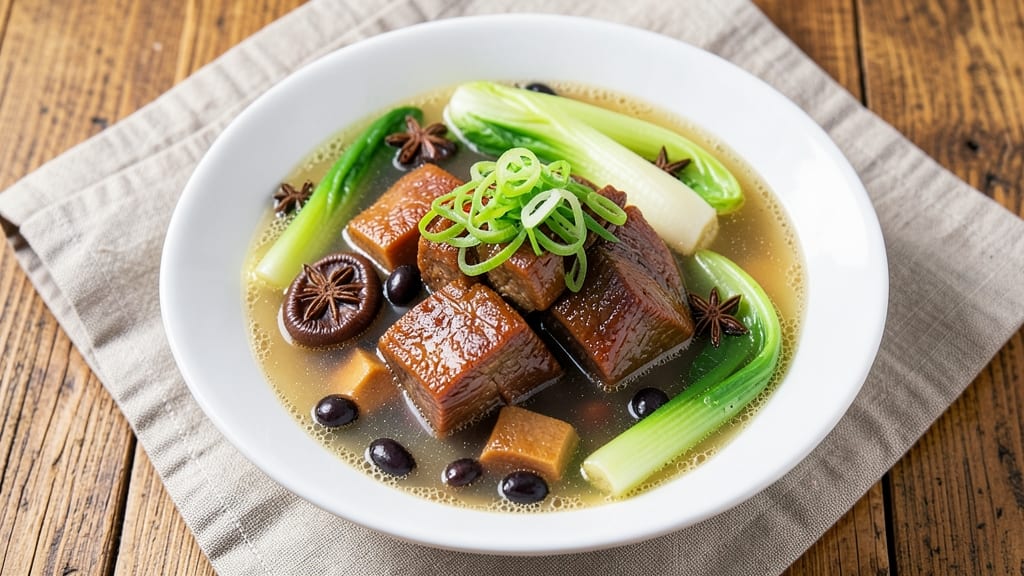
This Din Tai Fung braised beef soup recipe delivers the restaurant's signature tender beef bites and rich, aromatic broth at home. The secret lies in slow-braising beef with star anise, soy, and spices until fork-tender, then finishing with fresh bok choy and shiitake mushrooms for authentic texture.
I've perfected this technique over years of testing—every element matters to capture that signature depth and balance.
What sets this recipe apart is the two-stage cooking process: first braising the beef until it falls apart, then building a layered broth with fermented black beans, rock sugar, and a touch of soy sauce for umami richness.
The result is a soup where each bite delivers tender beef infused with aromatic spices, floating in a velvety broth that's both comforting and deeply flavorful. This is the kind of dish that transforms a simple meal into an experience.
Din Tai Fung's version is legendary for its attention to detail—from the precise spice ratios to the way the broth clings to every ingredient.
Here, we replicate that professional quality with straightforward techniques: a slow simmer for the beef, careful timing for the vegetables, and a final touch of green onions for brightness. The aroma alone will have everyone gathering around the table before the first spoonful.
Perfect for family dinners or special occasions, this soup serves 4-6 and comes together in about 3 hours (mostly hands-off time). The leftovers taste even better the next day as flavors meld further. Let's create this restaurant-quality masterpiece at home.
Ingredients for braised beef soup din tai fung
Twelve essential ingredients transform into Din Tai Fung's legendary braised beef soup at home.
| Ingredient | Amount | Notes |
|---|---|---|
| Beef Chuck Roast 🥩 | 2 lb | Cut into 1.5-inch cubes, trimmed of fat |
| Dried Shiitake Mushrooms 🍄 | ½ oz | Rehydrated in hot water |
| Bok Choy 🥬 | 1 lb | Baby or regular, cut into quarters |
| Green Onions 🧅 | ¼ cup | White and green parts separated |
| Star Anise 🌟 | 4 whole | Lightly crushed for aroma |
| Fermented Black Beans 🫘 | ¼ cup | Rinsed and drained |
| Rock Sugar 🍬 | 2 tbsp | Or substitute light brown sugar |
| Fresh Ginger 🧡 | 2 tbsp | Finely minced, skin removed |
| Light Soy Sauce 🥄 | ½ cup | Kikkoman preferred for balance |
| Shaoxing Wine 🍷 | ¼ cup | Or dry sherry as substitute |
| Sesame Oil 🫒 | 1 tbsp | Toasted, for finishing |
| Cornstarch 🌾 | 1 tbsp | For broth thickening |
| Water 💧 | 8 cups | Filtered preferred for clarity |
| Diamond Crystal Kosher Salt 🧂 | 1 ½ tsp | Adjust to taste |
| White Peppercorns 🌶️ | ½ tsp | Freshly cracked |
The beef selection is critical—chuck roast delivers the signature tenderness when braised properly. Look for cuts with good marbling at Whole Foods or your local butcher shop, where they can trim it precisely. Fermented black beans add umami depth; Asian markets carry them in jars or bags, and they keep for months in the pantry. Shiitake mushrooms should be dried and rehydrated—no substitutes here, as their earthy notes are essential. For ginger, choose fresh over powdered; the bright green skin indicates peak freshness, and it should smell pungent, not musty.
No shiitake mushrooms? Cremini mushrooms work in a pinch, though texture differs. Shaoxing wine unavailable? Dry sherry or mirin provides similar balance, though flavor will shift slightly. The rock sugar can be swapped for light brown sugar, but it won't caramelize as beautifully. For a vegetarian adaptation, replace beef with mushroom stems or seitan cubes, though texture will vary. Bok choy stems should be cut into matchsticks—they add hearty texture while staying tender. The sesame oil is purely for finishing; toasted lightly in a dry pan before adding enhances its nutty aroma.
Beef cubes can be prepped a day ahead and refrigerated in an airtight container. The broth develops deeper flavor when made a day in advance—4-5 days in the fridge or 3 months frozen. For serving, reheat gently on low heat, skimming any congealed fat. The soup improves with each reheating as flavors meld further. Store sesame oil separately and add just before serving to preserve its delicate aroma. Leftovers make excellent lunches; portion into containers with reserved broth for easy reheating.
Why You'll Love This Recipe
- Umami Bomb: That first spoonful of broth hits different. The star anise and shiitake mushrooms create this deep, earthy depth that’s cheffy without trying—no fancy techniques, just letting the flavors marry. And when you add the bok choy at the end? It soaks up all that goodness like a sponge, turning it into the most satisfying bite you’ll eat all week.
- Leftovers That Don’t Suck: Honestly, this soup only gets better the next day. The flavors meld even more, and the beef stays tender—no dry, sad leftovers here. I make a double batch on Sundays, freeze half, and pull it out for lazy nights or when unexpected company drops by. (Yes, even on a Tuesday night, this feels like a treat.)
- Budget Stretch King: Beef chuck roast is affordable, and dried shiitake? A tiny bag goes a long way. I buy the biggest cut of beef I can find, and the slow cooker makes it feel like a restaurant-quality meal without the price tag. Plus, the bok choy and green onions are cheap staples—this recipe is my go-to for feeding the family without breaking the bank.
Step-by-step instructions for braised beef soup Din Tai Fung recipe
Master this iconic soup with rich umami broth and melt-in-your-mouth beef.
Prepare the Beef and Aromatics for Deep Flavor
Cut the 2 lb Beef Chuck Roast into 1.5-inch cubes, trimming excess fat to ensure tender bites without greasiness. In a large pot, combine the beef with 8 cups water, 4 whole Star Anise (lightly crushed), 2 tbsp Fresh Ginger (minced), and 2 tbsp Rock Sugar. The sugar balances the acidity while caramelizing slightly during the braise.
Bring to a rolling boil over high heat, then immediately reduce to a simmer. Skim off any foam that rises to the surface—this prevents cloudiness in your broth. Let it simmer uncovered for 45 minutes, allowing the beef to release its collagen and develop a deep, savory foundation.
Build the Umami Base with Fermented Black Beans and Shiitake
After the initial simmer, add the 0.25 cup Fermented Black Beans (rinsed) and the rehydrated 0.5 oz Dried Shiitake Mushrooms (sliced). These ingredients are the soul of the soup—the black beans add funky depth, while the shiitake contributes earthy umami. Stir gently to incorporate, then return to a gentle simmer for another 30 minutes. The broth should now have a rich, aromatic aroma with visible sediment settling at the bottom.
Here's the thing—don't rush this step. The longer the aromatics steep, the more complex the flavor. If the broth reduces too quickly, add ½ cup hot water to maintain volume while keeping the simmer steady.
Infuse with Wine and Soy for Balance
Stir in the 0.25 cup Shaoxing Wine and 0.5 cup Light Soy Sauce, letting the mixture simmer for 15 minutes. The wine deglazes the pot, capturing any fond left behind, while the soy sauce adds saltiness and color. Taste the broth now—it should be deeply savory but not overly salty. If needed, adjust with the 1.5 tsp Diamond Crystal Kosher Salt (remember, the soy sauce already contributes salt).
Add the 0.25 cup Green Onions (white parts only) and 0.5 tsp White Peppercorns (freshly cracked) to the pot. The white onion parts add subtle sweetness, while the peppercorns provide a gentle heat that lingers. Let everything simmer together for 10 more minutes, allowing the flavors to meld into a cohesive harmony.
Thicken the Broth and Finish with Bok Choy
In a small bowl, whisk together the 1 tbsp Cornstarch with 2 tablespoons cold water to create a slurry. Slowly ladle the broth into the slurry while stirring constantly—this prevents lumps from forming. Return the thickened mixture to the pot and simmer for 5 minutes until the broth reaches your desired consistency. It should coat the back of a spoon but still be fluid enough to spoon.
Add the 1 lb Bok Choy (cut into quarters) and simmer for 3-4 minutes until the greens are vibrant and just tender. The bok choy should retain its crisp texture—overcooking turns it mushy. Remove the pot from heat and stir in the 1 tbsp Sesame Oil (toasted) for a final nutty aroma and glossy sheen.
Rest and Serve with Perfect Texture
Let the soup rest for 10 minutes off the heat. This crucial step allows the flavors to settle and the beef to reabsorb any juices. Before serving, skim off any excess fat that has risen to the surface—this ensures a clean, elegant presentation.
Serve the soup immediately in deep bowls, garnished with the remaining 0.25 cup Green Onions (green parts only) chopped finely. Each spoonful should deliver tender beef that falls apart with a gentle squeeze, a velvety broth that clings to the bowl, and a symphony of umami flavors from the fermented black beans and shiitake. The bok choy adds a fresh contrast, balancing the richness.
Pro Tips For Making Braised Beef Soup Din Tai Fung
- SEAR THE BEEF FIRST: I learned this the hard way—skipping the sear means flavorless broth. Pat the beef chuck dry, then sear it in batches over medium-high heat until deep brown on all sides. That crust locks in juices and builds the foundation for the rich, caramelized depth Din Tai Fung’s version is famous for.
- SOAK MUSHROOMS 20 MINUTES: Dried shiitake mushrooms are the unsung heroes here, but most people rush the soaking. Give them a proper 20-minute soak in hot water (not boiling) before slicing—this guarantees they rehydrate evenly and absorb the beef’s flavor like a sponge. Discard the soaking water; it’s bitter and will muddy your broth.
- LOW AND SLOW IS NON-NEGOTIABLE: After the initial sear and simmer, resist the urge to crank the heat. Cover the pot and maintain a gentle simmer (tiny bubbles, not a rolling boil) for at least 2 hours. I’ve seen people speed this up, and the beef turns out tough as shoe leather. Patience here makes the difference between fork-tender and chewy.
- ADD BOK CHOY LATE: Bok choy wilts faster than you’d think, and adding it too early turns your soup into a sad, limp mess. Wait until the beef is nearly done (about 10 minutes before the end) to toss in the leaves—just a quick wilt in the hot broth. The same goes for green onions: reserve half for garnish and add the rest in the last 5 minutes. Freshness matters.
Make-ahead tips for leftovers
Prep Ahead Essentials
The beef can be prepped 24 hours in advance—cut into 1.5-inch cubes, trimmed of fat, and stored in an airtight container in the fridge. This saves time on cooking day and allows the beef to relax slightly, making it even more tender when braised.
I always do this step first because it’s the most time-consuming part. 💪
Broth Development
For maximum flavor, make the broth 1-2 days ahead and let it sit uncovered in the fridge. The aromatics (star anise, ginger, and fermented black beans) infuse deeper over time, creating a richer base.
Skim off any congealed fat before reheating—this keeps the broth clear and elegant. The longer it rests, the better it tastes.
Vegetable Prep
Cut the bok choy into quarters and separate the green onions (white and green parts) the night before. Store them in separate ziplock bags in the fridge. This keeps everything organized and ready to go when you’re ready to assemble the soup. Trust me, it makes cooking day smoother. ✨
Freezer-Friendly Storage
This soup freezes beautifully for up to 3 months. Let it cool completely, then transfer to freezer-safe containers, leaving 1-inch headspace for expansion. When reheating, thaw overnight in the fridge, then warm gently on the stove—never microwave it directly, as it can break down the texture.
The flavors actually improve after freezing! ❄️
Make-Ahead Serving
For a stress-free dinner, assemble the soup 2 hours ahead and keep it warm in a slow cooker on low heat. The broth will continue to meld, and the beef will stay tender.
Just reheat gently before serving—no need to worry about timing on the big day. Perfect for hosting or busy weeknights.
Garnish Prep
Toast the sesame oil and chop the green onion tops the morning of serving. Freshly toasted sesame oil adds a nutty aroma that’s best enjoyed immediately, and the bright green onions provide a pop of color and freshness. These final touches elevate the dish from homemade to restaurant-quality. 🌟
Nutrition facts
Frequently asked questions
Why does Din Tai Fung's braised beef soup have such a rich flavor?
The secret lies in the combination of fermented black beans, star anise, and shiitake mushrooms, which create deep umami layers. The slow braising process (over 2 hours) breaks down collagen in the beef, while the Shaoxing wine and soy sauce add complexity. The rock sugar caramelizes slightly, balancing acidity for a velvety finish.
Can I substitute beef chuck roast with another cut?
While chuck roast is ideal for its marbling and tenderness, brisket or short ribs work in a pinch. Avoid lean cuts like sirloin—they won't braise as tenderly. For best results, trim excess fat and cut into 1.5-inch cubes to ensure even cooking. The texture will differ slightly but still deliver great flavor.
How do I prevent the broth from becoming too salty?
Taste the broth after adding soy sauce and adjust gradually with kosher salt. Start with 1 tsp and add ¼ tsp increments—soy sauce already contains salt. For extra insurance, use low-sodium soy sauce and compensate with a pinch of white pepper for depth. The fermented black beans also contribute saltiness, so taste before finalizing.
What's the best way to reheat leftovers without making the beef dry?
Reheat gently on the stove over low heat, adding 2-3 tbsp water to maintain moisture. Avoid microwaving—it breaks down the broth's texture. For extra richness, stir in 1 tsp toasted sesame oil at the end. The soup actually improves after 1-2 days as flavors meld further. Store in an airtight container with broth to keep it tender.