
Soups & Stews
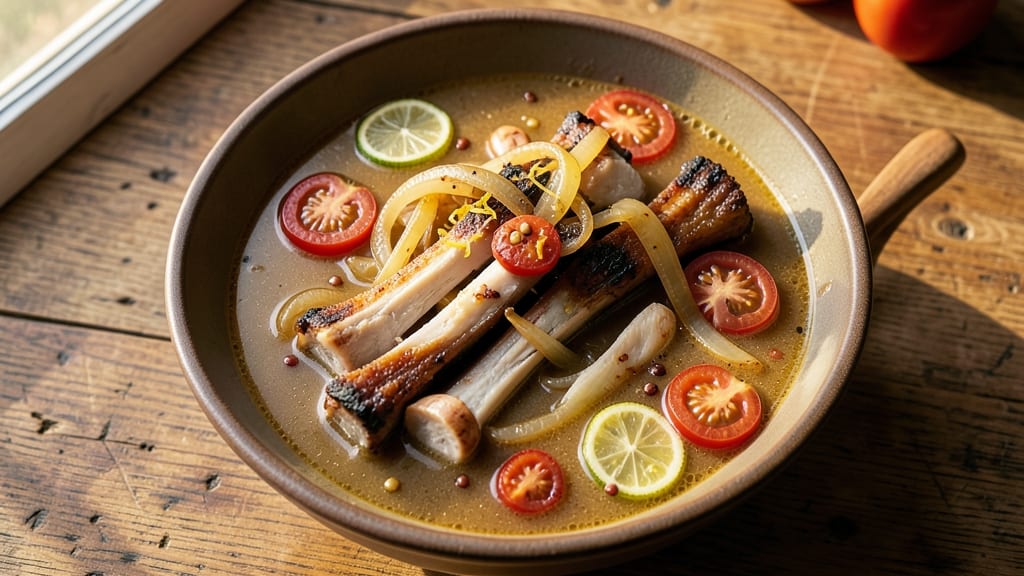
This beef bulalo bone marrow soup recipe delivers the ultimate Filipino comfort food experience—where tender beef, gelatinous marrow, and aromatic broth create a symphony of umami richness. 🌟 The secret lies in slow-simmered beef bones and marrow that transform into a luxurious, velvety broth, while traditional vegetables add fresh contrast.
What makes this dish special is the marriage of earthy flavors and tender textures, all achieved through patient cooking and simple techniques.
The foundation of authentic bulalo begins with beef shank and marrow bones, which release deep, savory flavors when simmered for hours. Fresh vegetables like cabbage, string beans, and potatoes absorb the rich broth, creating a hearty, satisfying meal that's both nourishing and indulgent.
The marrow, when cooked just right, becomes tender and gelatinous—a true luxury in every spoonful.
By the end, you'll have a pot of deeply flavorful soup with melt-in-your-mouth beef, silky marrow, and vibrant vegetables swimming in a thick, aromatic broth. This dish is perfect for family gatherings or cozy weeknight dinners, offering a taste of Filipino home cooking that's both comforting and impressive.
Ready to create a bowl of pure umami delight?
The beauty of bulalo lies in its simplicity and depth of flavor—no fancy techniques required, just time and patience. Whether you're serving it as a main dish or pairing it with steamed rice, this recipe promises a bowl of warmth that's hard to resist.
Let's bring the rich traditions of Filipino cuisine to your kitchen.
Ingredients for beef bulalo bone marrow soup
Authentic Filipino flavors start with these hearty ingredients—rich bones, fresh veggies, and aromatic spices.
| Ingredient | Amount | Notes |
|---|---|---|
| Beef Shank Bones 🥩 | 4 lb | With marrow, cut into chunks |
| Beef Marrow Bones 🦴 | 2 lb | Split lengthwise for even cooking |
| Yellow Onions 🧅 | 3 whole | Medium size, sliced |
| Garlic Cloves 🧄 | 8 cloves | Minced for aromatic base |
| Fresh Ginger 🌿 | 2 tbsp | Finely grated, peeled |
| Tomatoes 🍅 | 4 whole | Medium ripe, quartered |
| Bay Leaves 🍃 | 2 whole | Dried, for deep flavor |
| Cabbage 🥬 | 1 lb | Green, cut into wedges |
| String Beans 🌱 | 1 lb | Trimmed, cut into 2-inch pieces |
| Potatoes 🥔 | 2 lb | Russet, peeled, cubed |
| Salt 🧂 | 2 tsp | Kosher or sea salt |
| Black Peppercorns 🌶️ | 1 tsp | Whole, lightly crushed |
| Fish Sauce 🐟 | 2 tbsp | For umami depth |
| Soy Sauce 🍶 | 2 tbsp | For rich color and flavor |
| Calamansi or Lemon Juice 🍋 | 2 tbsp | Freshly squeezed, for brightness |
The beef bones are non-negotiable—look for marrow bones at Asian markets or ask your butcher to split them for you. Costco or Whole Foods often carry pre-cut beef shanks, but if you're buying whole, aim for 3-4 lbs total. Fresh ginger loses potency fast, so grab it at the market or freeze it whole until ready to use. For tomatoes, San Marzano if available—they're sweeter and hold up better during long cooking. The cabbage should be crisp and green; no wilted leaves here. String beans? Trim the ends and cut them into even pieces so they cook uniformly.
No fish sauce? Soy sauce plus a dash of Worcestershire gets you close, though the umami won't be identical. Short on soy sauce? Coconut aminos work in a pinch. The potatoes can be swapped for sweet potatoes if you prefer, but Russets hold their shape best. Fresh ginger too spicy? Reduce to 1 tbsp and add 1 tsp sugar to balance. For the cabbage, if you only have red cabbage, it'll still work but the color will be different. The marrow bones are the star—if they're too hard to find, beef knuckle bones can substitute, though they won't be as tender.
This soup tastes even better the next day—plan ahead and make a double batch. Store in the fridge for up to 5 days in an airtight container. For freezing, portion into containers with 1 inch headspace—it expands as it cools. The broth thickens as it sits, so add a splash of water when reheating. Leftovers? Perfect for lunches—just warm through and serve with steamed rice.
Why You'll Love This Recipe
- Minimal Chopping Required: I swear by this—just dice onions and mince garlic, then toss the bones in. No fancy prep, no stress. The marrow bones practically melt themselves into richness while you sip coffee.
- Rich Without the Guilt: That marrow turns the broth into liquid gold—creamy, deep, and unapologetically flavorful. Honestly, it’s the kind of soup where you’ll finish the pot and still want more, but somehow it feels lighter than it tastes.
- Leftovers That Taste Better: Between us, this soup improves overnight. The bones infuse deeper, the marrow solidifies into perfect little dollops, and reheating? Just a splash of water, 10 minutes, and you’ve got restaurant-quality seconds.
- Sunday Simmer, Weeknight Win: Start it slow on Sunday, let it bubble away while you handle errands or binge a show. By dinner, you’ve got a pot of soul-warming goodness that feeds a crowd—or becomes your lazy night’s savior when you’re too tired to cook.
Step-by-step instructions for beef bulalo bone marrow soup
Here's how to create a deeply flavorful bone marrow soup with rich umami layers and tender vegetables.
🔥 Step 1: Sear the Bones for Maximum Flavor
Heat a large Dutch oven over medium-high heat until very hot. Working in batches, sear the 4 lb beef shank bones and 2 lb beef marrow bones until deeply browned on all sides—about 3-4 minutes per side. This caramelization builds the soup's deep, meaty flavor foundation.
Here's the thing—don't rush this step. You want those bones to develop a dark crust. Once all bones are seared, transfer them to a plate. I like to leave the rendered fat in the pot—it's packed with flavor that will infuse into the soup.
🍳 Step 2: Build the Aromatic Base
In the same Dutch oven, add 3 whole yellow onions (sliced), 8 cloves garlic cloves (minced), and 2 tbsp fresh ginger (finely grated). Cook for 5-6 minutes until the onions are translucent and the garlic is fragrant but not browned.
Add 4 whole tomatoes (quartered) and 2 whole bay leaves to the pot. Pour in enough water to cover everything by about 2 inches—this helps extract all those wonderful flavors from the bones. Bring to a boil, then reduce heat to medium-low and let it simmer for 30 minutes.
🥘 Step 3: Simmer the Bones and Vegetables
Return the seared bones to the pot and add 2 lb potatoes (cubed), 1 lb cabbage (wedges), and 1 lb string beans (trimmed and cut into 2-inch pieces). The vegetables should be mostly submerged—add a little more water if needed.
Season with 2 tsp salt and 1 tsp black peppercorns (lightly crushed). Bring back to a gentle simmer and cook uncovered for 1.5-2 hours until the meat is fork-tender and falling off the bones. You'll know it's ready when the marrow bones split open easily and release their rich, velvety marrow.
🔪 Step 4: Finish with Umami and Brightness
Once the meat is tender, carefully remove the bones and let them cool slightly. Scoop out the marrow from the marrow bones using a spoon and set aside. Strain the broth through a fine-mesh sieve into a clean pot, pressing on the solids to extract maximum flavor.
Return the strained broth to the pot and stir in 2 tbsp fish sauce, 2 tbsp soy sauce, and 2 tbsp calamansi or lemon juice. The acidity from the citrus brightens the rich, umami flavors. Add the cooked vegetables back to the pot and gently reheat for 2-3 minutes.
🍽️ Step 5: Serve with Marrow Luxury
Divide the soup among bowls, ladling in the vegetables and broth. Top each serving with the marrow from the bones and a few spoonfuls of the broth. The marrow should be creamy and rich—this is the star of the dish!
Serve immediately with steamed rice on the side. The contrast of the tender vegetables, rich broth, and creamy marrow makes every spoonful a symphony of textures and flavors. Don't forget to save the bones for another batch—their flavor only gets better with each use!
Pro Tips For Making Beef Bulalo Bone Marrow Soup
- CRACK THE MARROW FIRST: I learned this the hard way—skipping this step means you’ll be scraping burnt marrow off your pot later. Use a sharp cleaver to split the marrow bones lengthwise before adding them to the broth, so the marrow melts into the soup naturally instead of clumping.
- BLISTER ONIONS, DON’T CHAR: High heat, but watch the onions. They should turn deep golden and caramelized, not blackened. If they’re sticking, add a splash of water and scrape the bottom—this builds flavor without burning. (Yes, even if you’re impatient like me.)
- SIMMER LOW OR LOSE FLAVOR: After the initial boil, drop the heat to a gentle simmer—think tiny bubbles, not rolling. Too much heat turns the broth cloudy and makes the marrow separate instead of emulsifying. Trust me, the pot won’t explode if you turn it down.
- SAVE TIME WITH GINGER JUICE: Instead of grating fresh ginger (which adds prep time), juice it through a citrus reamer or fine strainer. A tablespoon of concentrated ginger juice packs the same punch without the fibrous texture—just don’t skip the zest if you’re feeling fancy.
Pro cooking tips for great beef bulalo bone marrow soup
Bone Prep Secrets
Split your marrow bones lengthwise with a sharp cleaver before cooking—this exposes more surface area for flavor extraction and ensures even cooking. I like to ask my butcher to do this in advance, or use a heavy-duty meat mallet if you're prepping at home.
Never skip this step; it's what transforms tough marrow into silky, luxurious bites. 🦴
Slow Simmer Control
Maintain a gentle simmer at 190-200°F throughout cooking—any hotter and the broth will scorch. I use a meat thermometer clipped to the pot to monitor temperature. If bubbles form too vigorously, reduce heat immediately. The key is patience: 2-3 hours of slow cooking develops that signature depth of flavor.
Marrow Perfection
Test marrow doneness by gently pressing a bone with tongs—it should split open easily, releasing creamy white marrow. If it's still firm after 2 hours, add ½ cup hot water and continue cooking.
Overcooked marrow turns greasy; undercooked stays rubbery. Aim for that perfect jelly-like texture that melts in your mouth.
Broth Clarity Hacks
For a clearer broth, skim off any foam that forms during the first 30 minutes of simmering with a fine-mesh skimmer. I also add 1 tbsp cornstarch mixed with 2 tbsp cold water to the strained broth just before serving—it gently thickens without altering flavor.
Never boil the broth after straining, or it'll turn cloudy again.
Vegetable Timing
Add potatoes and string beans 45 minutes before the meat is done, and cabbage in the final 20 minutes. This ensures they cook just enough to soften but retain their structure.
Overcooked vegetables turn mushy and lose their fresh contrast against the rich broth. I like my cabbage still slightly crisp for texture.
Double Broth Boost
Save your bones after serving—they're packed with flavor! Store them in the freezer for up to 3 months, then use them to make a second batch of broth. The second time around, simmer them with 1 tbsp soy sauce and 1 tbsp fish sauce for even deeper umami.
This is my secret for getting maximum value from every bone. 💡
Nutrition facts
Frequently asked questions
Can I substitute beef marrow bones if I can't find them?
Yes! Use beef knuckle bones or beef shank bones with marrow—just split them lengthwise before cooking to expose more surface area. For extra richness, add 1 cup bone marrow (from other cuts) to the pot during the last 30 minutes of simmering. The flavor won't be identical, but it'll still add depth.
How do I know when the marrow is perfectly cooked?
Press a marrow bone gently with tongs—it's done when it splits open easily, releasing creamy white marrow. If it's still firm after 2 hours, add ½ cup hot water and continue cooking. Overcooked marrow turns greasy; undercooked stays rubbery. Aim for that jelly-like texture that melts in your mouth.
Can I make this soup in a slow cooker?
Sear the bones first, then transfer everything to a 6-quart slow cooker and cook on low for 8-10 hours or high for 5-6 hours. The slow cooker's gentle heat ensures even cooking and maximum flavor extraction. Just add the vegetables in the last 1-2 hours to avoid overcooking.
What if my broth turns cloudy?
Cloudiness usually means the broth boiled after straining. To fix it, skim off any foam during the first 30 minutes of simmering, and avoid boiling after straining. For a clearer broth, add 1 tbsp cornstarch mixed with 2 tbsp cold water just before serving—it gently thickens without altering flavor.
How long can I store leftovers?
Store in an airtight container in the fridge for up to 5 days or freeze for 3 months. The broth thickens as it cools, so add a splash of water when reheating. Leftovers taste even better the next day—the flavors meld beautifully!