
Soups & Stews
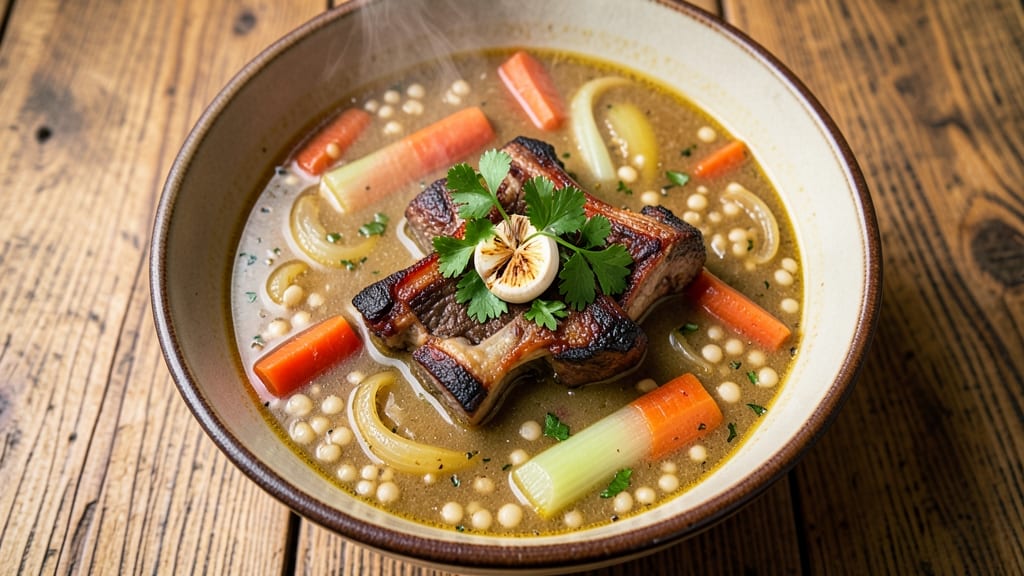
This beef barley soup recipe with soup bones transforms tough cuts into a deeply flavorful, one-pot masterpiece that tastes like it simmered all day. The secret lies in rendering marrow-rich bones for a naturally rich broth, while barley absorbs all the savory depth—no bouillon cubes or shortcuts needed.
What starts as a simple pot of ingredients becomes a velvety, hearty soup with layers of umami and tender beef that practically melts in your mouth.
The process begins with slow-roasting soup bones to unlock their collagen and marrow, creating a broth so rich it doesn’t need heavy cream. Barley, often overlooked, adds a satisfying chew and earthy sweetness that balances the beef’s richness, while aromatics like carrots and celery build a flavor foundation.
Skimming fat and adjusting seasoning as you go ensures a clean, well-balanced broth that’s truly restaurant-quality.
By the time you’re done, you’ll have a steaming pot of soup with tender beef chunks, perfectly cooked barley, and a broth so deeply flavorful it coats every spoonful. The aroma alone—smoky, savory, and slightly sweet—will have everyone gathering around your table.
This isn’t just soup; it’s comfort in a bowl, made better with the patience of slow cooking.
Serve with crusty bread to soak up every last drop, or pair it with a simple green salad for balance. The leftovers? Even better the next day as flavors meld further. This is the kind of recipe that becomes a weekly staple—once you taste the difference, store-bought broth won’t compare.
Ingredients for beef barley soup recipe with soup bones
Pantry staples meet bone-braised richness—just 14 ingredients for a soup that tastes like a hug.
| Ingredient | Amount | Notes |
|---|---|---|
| Beef Soup Bones 🦴 | 3 lb | Marrow-rich, knuckle or neck bones preferred |
| Yellow Onion 🧅 | 2 whole | Medium size, chopped |
| Carrots 🥕 | 4 whole | Medium size, peeled and chopped |
| Celery Stalks 🧄 | 4 whole | Fresh, chopped |
| Garlic Cloves 🧄 | 6 cloves | Fresh, minced |
| Pearl Barley 🌾 | 1 cup | Uncooked, rinsed well |
| Tomato Paste 🍅 | ½ cup | Smooth, no sugar added |
| Dried Thyme 🌿 | 1 tbsp | Or 1 tbsp fresh thyme |
| Bay Leaves 🌿 | 2 whole | Fresh if possible |
| Black Peppercorns 🌶️ | 1 tsp | Freshly cracked |
| Salt 🧂 | 2 tsp | Kosher or sea salt |
| Beef Chunks 🥩 | 2 lb | Chuck roast or stew meat |
| Water 💧 | 8 cups | Enough to cover ingredients |
| Olive Oil 🫒 | 2 tbsp | For roasting bones |
The soup bones are non-negotiable here. Look for marrow-rich knuckle or neck bones at your butcher counter—they’re worth the extra effort. Whole Foods or local markets often carry them, but regular grocery stores do too if you ask. If you can’t find them, beef shank bones are a solid backup. The key is roasting them first to render fat and unlock collagen—don’t skip this step. For the barley, Bob’s Red Mill is my go-to brand, but any pearl barley works. Just make sure it’s rinsed thoroughly to remove any dust or debris that could make the soup cloudy.
No marrow bones? Beef shank or even chicken thighs can work in a pinch, though the broth won’t be as rich. Fresh thyme is ideal, but dried at one-third the amount gets you close. The tomato paste can be swapped for 1 cup crushed tomatoes if you prefer. For the beef chunks, chuck roast is perfect—it stays tender but holds up to long cooking. If you’re using pre-chopped beef, look for 2-inch cubes at the meat counter. The carrots and celery can be baby versions if that’s what’s in your fridge, but whole stalks add better flavor when roasted with the bones.
This soup tastes even better the next day—4-5 days in the fridge or 6 months frozen. For freezing, portion into containers with room at the top—broth expands when frozen. The barley softens further when reheated, so add a splash of water if it’s too thick. Store the bones separately if you want to make more later—they’re like flavor gold. And if you’ve got leftover broth? Use it for risotto or pasta—it’s too good to waste.
Why You'll Love This Recipe
- Soup Bones Shortcut: I swear by the soup bones here—just toss them in cold water, simmer, and walk away. No pre-boiling, no extra steps, just pure, rich broth magic while you handle the rest.
- Garlic-Carrot Depth Bomb: That first bite? The crisp-tender carrots and celery with the garlic-infused broth—it’s the kind of flavor that makes you pause mid-sip. Honestly, the bones alone give it a depth store-bought broth can’t touch.
- Meal Prep MVP: Make a double batch on Sunday, and you’ve got lunch covered all week. The barley thickens beautifully when reheated, and the flavors only get better as it sits—perfect for busy mornings.
- Budget-Busting Comfort: Soup bones are my wallet’s best friend—cheap, packed with flavor, and you use every last bit. Leftovers? Even better cold the next day, with the barley holding its shape like a dream.
Step-by-step instructions for beef barley soup with soup bones
Here's how to transform simple ingredients into a deeply flavorful soup that simmers with rich bone-braised depth.
Roast the Beef Soup Bones for Maximum Flavor
Preheat your oven to 425°F and line a baking sheet with aluminum foil. Place the 3 lb beef soup bones on the sheet and rub them generously with 2 tbsp olive oil. Roast for 30-40 minutes until the bones are deeply browned and smell incredible—this step unlocks the most flavor from the marrow.
Here's the thing—roasting caramelizes the natural sugars in the bones, creating a rich, nutty aroma that infuses the entire soup. Turn them occasionally so they brown evenly. You'll know they're ready when they release that irresistible bone broth scent. Let them cool slightly before transferring to your pot.
Sauté the Aromatic Vegetables
In a large Dutch oven or heavy pot with a lid, add the roasted bones along with the 2 whole yellow onion, 4 whole carrots, and 4 whole celery stalks. Cook over medium-high heat for 5-7 minutes, stirring occasionally, until the vegetables begin to soften and the onions turn translucent.
This initial sauté builds the soup's flavor foundation. The vegetables release their natural juices, which will meld with the roasted bones to create a complex broth. Don't rush this step—you want the vegetables to develop some color and texture before adding liquid. I like to press down gently on the vegetables with a wooden spoon to help break them down slightly.
Add Liquids and Simmer the Bones
Pour in the 8 cups water and bring the mixture to a boil. Once boiling, reduce heat to low and add the 2 whole bay leaves, 1 tbsp dried thyme, 1 tsp black peppercorns, and 2 tsp salt. Cover and simmer gently for 1.5 hours, skimming any foam that rises to the surface.
This initial simmer extracts the gelatin and minerals from the bones, creating a rich, flavorful broth. You'll notice the liquid will turn a beautiful amber color and develop a deep, savory aroma. I check the pot every 20 minutes to ensure it's maintaining a gentle simmer—never a rolling boil, as that can make the broth cloudy.
Add Meat and Barley for Hearty Texture
After the initial simmer, remove the bones and set them aside (you can save them for another use or discard). Add the 2 lb beef chunks to the pot and cook for 20-25 minutes until they begin to brown slightly. Stir in the 1 cup pearl barley and 0.5 cup tomato paste, mixing well to coat the barley in the flavorful broth.
The barley will absorb the rich broth as it cooks, creating that satisfying bite we love in beef barley soup. The tomato paste adds a subtle sweetness that balances the savory flavors. Here's where it gets fun—taste the broth now and adjust the seasoning if needed. You might want to add a bit more salt or a splash of water if the soup seems too thick at this stage.
Simmer to Perfection and Rest
Return the pot to a gentle simmer and cook uncovered for 45-60 minutes, stirring occasionally, until the barley is tender and the beef is fork-tender. The soup should have a thick, hearty consistency with the barley holding its shape but being easily mashed with a fork.
When the soup reaches this stage, it will have that perfect balance of rich broth and tender meat. Let it rest off the heat for 10 minutes before serving. This resting period allows all the flavors to meld together and the barley to finish absorbing the broth. Skim off any excess fat that rises to the surface before serving, and you'll have a soup that's deeply satisfying in every spoonful.
Pro Tips For Making Beef Barley Soup Recipe With Soup Bones
- Brown the Bones First: Toss those soup bones in a screaming-hot pot for 5-7 minutes until they’re deep mahogany, not just pink. I learned this the hard way—skipping the browning means a soup that tastes like broth, not beef. The Maillard reaction here is your flavor foundation.
- Chop Veggies Evenly: Cut onions, carrots, and celery into roughly ½-inch pieces—no tiny dice, no giant chunks. Uneven sizes mean some veggies turn to mush while others stay crunchy. (Yes, even if you’re impatient like me.) A quick knife check before adding saves you from biting into a rock later.
- Simmer, Don’t Boil: Once everything’s in the pot, keep the heat low enough that bubbles pop gently, not roar. Boiling scalds the barley and makes the broth cloudy. I used to rush this, and the soup always ended up thin and sad—now I set a timer for 30 minutes of quiet simmering first.
- Toast the Barley: Dry-toast the barley in a separate pan for 2-3 minutes before adding it to the soup. It thickens the broth and adds a nutty depth. (Skip this, and you’ll just have mushy barley floating in water.) Works for pearl barley or quick-cooking varieties—just don’t walk away.
Creative variations of this dish
Classic Barley Swaps
If you can't find pearl barley, try wheat berries for a nuttier flavor or farro for a chewier texture. Both cook in about the same time as barley but add a different visual appeal.
For a gluten-free option, quinoa works beautifully—just reduce the cooking time to 15-20 minutes and use a 1:2 quinoa-to-broth ratio. 🌾
Vegetable Variations
Swap out the carrots and celery for sweet potatoes and leeks—roast them with the bones for a naturally sweet, earthy depth. Or try mushrooms (like cremini or shiitake) sautéed with the onions for an umami boost.
I also love adding fennel for a subtle anise-like note that pairs perfectly with beef.
Protein Alternatives
For a lighter option, replace the beef chunks with chicken thighs—they stay juicy while absorbing the broth's rich flavors. Or go vegetarian with mushroom stems (from whole mushrooms) or lentils (add them with the barley).
If you want to keep beef but add variety, try brisket or short ribs for a different texture and deeper flavor.
Global Twists
For an Italian touch, stir in 1 tbsp tomato paste and add sun-dried tomatoes at the end. A French-inspired version swaps barley for wild rice and adds a splash of white wine when sautéing the vegetables.
For a smoky kick, add 1 tsp smoked paprika with the spices or a chipotle pepper in adobo for heat.
Seasonal Adjustments
In summer, add zucchini or corn for freshness, while winter calls for rutabaga or turnips roasted with the bones. For spring, try asparagus or peas—add them in the last 10 minutes of cooking.
I also love a harvest version with butternut squash and apples for natural sweetness that balances the savory broth.
Dietary Customizations
For a low-carb version, omit the barley and use cauliflower rice or shirataki noodles instead. If you're watching sodium, reduce the salt to 1 tsp and use low-sodium beef broth if needed.
For a spicier kick, add ½ tsp cayenne or 1 tsp hot sauce at the end. The possibilities are endless—adjust to your taste! 🌶️
Nutrition facts
Frequently asked questions
Why do I need to roast the soup bones before simmering?
Roasting the bones unlocks maximum flavor by caramelizing their natural sugars and rendering fat, which creates a deeper, more complex broth. The process also helps break down collagen, resulting in a richer, more velvety texture. Skipping this step means missing out on that restaurant-quality depth.
Can I use regular beef bones instead of soup bones?
You can try, but regular bones won't provide the same rich, gelatinous broth. Soup bones (especially marrow-rich knuckle or neck bones) contain more collagen and fat that melts into the liquid during simmering. For best results, ask your butcher for soup bones—if unavailable, beef shanks are a decent alternative.
How do I know when the barley is cooked properly?
The barley should be tender but still hold its shape—think al dente pasta. Press a grain between your fingers; it should be soft but not mushy. If it's still firm after 45-60 minutes of simmering, add ½ cup hot water and cook another 10 minutes. Overcooked barley turns to mush and makes the soup gluey.
What if my soup tastes too salty?
If the broth is over-salted, add 1-2 cups cold water to dilute it, then taste again. For a more natural fix, stir in ½ cup unsalted tomato paste or 1 cup diced cucumber—both add freshness that balances salt. Never add more liquid without tasting first, as the soup may still need seasoning.
Can I make this soup in a slow cooker?
Roast the bones as directed, then transfer everything (except barley) to your slow cooker. Cook on low for 8-10 hours or high for 5-6 hours. Add barley and beef chunks during the last 1 hour of cooking. The slow cooker method is perfect for hands-off flavor development—just