
Soups & Stews
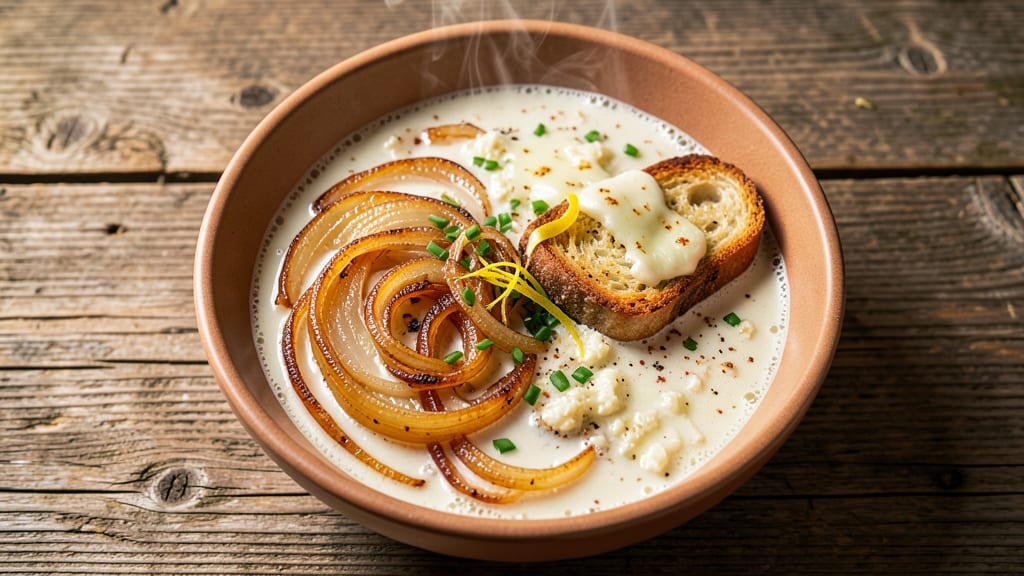
This Bavarian onion soup recipe transforms humble onions into golden, caramelized layers that form the heart of a dish as comforting as it is elegant. The secret lies in slow-cooking onions until they melt into a sweet, velvety base—a process that takes patience but yields restaurant-quality results.
I've perfected this technique over years, balancing rich beef broth with just enough white wine to brighten the depth without overpowering the onions' natural sweetness.
The crowning glory comes when crispy bread slices, generously topped with melted Gruyère, toast directly in the simmering broth. This isn't just soup—it's an experience that combines French fondue traditions with German heartiness, creating a dish that feels both sophisticated and deeply satisfying.
The Gruyère develops a golden crust while staying creamy inside, adding a luxurious texture that makes every spoonful irresistible.
What sets this recipe apart is its versatility—whether you use a classic beef broth or swap in dark beer for a malty twist, the caramelized onions remain the star.
The dish serves as both a starter and a main course, warming up cold evenings or impressing dinner guests with minimal effort. The aroma alone will have everyone gathering around the table, anticipation building with every slow, sweet caramelization.
For those who love tradition, this is the soup you'll find in Bavarian beer halls, where it's served in deep bowls with crusty bread. But don't let its rustic roots fool you—this version elevates the classic with a touch of finesse, proving that comfort food can be elegant too.
Ready to create a dish that tastes like home, but with the confidence of a professional? Let's begin.
Ingredients for bavarian onion soup
Four pounds of onions, a splash of wine, and Gruyère that melts like a dream—this is comfort food at its finest.
| Ingredient | Amount | Notes |
|---|---|---|
| Yellow Onions 🧅 | 4 lb | Yellow or sweet onions, thinly sliced |
| Unsalted Butter 🧈 | ½ cup | Cold, cubed for even melting |
| All-Purpose Flour 🌾 | ¼ cup | For roux, use all-purpose flour |
| Beef Broth 💧 | 6 cups | Homemade or high-quality store-bought |
| Dry White Wine 🍷 | ½ cup | Sauvignon Blanc or Pinot Grigio |
| Gruyère Cheese 🧀 | 1 ½ cups | Freshly grated, aged 12+ months |
| Baguette 🍞 | 1 whole | Crusty, sliced into 1-inch pieces |
| Olive Oil 🫒 | 2 tbsp | For bread toasting |
| Salt 🧂 | 1 ½ tsp | Kosher or sea salt |
| Black Pepper 🌶️ | ½ tsp | Freshly cracked |
| Fresh Thyme 🌿 | ¼ cup | Chopped, stems removed |
| Dark Beer 🍺 | ½ cup | Optional, for malty depth |
The onions are non-negotiable here. Yellow onions give the best caramelization, but sweet onions work too—they'll just be sweeter. I grab the big 4-pound bags from Whole Foods or the produce section at Kroger, but any grocery store has them. Thinly slice them—about 1/8-inch thick—and get ready for the slow cook. The butter should be cold when you start, or you'll get a greasy mess instead of a golden fond. If you're feeling fancy, use European-style unsalted butter like Plugrá or President—it's worth it for this dish.
No white wine? Dry vermouth works too, or even apple juice in a pinch. The Gruyère needs to be fresh—pre-shredded loses its melt, so grab a wedge and grate it yourself. Short on time? Comté or Emmental are good substitutes, though they won't be as creamy. The beer swap is my favorite trick—a dark lager or stout adds a malty depth that pairs perfectly with the caramelized onions. As for the bread, baguette is ideal, but a good sourdough works too. Just make sure it's crusty—you want that bread to toast up crispy in the broth.
This soup tastes even better the next day, so make extra. Store the broth separately in the fridge for 5 days, and keep the bread slices wrapped in a paper towel—they stay crispy for 2 days. To reheat, just warm the broth gently and toast the bread fresh. The Gruyère? Grate it fresh before serving—it melts best when it's at room temperature. And if you're making this ahead, freeze the broth without the bread for up to 3 months. Just thaw and toast the bread fresh when you're ready to serve.
Why You'll Love This Recipe
- One-Pot Magic: I swear by this recipe—just onions, butter, and flour caramelizing in one pot while you sip wine. No chopping boards to clean, no extra dishes, just pure, golden simplicity.
- Wine-Infused Depth: That splash of dry white wine? It’s not just fancy—it cuts through the sweetness of the onions and adds a bright, almost floral note. Honestly, it’s the secret weapon that makes this soup taste like a restaurant dish.
- Crowd-Pleaser Flex: Serve it as a starter for dinner parties or a hearty lunch on a chilly day. The rich broth and crispy onions make it feel special, but it’s so easy I’ve even made it for picky eaters (yes, they ate it).
- Budget-Friendly Luxury: A single onion and a stick of butter stretch far, especially with broth and wine. Leftovers reheat beautifully—just add a splash of water and a pat of butter. My wallet (and my freezer) thank me every time.
Step-by-step instructions for Bavarian onion soup
Here's how to transform simple ingredients into a rich, caramelized masterpiece with perfect Gruyère crowns.
Caramelize the Onions Slowly
Heat a large Dutch oven over medium-low heat and add the 0.5 cup unsalted butter. Let it melt completely before adding the 4 lb yellow onions, sliced into ¼-inch thick rings. I like to use a mandoline for even slices, but a sharp knife works too—just be consistent. Spread the onions in an even layer so they cook without steaming.
Cook for 45-50 minutes, stirring occasionally, until the onions turn a deep golden brown color. This is where patience pays off—don't rush it. You want them to develop that sweet, jammy texture that's the soul of Bavarian onion soup. If they start to stick, add a splash of 0.5 cup dry white wine or 0.5 cup dark beer to deglaze and keep them moving. The onions are done when they're almost dry and have lost their raw onion flavor completely.
Build the Roux and Deglaze
Once the onions are caramelized, reduce the heat to medium and sprinkle in the 0.25 cup all-purpose flour. Stir constantly for 2-3 minutes until the flour turns a light golden color and the mixture smells nutty. This creates a roux that will thicken your soup beautifully. If the roux starts to darken too quickly, lower the heat slightly—burnt roux tastes bitter.
Pour in the 0.5 cup dry white wine (or remaining beer) and scrape up all those delicious browned bits from the bottom of the pot. Let it simmer for 2 minutes until the alcohol cooks off completely. Then gradually whisk in the 6 cups beef broth, making sure to scrape up any stuck-on bits. Season with 1.5 tsp salt and 0.5 tsp black pepper, then stir in the 0.25 cup fresh thyme. Bring the soup to a gentle simmer and let it cook uncovered for 15 minutes to develop the flavors.
Prepare the Gruyère-Crusted Bread
While the soup simmers, preheat your broiler to high. Cut the 1 whole baguette into 1-inch thick slices. Brush both sides generously with 2 tbsp olive oil—this helps create a perfect golden crust. Place the slices on a baking sheet and broil for 3-4 minutes per side until they're crispy and golden brown. Watch them closely to prevent burning.
Remove the bread from the oven and immediately sprinkle 1.5 cups gruyère cheese evenly over the top. Return to the broiler for 1-2 minutes just until the cheese begins to melt and bubble. The bread should be hot and the cheese should be gooey—this is what makes the soup experience special. Keep the broiled bread warm while you finish the soup.
Finish and Serve
Taste the soup and adjust seasoning if needed—you might want to add a pinch more salt or a splash of wine to balance the flavors. If the soup is too thick, whisk in a little more beef broth. If it's too thin, let it simmer uncovered for another 5-10 minutes to reduce. The perfect consistency should coat the back of a spoon but still be light enough to ladle easily.
To serve, ladle the hot soup into deep bowls, placing 2-3 slices of the Gruyère-topped bread on top of each serving. The cheese should melt slightly from the heat of the soup, creating a rich, creamy crown. Serve immediately while the bread is still crispy and the cheese is gooey—this is when Bavarian onion soup shines brightest. The combination of sweet caramelized onions, rich broth, and crispy cheesy bread is pure comfort in a bowl.
Pro Tips For Making Bavarian Onion Soup
- Sweat the Onions Slowly: I learned this the hard way—rushing the onions with high heat turns them bitter. Use medium-low heat and let them cook for at least 30 minutes, stirring occasionally, until they’re deep golden and jammy. That’s when the flavor really develops.
- Use Cold Butter for Roux: Plopping warm butter into the pan for the roux makes it splatter like a grease fire. Take the butter straight from the fridge, cut it into chunks, and let it melt slowly over low heat—this keeps the roux smooth and prevents lumps.
- Deglaze with Wine Early: Don’t wait until the onions are fully cooked to add the white wine—it’ll just burn off. Pour it in after 15-20 minutes of sweating, let it bubble for 2-3 minutes, then reduce before adding broth. That’s how you get the full flavor, not just alcohol fumes.
- Skip the Pre-Cut Onions: Buying pre-chopped onions is a shortcut that backfires—they oxidize fast and turn mushy. Halve the onions, peel, and slice them yourself just before cooking. Freshly cut onions caramelize better and keep their texture.
Wine and beer pairings for this bavarian onion soup
Classic White Wine Pairings
A crisp Sauvignon Blanc from the Loire Valley is my go-to choice—its bright acidity and citrus notes cut through the richness of the caramelized onions while complementing the Gruyère's nutty depth. Look for a bottle with 12-14% alcohol like Oyster Bay Sauvignon Blanc ($15) for perfect balance.
The wine's herbal undertones mirror the thyme in the soup, creating a harmonious match that feels effortless yet sophisticated. 🍷
Malty Beer Alternatives
For beer lovers, a dark lager or stout adds a perfect malty contrast to the sweet onions. I recommend Paulaner Salvator (6% ABV) or Guinness—both provide a roasted depth that enhances the caramelization.
The beer's bitterness balances the soup's richness, while its body mirrors the Gruyère's creaminess. Serve slightly chilled (around 50°F) to highlight these complementary flavors.
Red Wine Surprises
Don't overlook Pinot Noir—its light body and red fruit notes pair surprisingly well with the soup's sweetness. Choose a Burgundy-style Pinot like La Crema Sonoma Coast ($25) for earthy undertones that complement the thyme.
The wine's acidity prevents the soup from feeling heavy, making it a great alternative when you want something red but still elegant. 🍇
Non-Alcoholic Options
For those skipping alcohol, a sparkling apple cider or ginger beer works beautifully. Martinelli's Sparkling Apple Cider ($4) mirrors the wine's acidity while adding fruity brightness. For a savory twist, try Brew Dr. Brown's Cel-Ray Ginger Beer—its spicy kick enhances the caramelized onions' sweetness without overpowering the dish.
Nutrition facts
Frequently asked questions
Why does Bavarian onion soup need such a long cooking time for the onions?
The slow caramelization process—45-50 minutes—is what transforms raw onions into sweet, jammy layers. This low-and-slow method develops deep flavors and removes any sharp onion taste, creating the signature rich base of the soup.
Can I make this soup ahead of time?
Store the finished broth (without bread) in the fridge for 5 days or freeze it for 3 months. Reheat gently, then toast the bread fresh before serving—this keeps the crispy texture perfect. The flavors actually improve overnight!
What if my onions burn before caramelizing?
Reduce heat to low and add 1-2 tbsp water or 0.5 cup white wine to deglaze. Stir constantly and cover for 5 minutes to steam off moisture, then uncover and continue cooking. The key is patience—burnt onions ruin the dish!
Is Gruyère cheese essential, or can I use something else?
Gruyère is traditional, but Comté or Emmental work well too. For extra richness, mix 1 cup Gruyère with 0.5 cup sharp cheddar. Avoid pre-shredded cheese—it contains anti-caking agents that prevent proper melting.
How do I fix soup that's too thick or too thin?
For thin soup, simmer uncovered for 5-10 minutes to reduce. If too thick, whisk in 0.25 cup warm broth gradually. The ideal consistency should coat the back of a spoon but still be ladle-friendly.