
Soups & Stews
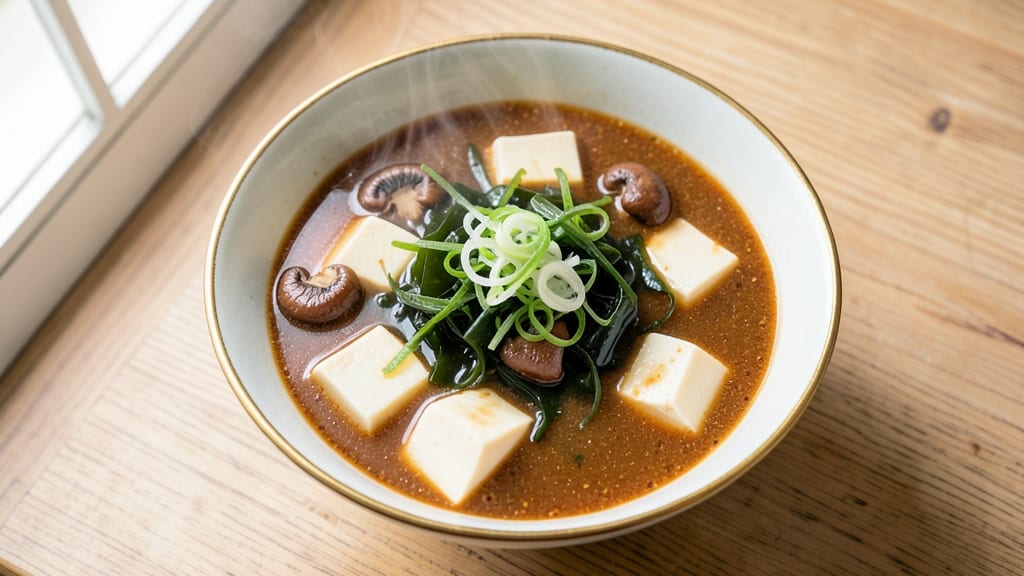
This awase miso soup recipe transforms simple ingredients into a symphony of textures—silky kombu broth cradling crispy tofu ribbons and umami-rich miso paste. The secret lies in slow-simmered dashi, where delicate kombu and katsuobushi infuse the broth with depth, while the tofu's delicate slices achieve perfect crispness through precise cooking.
What makes this dish special is its balance: the contrast between tender tofu and velvety broth creates an experience that's both comforting and sophisticated.
The foundation of authentic awase miso begins with proper dashi preparation—simmering kombu and bonito flakes (or shiitake mushrooms for vegetarian) to extract their natural flavors without bitterness. The miso paste, whether red or white, dissolves into the hot broth to create a smooth, flavorful base.
Meanwhile, silken tofu is sliced into thin ribbons and gently fried until golden—just enough to add texture without overpowering the delicate broth.
What you'll achieve is a bowl that's as visually appealing as it is delicious: crispy tofu ribbons floating in a glossy, umami-rich broth, topped with fresh scallions and rehydrated wakame seaweed.
Each spoonful delivers layers of flavor—salty, sweet, and savory—while the contrast of temperatures (hot broth, room-temperature tofu) enhances the overall experience. This is the kind of soup that feels like a warm embrace on a chilly day.
While traditional awase miso uses specific ingredients, modern adaptations allow for flexibility—vegetarian dashi, different miso varieties, or even adding mushrooms for extra depth. The key is maintaining balance: let the miso shine while supporting it with complementary ingredients.
Whether you're preparing this for a special occasion or a comforting weeknight meal, the result is always satisfying.
Ingredients for awase miso soup
Silken tofu, kombu, and shiitake mushrooms create the perfect umami-rich foundation for this elegant vegetarian soup.
| Ingredient | Amount | Notes |
|---|---|---|
| Silken Tofu 🥬 | 14 oz | Firm, block preferred for slicing |
| Dried Shiitake Mushrooms 🍄 | 4 whole | Rehydrated for dashi base |
| Kombu Seaweed 🌿 | 1 sheet | Dried, 4x6-inch size |
| Red Miso Paste 🧈 | 2 tbsp | Aged, high-quality preferred |
| Dried Wakame Seaweed 🌊 | ½ oz | Rehydrated for garnish |
| Green Onions 🧅 | 3 whole | Thinly sliced for garnish |
| Sesame Oil 🫒 | 1 tbsp | Toasted, for frying tofu |
| Vegetable Oil 🫒 | ¼ cup | For shallow frying |
| Dried Bonito Flakes 🐟 | ½ oz | Vegetarian alternative: shiitake |
| Diamond Crystal Kosher Salt 🧂 | ½ tsp | For seasoning broth |
| White Miso Paste 🧈 | 1 tbsp | Optional for lighter flavor |
The kombu and shiitake mushrooms form the heart of your dashi—look for dried kombu sheets with vibrant color and minimal salt crystals. Japanese specialty stores carry the best quality, but Asian grocery aisles at Whole Foods or Trader Joe's have reliable options. For shiitake, choose thick-stemmed dried mushrooms to ensure maximum flavor extraction. The miso paste should be aged at least 12 months for optimal depth; Marukome or Hatsu-miso brands are excellent choices. Silken tofu blocks should be firm, not watery—Natto or House Foods brands are consistently reliable.
No kombu? Rehydrated wakame works in a pinch, though it lacks the same depth. Substituting dried bonito flakes? Use shiitake powder at half the amount for a vegetarian alternative. The miso paste can be adjusted between red and white based on preference—red for richer umami, white for milder sweetness. For the tofu, extra-firm tofu pressed for 20 minutes holds its shape better than silken. If you can't find sesame oil, toasted sesame seeds ground with neutral oil replicate the flavor. The green onions should be fresh with crisp stems—no wilted ends.
Store dried kombu and shiitake in an airtight container away from light for up to 12 months. Rehydrated wakame keeps for 5 days in the fridge, while miso paste lasts 6 months unopened. The tofu ribbons can be fried ahead and stored in the fridge for 3 days—reheat in the broth just before serving. For maximum freshness, prepare the dashi and miso base the same day, as flavors meld best when freshly combined.
Why You'll Love This Recipe
- No-Chop Required: I swear by this—just soak those dried shiitake and wakame overnight, then dump everything in a pot. The kombu dissolves into the broth while you’re making tea, and the tofu cubes themselves in minutes. Honestly, I’ve made it at 7 AM before work with one hand tied behind my back.
- Umami Bomb Combo: That red miso paste? It’s the MVP, but the real magic happens when the kombu and shiitake team up—deep, savory layers that hit different. The silken tofu soaks up all the flavor without falling apart, and the wakame adds that briny, ocean-y something that makes it feel like a hug in a bowl.
- Leftovers That Lie: Between us, this soup actually tastes better the next day. The flavors meld into this rich, cohesive broth that’s perfect for reheating with rice or noodles. I’ve frozen portions too—just add hot water, and boom, instant meal. My freezer’s stocked with it like it’s my secret weapon.
- Pantry Staple Power: I keep dried shiitake, kombu, and miso on hand just for this. Wakame’s cheap in bulk, and silken tofu lasts forever. It’s my go-to when I’m broke but still want to eat well—plus, it’s the one dish I can make when my fridge is empty except for a sad onion. Reliable, no excuses.
Step-by-step instructions for awase miso soup with crispy tofu ribbons
Master this Japanese technique combining delicate broth with perfectly crisp fried tofu.
Prepare the Dashi Broth Foundation
Fill a medium saucepan with 4 cups water and add the 1 sheet kombu seaweed, placing it vertically so it unfurls naturally. Bring to a gentle simmer over medium-low heat until small bubbles form around the edges (5 minutes). Remove the kombu immediately—it should be soft but not disintegrating.
Add the 4 whole dried shiitake mushrooms and 0.5 oz dried bonito flakes (if using vegetarian alternative, add 0.5 oz rehydrated shiitake instead). Simmer for 15 minutes until the mushrooms are tender and the liquid develops a rich umami aroma. Strain through a fine-mesh sieve, pressing gently on the solids to extract maximum flavor. Discard the solids and return the broth to the pan.
Create the Miso Paste Mixture
In a small bowl, whisk together the 2 tbsp red miso paste and 1 tbsp white miso paste (if using) until completely smooth. The red miso provides depth while the white adds brightness—this combination creates the signature awase balance. Keep this mixture separate from the broth until ready to incorporate.
Add 0.5 tsp Diamond Crystal kosher salt to the strained dashi broth and bring to a gentle simmer. Reduce heat to low and maintain at 185°F—just below a full boil. This gentle heat preserves the delicate flavors we've built while preparing the tofu.
Fry the Silken Tofu Ribbons to Crisp Perfection
Cut the 14 oz silken tofu block into ¼-inch thick slices, then slice each slice into ¼-inch wide ribbons. Heat 0.25 cup vegetable oil in a nonstick skillet over medium-high heat until shimmering (2-3 minutes). Working in batches, fry the tofu ribbons for 30-45 seconds per side until golden brown with crisp edges.
Transfer the fried tofu to a paper towel-lined plate and immediately drizzle with 1 tbsp toasted sesame oil. The high smoke point of vegetable oil creates the initial crisp, while the sesame oil adds nutty aroma and helps maintain texture. Keep the fried tofu warm while you prepare the final assembly.
Assemble the Awase Miso Soup
Ladle 3 cups of the simmering dashi broth into each of four serving bowls. Using a ladle, gently stir in the miso paste mixture, creating delicate swirls that distribute the umami evenly. The broth should turn a rich amber color—this indicates proper emulsification without breaking the delicate texture.
Add the fried tofu ribbons to each bowl, arranging them artistically across the surface. The contrast between the crisp tofu and silky broth is what makes this dish exceptional. For final garnish, sprinkle with thinly sliced green onions and rehydrated wakame seaweed (if using). Serve immediately while the tofu maintains its perfect texture.
Serve with Proper Technique
Present each serving with the tofu ribbons prominently displayed on top—this allows diners to experience both textures in every bite. The broth should be hot but not boiling when served, maintaining its delicate balance of flavors. I recommend serving with steamed rice to soak up the rich umami broth while providing contrast to the crisp tofu.
For optimal enjoyment, consume within 20 minutes of assembly. The tofu will begin to soften as it absorbs the broth's moisture, and the temperature contrast between the hot soup and room-temperature tofu creates the perfect eating experience. Each spoonful should deliver the harmony of crisp, umami-rich tofu against the velvety dashi broth.
Pro Tips For Making Awase Miso Soup
- SOAK KOMBU FIRST: Toss the kombu in cold water for 10 minutes before simmering—this draws out the umami before the heat hits. I used to skip this, and the broth always tasted flat until I realized the seaweed needs a head start to release its magic.
- CUT TOFU IN WATER: Slice the silken tofu under cold water with a sharp knife—it stays together better, and the water prevents it from turning to mush. (Yes, even if you’re impatient like me.) If it falls apart, strain it and pat it dry before adding.
- DON’T BOIL THE MISO: Stir the miso paste after the broth cools slightly—direct heat kills the probiotics and makes it bitter. Remove the pot from heat, add the miso, and let it sit for 30 seconds before blending. Your gut (and taste buds) will notice.
- REHYDRATE SHIITAKES FAST: Break dried shiitake into rough chunks before soaking—they absorb water twice as fast and cook more evenly. Skip the whole mushrooms, and you’ll end up with a few soggy centers and a lot of waiting. (Your future self will thank you.)
Essential equipment for awase miso soup
Dashi Simmering Pot
Your dashi broth is the soul of awase miso soup, so a heavy-bottomed stainless steel pot (like All-Clad or Cuisinart MultiClad) is essential. These pots distribute heat evenly, preventing hot spots that can burn kombu or bonito flakes.
I avoid aluminum because it reacts with acidic ingredients over time. For budget-friendly options, a well-seasoned cast iron skillet works beautifully—just monitor the heat closely. 🌡️
Fine-Mesh Strainer
A dedicated dashi strainer (like the Norpro Fine-Mesh Strainer) makes all the difference when separating solids from broth. Look for one with a long handle and collapsible frame—it fits perfectly over your simmering pot.
I use mine to press kombu and shiitake gently, extracting every last drop of umami. For a cheaper alternative, a double-layered cheesecloth works in a pinch, though it requires more effort. 🧈
Nonstick Skillet
For crispy tofu ribbons, a high-quality nonstick skillet (like GreenPan or Calphalon) is non-negotiable. The even heat distribution prevents sticking while achieving that perfect golden-brown finish. I avoid ceramic-coated pans—they can degrade with acidic ingredients like sesame oil.
A well-seasoned carbon steel pan also works if you're willing to put in extra maintenance. 🔥
Miso Whisk
A bamboo or silicone whisk (like the Kinto brand) is perfect for dissolving miso paste smoothly. The flexible tines create gentle swirls that prevent clumping. I avoid metal whisks—they can scratch your bowls and introduce unwanted flavors.
For a quick alternative, a chopstick or fork works in a pinch, though it requires more elbow grease. ✨
Serving Bowls
Traditional awase miso is served in wide, shallow bowls (like Japanese lacquerware or ceramic soup bowls) to showcase the tofu ribbons. The shallow depth allows diners to appreciate both the broth and garnishes.
For a budget-friendly option, stoneware or melamine bowls work well. Avoid deep bowls—they can make the tofu look submerged rather than presented. 🍜
Optional Tools
For advanced techniques, consider a dashi spoon (a small ladle with a fine mesh) to strain broth directly into serving bowls. A tofu slicer (like the KitchenCraft model) creates uniform ribbons—essential for restaurant-quality results.
If you're serious about Japanese cooking, a kombu cutter (a small knife with a serrated edge) makes preparing seaweed effortless. 💡
Nutrition facts
Frequently asked questions
What makes awase miso soup different from regular miso soup?
Awase miso soup stands out because it combines two types of miso paste (traditionally red and white) for a balanced umami-sweet profile, plus crispy fried tofu ribbons that contrast with the silky broth. Regular miso soup typically uses just one miso type and features softer ingredients like tofu cubes or wakame. The awase technique creates a more complex flavor experience through this careful layering.
Can I make awase miso soup vegetarian?
Simply replace the dried bonito flakes with rehydrated shiitake mushrooms or shiitake powder for the dashi base. The traditional kombu and shiitake combination already creates a rich umami foundation. Many authentic recipes are naturally vegetarian—just check your miso paste ingredients to ensure no fish-based additives.
Why does my tofu turn rubbery instead of crispy?
Rubbery tofu usually means overcooking or improper preparation. Use firm silken tofu (not soft), cut it ¼-inch thick, and fry at medium-high heat for only 30-45 seconds per side. The key is high heat and quick cooking—if your pan isn't hot enough, the tofu will absorb oil and lose crispness. Press the tofu for 20 minutes before slicing to remove excess moisture.
What's the best way to store leftover awase miso soup?
Store the broth and miso mixture separately in airtight containers for up to 3 days in the fridge. Reheat gently to 165°F before adding the fried tofu ribbons (which are best eaten fresh). For longer storage, freeze the broth (without tofu) for up to 3 months
Can I use instant miso soup packets for this recipe?
While you can use instant miso packets as a shortcut, they won't give you the authentic awase experience. These packets typically contain only one miso type and often include additives. For best results, use high-quality aged miso paste (red and white) and make your dashi from scratch. The flavor difference is significant—homemade awase develops deeper umami layers that packet versions can't match.