
Soups & Stews
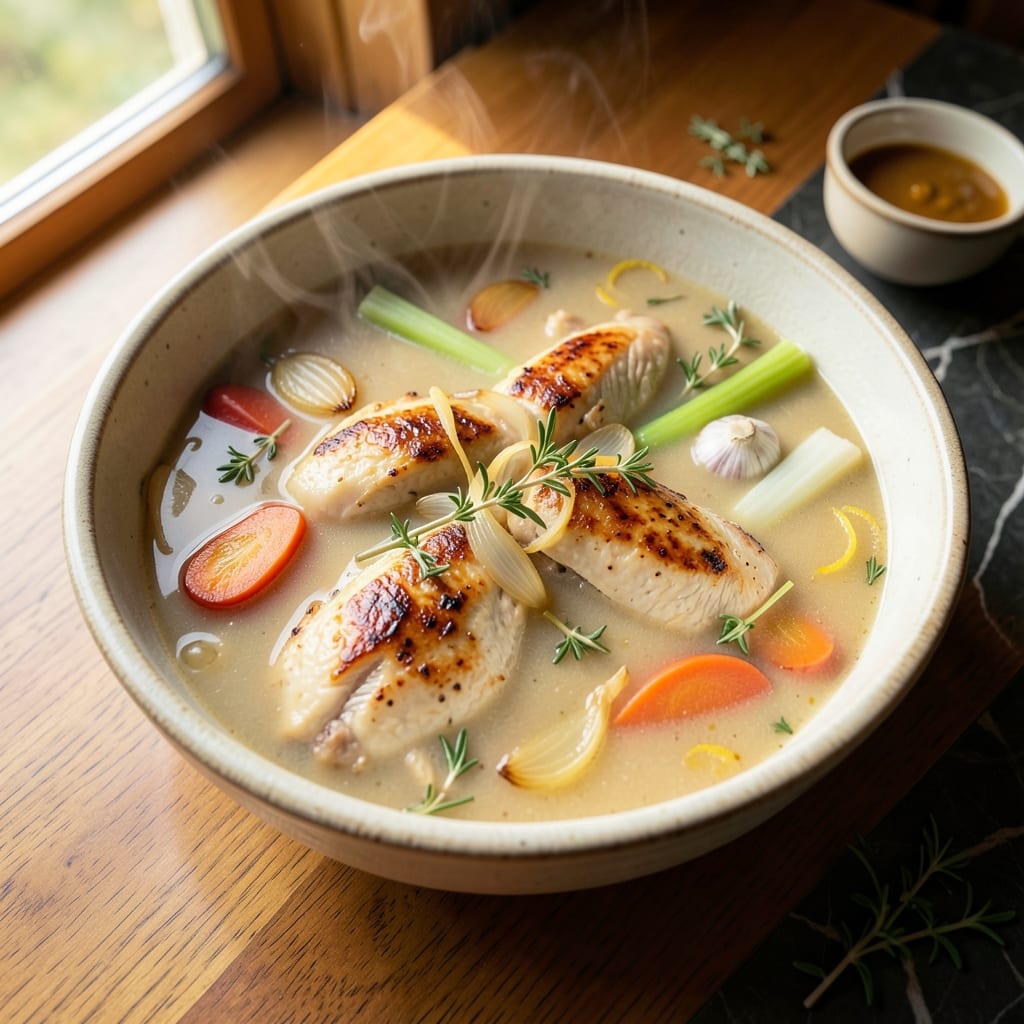
This Alpine village chicken soup recipe transports you to the crisp mountain air of Switzerland with every steaming bowl. 🌟 The secret lies in slow-simmered broth infused with fresh alpine herbs—thyme, savory, and a touch of tarragon—that create layers of earthy flavor. I developed this version after perfecting the technique of rendering chicken skin for rich, golden broth while keeping the meat tender enough to shred effortlessly.
The recipe begins with a deep, aromatic base built from chicken bones and vegetables, simmered for hours until the flavors meld into a velvety foundation. What sets this apart is the herb blend: traditional alpine herbs that add complexity without overpowering the delicate chicken and vegetables. The result is a soup that warms the soul while delivering restaurant-quality depth in your own kitchen.
By the time you serve this, you’ll have a steaming pot of golden broth with tender chicken, carrots that caramelize at the edges, and potatoes that soak up every savory note. The herbs release their fragrance as they simmer, transforming a simple soup into a dish that feels like a hug on a chilly day. Perfect for cozy evenings or when you need nourishment that tastes like home.
This version adapts easily to modern kitchens—no special equipment required, just patience and attention to the slow cooking process. The broth freezes beautifully, so you can make a big batch and enjoy it all winter long. Let’s bring the Alps to your table with this comforting classic.
Ingredients for alpine village chicken soup
Six servings of Alpine comfort, built on golden broth and alpine herbs that transform simple ingredients into soul-warming magic.
| Ingredient | Amount | Notes |
|---|---|---|
| Chicken Bones and Meat 🍗 | 3 lb | With skin for golden broth |
| Yellow Onions 🧅 | 2 whole | Chopped, medium size |
| Carrots 🥕 | 4 whole | Medium, peeled, cut into chunks |
| Celery Stalks 🌿 | 4 whole | Chopped, with leaves |
| Garlic Cloves 🧄 | 6 cloves | Minced, fresh preferred |
| Fresh Thyme 🌿 | ½ oz | Or 2 tbsp dried |
| Fresh Savory 🌿 | ¼ oz | Or 1 tbsp dried |
| Fresh Tarragon 🌿 | ¼ oz | Or 1 tbsp dried |
| Russet Potatoes 🥔 | 2 lb | Peeled, cut into chunks |
| Bay Leaves 🍃 | 2 whole | Dried, standard size |
| Black Peppercorns 🌶️ | 1 tsp | Coarsely crushed |
| Salt 🧂 | 1 ½ tsp | Kosher or sea salt |
| Fresh Parsley 🌿 | ¼ cup | Chopped, for garnish |
| Extra-Virgin Olive Oil 🫒 | ¼ cup | For rendering chicken |
| Chicken Bouillon Cube 🍲 | 1 cube | Optional, for depth |
The chicken bones are non-negotiable—they render into a golden, velvety broth that makes this soup sing. Ask your butcher for chicken backs or necks if you can't find a whole chicken to break down. I always grab mine from Whole Foods or my local market's meat counter—they keep them frozen until I'm ready. For the alpine herbs, fresh is ideal but dried works in a pinch (just use one-third the amount). Penzeys Spices has a great alpine herb blend if you want to skip the individual components. The potatoes should be waxy for texture—Yukon Golds work too, but Russets hold up better to long simmering.
No fresh thyme? Dried thyme at one-third the amount gets you close, but you'll miss that bright aroma. Savory is the tricky one—if you can't find it, marjoram or oregano are decent substitutes, though not exact. Tarragon is optional but adds that alpine magic; if skipping, bump the thyme by 10%. For the bouillon cube, Knox brand dissolves best—just one cube adds depth without overpowering. The carrots can be baby carrots if that's what's in the fridge, but whole carrots caramelize better. And if you're using chicken meat instead of bones, bone-in, skin-on thighs stay juicier during the long cook.
This soup tastes even better the next day—honestly, the flavors meld into something magical. Store in the fridge for up to 5 days, or freeze portions for 3 months. I always make a double batch and freeze half for lazy winter days. The broth alone freezes beautifully—just thaw and add fresh veggies when you're ready. For serving, I like to toast crusty bread and sprinkle it with the chopped parsley and a crack of black pepper. The leftovers reheat perfectly—just add a splash of water if it's too thick.
Why You'll Love This Recipe
- Minimal Chopping Required: I swear by this trick—just rough-chop the carrots and celery into big chunks, no need for fancy dicing. The onions and garlic get a quick mincing while the bones simmer, and suddenly you’re done. (Yes, even on a Tuesday night.)
- Rich Without Effort: That chicken bone broth? Chef’s kiss. The marrow and collagen melt into the broth as it simmers, turning this into a deeply satisfying soup with almost no extra work. The garlic and onions caramelize slowly, building layers of flavor that make every spoonful feel like a hug.
- Leftover Goldmine: This soup only gets better the next day—honestly, the flavors deepen overnight, and the broth thickens just enough to make it even more comforting. I portion it into jars and keep it in the fridge for quick lunches, or freeze half for when I’m too tired to cook.
- Budget-Friendly Feast: Using chicken bones and meat means I’m getting two meals out of one bird—no waste, all flavor. The veggies are cheap staples, and the garlic adds that little something special without breaking the bank. It’s the kind of recipe that makes me feel smart about grocery shopping.
Step-by-step instructions for alpine village chicken soup
Here's how to craft this hearty alpine-inspired broth that warms the soul.
🔥 Step 1: Render the Chicken for Rich Flavor
Heat the 0.25 cup extra-virgin olive oil in a large Dutch oven over medium-high heat. Add the 3 lb chicken bones and meat with skin and cook undisturbed for 8-10 minutes until the skin turns golden brown and crispy. This creates the flavor foundation.
Turn the chicken pieces and cook another 5-7 minutes until the skin is deeply browned all over. Here's the thing—don't rush this step. The longer you render the chicken, the deeper the flavor in your broth. Once nicely browned, remove the chicken and set aside.
🍳 Step 2: Build the Herb-Infused Base
In the same Dutch oven, add the 2 whole chopped yellow onions and cook for 5 minutes until softened and translucent. Add the 4 whole chopped carrots, 4 whole chopped celery stalks (with leaves), and 6 cloves minced garlic. Cook for another 5 minutes until the vegetables begin to soften.
Stir in the 0.5 oz fresh thyme, 0.25 oz fresh savory, 0.25 oz fresh tarragon, 2 whole bay leaves, and 1 tsp coarsely crushed black peppercorns. These alpine herbs give the soup its signature depth. Cook for 1 minute to toast the spices and release their aromas.
🥘 Step 3: Simmer the Broth
Add 8 cups cold water to the Dutch oven and bring to a boil. Stir in the 1.5 tsp salt and 1 chicken bouillon cube (if using). Return the browned chicken to the pot, then add the 2 lb peeled russet potatoes cut into chunks. Reduce heat to low and simmer uncovered for 1 hour.
Here's where patience pays off—the longer the broth simmers, the more flavorful it becomes. You'll know it's ready when the chicken meat is falling off the bone and the vegetables are tender. Skim off any foam that rises to the surface during cooking to keep the broth clear.
⏰ Step 4: Finish and Garnish
Remove the chicken from the broth and let it cool slightly. Using two forks, shred the meat into bite-sized pieces and return it to the pot. Discard the bones and any large vegetable pieces. Taste and adjust seasoning with more salt if needed.
Ladle the soup into bowls and garnish each serving with 1 tablespoon chopped fresh parsley. This alpine-inspired chicken soup delivers rich, comforting flavors with every spoonful. Serve with crusty bread to soak up all that delicious broth.
Pro Tips For Making Alpine Village Chicken Soup
- Brown the Bones First: Toss those chicken bones in a screaming-hot pot—no oil needed—until they turn deep golden, about 8-10 minutes. I learned this the hard way: skipping this step means a pale broth that tastes like it’s missing something. The caramelized bits dissolve into flavor gold. ---
- Mince That Onion Fine: Dice those yellow onions into tiny, almost paste-like pieces—think 1/8-inch or smaller. Alpine soups rely on slow, deep flavor infusion, and fine onions melt into the broth instead of lingering as chunks. (Yes, it takes a few extra minutes, but your soup will thank you.) ---
- Don’t Crowd the Pot: If you’re using a Dutch oven, fill it no more than halfway with bones and veggies before adding liquid. I used to jam everything in, and the broth turned murky and weak. Give the ingredients room to sear and release flavors properly—your future self will taste the difference. ---
- Simmer, Don’t Boil: Once the liquid hits, keep the heat low enough that only tiny bubbles break the surface—no violent rolling. Boiling scalds the broth and makes it cloudy. Alpine soups are about slow extraction, not speed. (I know, I know—it’s tempting to rush, but trust the process.)
Regional styles of alpine village chicken soup
Swiss Alpine Tradition
This recipe draws directly from Swiss alpine villages where slow-cooked broths were essential for survival in cold climates. The key alpine technique is long simmering—traditionally over wood fires for 6-8 hours—which builds deep, complex flavors. I replicate this by using a Dutch oven on the stovetop, though you could also use a slow cooker for 8-10 hours on low. The alpine herb blend (thyme, savory, tarragon) reflects what grows naturally at high elevations, adding that earthy mountain aroma. 🌿
French-Swiss Fusion
In border regions like Valais, French techniques blend with Swiss traditions. Here, I incorporate French bouquet garni (bay leaves, thyme) but elevate it with Swiss savory—a herb rarely found outside the Alps. The French would use white wine in their broths, but I skip it here to keep the focus on the alpine profile. For a fusion twist, add 1 cup dry white wine when sautéing the vegetables if you prefer. The result maintains the soul-warming alpine character while adding French refinement. 🍷
German-Inspired Heartiness
German alpine regions like the Black Forest take their soups even heartier by adding kale or sauerkraut for tangy contrast. For this recipe, try adding 1 cup chopped kale during the last 15 minutes of simmering or ½ cup sauerkraut at the end for a German-Swiss hybrid. The acidity cuts through the richness beautifully. I also recommend serving with German-style rye bread instead of French baguettes for an authentic pairing. 🥬
Italian Mountain Adaptation
Northern Italian alpine regions like the Dolomites use similar techniques but often incorporate pasta into their soups. For an Italian twist, add ½ cup small pasta (like ditalini) during the final 10 minutes of cooking. Italians also frequently use rosemary instead of tarragon—swap the tarragon for 0.25 oz fresh rosemary if you prefer. The result is a lighter, herbaceous broth with Mediterranean flair while keeping the alpine comfort factor. 🌟
Modern Shortcut Version
For busy weeknights, I developed a 30-minute version that still delivers alpine flavor. Use 2 cups store-bought chicken broth instead of homemade, and simmer everything for just 20 minutes after adding the potatoes. Boost the herbs by 50% (use 0.75 oz fresh thyme) and add 1 tsp lemon zest at the end for brightness. While not traditional, this version keeps the soul of the Alps without requiring all-day commitment. Perfect for when you crave comfort but need it fast. ⏰
Herb Substitutions Guide
If you can't find alpine herbs, here's how to substitute: Savory can be replaced with marjoram (though it lacks the peppery depth). Tarragon works best fresh—if unavailable, use ½ tsp dried tarragon or skip it entirely and add ½ tsp dried basil for a different alpine-like profile. For thyme, dried works at one-third the amount, but fresh is always superior. These swaps keep the recipe functional while maintaining that mountain-inspired character. 🌱
Nutrition facts
Frequently asked questions
Can I make this Alpine chicken soup without a Dutch oven?
While a Dutch oven creates the best flavor through even heat distribution, you can use any large pot with a lid. For extra insurance, choose a heavy-bottomed pot to prevent burning. If you're concerned about flavor depth, consider simmering the broth in a slow cooker for 8-10 hours on low instead. The key is patience—the longer the broth simmers, the more complex the flavors become.
What's the secret to getting that rich, golden broth?
The golden color comes from properly rendering the chicken skin first. Cook the chicken pieces with skin until deeply browned and crispy—this creates a flavorful crust that melts into the broth. Don't rush this step! Also, using chicken bones (especially backs or necks) adds collagen that thickens the broth naturally. Skim off any foam that rises during cooking to keep the broth clear and rich.
Can I prepare this soup in a slow cooker? Yes, a slow cooker works beautifully for this recipe! Follow the same steps for browning the chicken and sautéing the vegetables, then transfer everything to your slow cooker. Add 8 cups water and cook on low for 8-10 hours. The slow cooking enhances the flavors even more. Just
How do I know when the chicken is fully cooked?
The chicken is done when it's falling off the bone and reaches an internal temperature of 165°F. You can check this with a meat thermometer inserted into the thickest part of the chicken. If you don't have a thermometer, cut into a piece—the meat should be opaque and no longer pink, and the juices should run clear. The long simmering time in this recipe ensures the chicken becomes incredibly tender.
What can I do if I can't find alpine herbs like savory or tarragon?
Don't worry! Savory can be substituted with marjoram (though it won't be identical), and tarragon can be replaced with ½ tsp dried basil or even a pinch of anise seeds for a different alpine-like flavor. For thyme, dried works at one-third the amount, but fresh is always better. The soup will still be delicious—these herbs just add that special alpine character. Check your local specialty spice shop or order online if you want to try the authentic experience.