
Soups & Stews
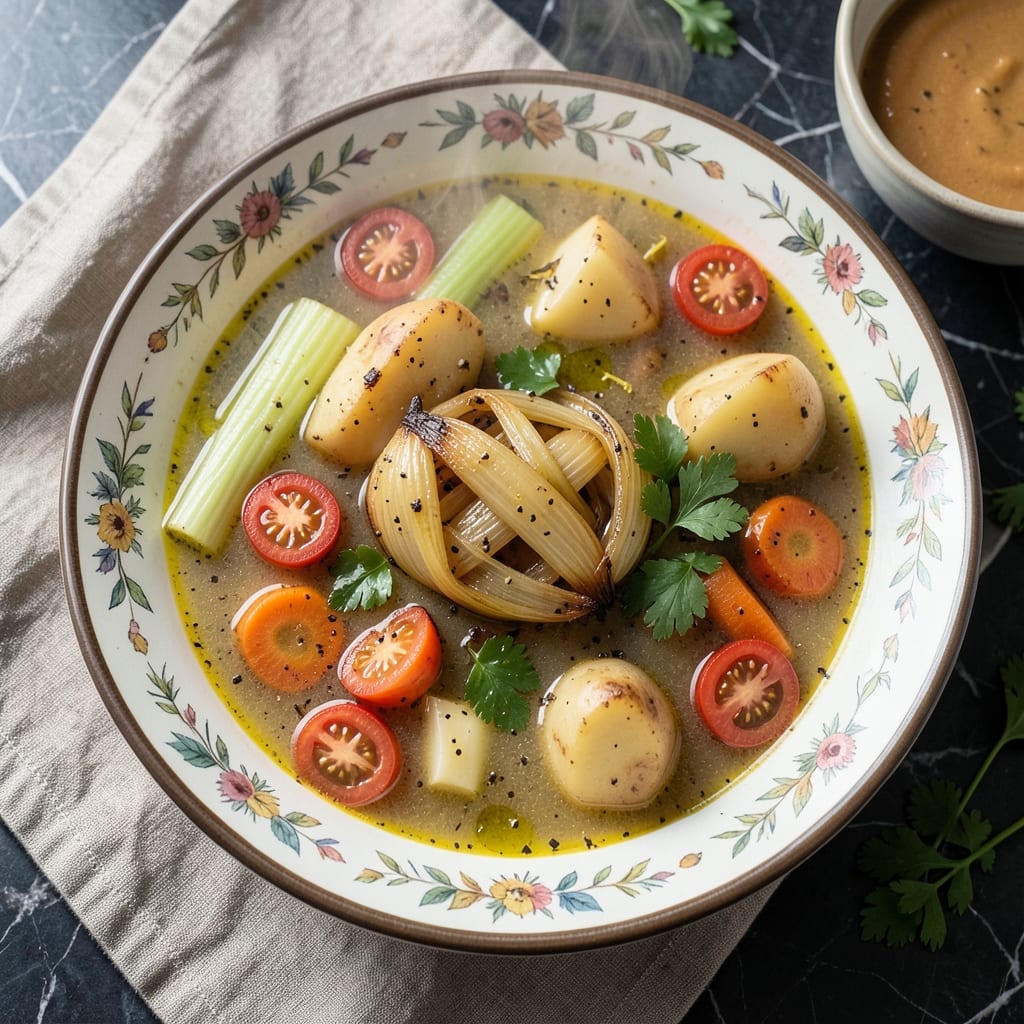
This all-vegetable soup recipe transforms simple garden produce into a hearty, flavor-packed meal that’s ready in just 25 minutes. The secret lies in layering aromatics—caramelized onions, celery, and garlic—before adding seasonal vegetables like carrots, potatoes, and tomatoes for depth. No broth? No problem—water and vegetable stock create a rich base that absorbs the flavors beautifully.
The beauty of this recipe is its versatility. Swap in mushrooms for umami, lentils for protein, or spinach for greens—it adapts to what’s fresh and what you have on hand. A quick blend at the end transforms it into a creamy, velvety soup, or leave it rustic for texture. The result is a savory, satisfying bowl that’s naturally vegan, gluten-free, and oil-free, yet packed with restaurant-quality flavor.
What makes this soup special is how it elevates humble ingredients. The vegetables soften into tender perfection while retaining their natural sweetness, and the spices—cumin, thyme, and bay leaf—add warmth without overpowering. Serve it as a light lunch, a comforting dinner, or a side for grilled meats, and watch it disappear from the bowl.
Perfect for meal prep, this soup tastes even better the next day as the flavors meld. Garnish with fresh parsley or a squeeze of lemon for brightness, and you’ve got a foolproof, nourishing dish that’s as good for your body as it is for your soul.
Ingredients for all vegetable soup
Fresh garden veggies and pantry staples create this hearty, quick-simmering all-vegetable soup.
| Ingredient | Amount | Notes |
|---|---|---|
| Yellow Onions 🧅 | 1 whole | Thinly sliced for caramelization |
| Celery Stalks 🌿 | 3 whole | Diced into small pieces |
| Garlic Cloves 🧄 | 4 cloves | Minced for aromatic base |
| Carrots 🥕 | 4 medium | Peeled and chopped into rounds |
| Russet Potatoes 🥔 | 2 medium | Cubed into 1-inch pieces |
| Roma Tomatoes 🍅 | 3 whole | Diced for fresh tomato flavor |
| Vegetable Stock 💧 | 4 cups | Low-sodium preferred |
| Water 💧 | 2 cups | For liquid base |
| Ground Cumin 🌿 | ½ tsp | Toasted for deeper flavor |
| Fresh Thyme Leaves 🌿 | 1 tbsp | Or 1 tsp dried thyme |
| Bay Leaves 🌿 | 2 whole | Removed before serving |
| Fresh Parsley 🌿 | ¼ cup | Chopped for garnish |
| Lemon Juice 🍋 | 1 tbsp | Freshly squeezed for brightness |
| Salt 🧂 | 1 tsp | Adjust to taste |
| Black Pepper 🌶️ | ½ tsp | Freshly ground |
The onions, celery, and garlic form the flavor foundation—caramelizing them first deepens the soup's richness. Trader Joe's and Whole Foods often have pre-sliced onions and celery for convenience, but fresh is always better. Look for carrots with vibrant orange color and firm texture—they should snap when bent. Potatoes? Russets hold their shape best, but Yukon Golds add creaminess if you prefer a silkier texture. Fresh thyme is ideal, but dried works in a pinch (just use one-third the amount).
No vegetable stock? Water plus 1 tbsp soy sauce or miso mimics umami depth. Swap carrots for butternut squash or sweet potatoes if you're craving something different. The tomatoes can be canned (San Marzano is best) if fresh aren't in season. For extra protein, stir in cooked lentils or chickpeas at the end. Want it creamy without dairy? Blend in 1/2 cup silken tofu at the finish—no one will guess it's there. The bay leaves add earthy notes, but remove them before serving (they're not meant to be eaten).
This soup tastes even better the next day as flavors meld. Store in an airtight container for 4-5 days in the fridge or freeze for 3 months. I double the batch and portion into containers for easy lunches. Garnish with fresh parsley and a squeeze of lemon right before serving—brightness matters. Leftovers reheat beautifully; just add a splash of water if they've thickened too much.
Why You'll Love This Recipe
- No Chopping Chaos: I swear by this one—just dice the onions, celery, and carrots in big chunks (no fancy julienne here), toss them in with the garlic and potatoes, and let the pot do the work. The celery softens just enough to mellow out its bitterness, while the potatoes turn into those fluffy, buttery chunks that make every spoonful feel like a hug.
- Garlic-Carrot Magic: That first sip of broth with the garlic and carrot sweetness? It’s the kind of flavor that makes you pause mid-slurp. The onions caramelize just enough to add depth, and the potatoes soak up all the savory goodness—like a blank canvas waiting for the best paint job.
- Lunchbox Hero: Between us, this is my secret weapon for meal prep. I make a big batch on Sundays, portion it out, and it stays fresh for days. Add a sprinkle of cheese or crusty bread when reheating, and suddenly you’ve got a lunch that feels gourmet without the fuss.
- Budget Blanket: Honestly, this soup costs me pennies per serving. Yellow onions and carrots last forever, potatoes are cheap, and celery stretches further than you’d think. It’s the kind of meal that lets you feed the whole family without breaking the bank—or your grocery budget.
Step-by-step instructions for all-vegetable soup
This soup builds layer by layer—start with caramelized aromatics, then let the vegetables melt into a rich, comforting broth.
Build the Flavor Base
Heat a large pot over medium heat and add the 1 whole yellow onions and 3 whole celery stalks, sliced as directed. Cook for 8-10 minutes, stirring occasionally, until the onions soften and the celery becomes tender. You'll notice the onions release moisture and begin to caramelize slightly—this is where the deep, sweet foundation of your soup begins.
Add the 4 cloves garlic cloves, minced, and cook for another 1-2 minutes until fragrant but not browned. Here's the thing—garlic burns fast, so keep your eye on the pot. If it starts to darken, reduce the heat slightly. This aromatic base is the soul of your soup, so don't rush it.
Toast the Spices and Add Potatoes
Stir in the 0.5 teaspoon ground cumin and cook for 30 seconds until you can smell its warm, earthy notes. Add the 4 medium carrots, peeled and chopped, and the 2 medium russet potatoes, cubed. Pour in the 4 cups vegetable stock and 2 cups water, then bring to a gentle boil.
Once boiling, reduce heat to medium-low and add the 2 whole bay leaves and 1 tablespoon fresh thyme leaves. The bay leaves will infuse subtle floral notes, while the thyme adds a bright, herbal complexity. Let the soup simmer uncovered for 10 minutes, stirring occasionally. This initial simmer helps the potatoes begin to soften while preventing the soup from boiling over.
Add Tomatoes and Simmer
After 10 minutes, add the 3 whole roma tomatoes, diced, and stir gently to distribute them evenly. The acidity from the tomatoes will brighten the soup and balance the earthy flavors. Return the heat to a steady simmer and cook for another 10 minutes, or until the potatoes are tender when pierced with a fork.
Here's where the magic happens: taste the soup and adjust seasoning with the 1 teaspoon salt and 0.5 teaspoon black pepper. The potatoes should be fork-tender, and the carrots should be soft but still hold their shape. If the soup seems too thick, add a splash of water—you want a broth that coats the back of a spoon but isn't gluey.
Finish with Fresh Herbs and Brightness
Remove the pot from heat and stir in the 1 tablespoon lemon juice, freshly squeezed. This adds a bright, tangy finish that cuts through the richness of the vegetables. Discard the 2 whole bay leaves—they've done their job and can be removed now.
Finally, stir in the 0.25 cup fresh parsley, chopped. The parsley not only adds freshness but also a pop of color that makes the soup look as good as it tastes. Let the soup sit for 5 minutes off the heat to allow the flavors to meld together. Serve warm, garnished with an extra sprinkle of parsley if you like.
Pro Tips For Making All Vegetable Soup
- SWEAT THE AROMATICS LOW: If you’re not seeing the onions and celery turn translucent before adding garlic, you’re missing flavor. Cook them on medium-low heat for 8-10 minutes—yes, it takes longer, but rushing this step means your soup will taste like it’s missing something. I learned this the hard way when I burned the celery and had to start over.
- CUT POTATOES EVENLY: Russet potatoes soak up liquid like a sponge, so if yours are lumpy, they’ll turn to mush while carrots stay firm. Cut them into 1-inch cubes—no smaller—and parboil them for 3 minutes before adding to the pot. This guarantees they’ll be tender without falling apart.
- ADD GARLIC LATE: Garlic burns faster than you think, and once it’s bitter, there’s no fixing it. Toss in the minced cloves with the potatoes in the last 10 minutes of cooking. If you’re using whole cloves, smash them lightly with the side of your knife first—this releases more flavor without burning.
- DON’T SKIP THE BOIL: Starting the soup in cold water might seem logical, but throwing everything in at once leads to uneven cooking. Bring the broth to a full boil first, then add the veggies. This ensures carrots and celery soften at the same rate, and the potatoes don’t turn to glue before the garlic gets a chance to shine.
Common mistakes when making your all vegetable soup
Overcooking Vegetables
I’ve ruined more soups than I’d admit by letting the vegetables turn to mush. Potatoes and carrots are particularly guilty of this—once they’re tender, they’re done. Test with a fork: if it slides in easily but the pieces still hold shape, stop cooking. Overcooking releases excess starch, making your soup gluey and unappetizing. 🥔
Skipping the Flavor Base
Rushing the onion and celery caramelization is a huge mistake. Those 8-10 minutes of cooking time develop deep, sweet flavors that carry the whole soup. If you’re in a hurry, at least cook them until soft—not raw. Raw onions and celery will make your soup taste bitter and unfinished. Trust me, it’s worth the wait. 🧅
Ignoring Seasoning Adjustments
Taste your soup before serving—it’s the only way to ensure it’s perfectly balanced. I’ve seen people skip this step and end up with bland or overly salty soup. Add salt and pepper gradually, tasting as you go. The lemon juice at the end is key too—it brightens everything, but don’t add it too early or the acidity will break down the vegetables. 🍋
Using Low-Quality Stock
Cheap or salty vegetable stock can ruin an otherwise great soup. If you’re using store-bought, opt for low-sodium versions like Pacific Foods or Imagine. Homemade stock is even better, but if you’re short on time, a splash of soy sauce or miso paste adds umami depth. Never skip this step—it’s the backbone of your soup’s flavor. 💧
Forgetting to Remove Bay Leaves
Bay leaves are a game-changer for flavor, but they’re not meant to be eaten. I’ve seen people serve soup with bay leaves still in it, and it’s a texture disaster. Always remove them before serving—just fish them out with tongs or a slotted spoon. It’s an easy fix that makes a big difference. 🌿
Not Letting It Rest
Soup tastes best after sitting for a few minutes off the heat. This lets the flavors meld and the vegetables absorb the broth. If you serve it immediately, you’ll miss out on that restaurant-quality depth. Give it 5 minutes before serving—your taste buds will thank you. ⏳
Nutrition facts
Frequently asked questions
Can I make this all-vegetable soup without broth?
Use 6 cups water instead of broth, then add 1 tbsp soy sauce or 1 tsp miso paste for umami depth. The soup will still be flavorful—just stir in an extra pinch of salt at the end to balance the taste.
How can I make this soup creamy without dairy?
Blend 1/2 cup silken tofu or 1/2 cup cooked white beans directly into the soup at the end for a velvety texture. For a lighter option, stir in 2 tbsp nutritional yeast after blending—it adds a cheesy flavor without heaviness.
What vegetables can I swap in for a different flavor profile?
Try butternut squash or sweet potatoes for natural sweetness, mushrooms for umami depth, or kale/spinach for greens. For heartiness, add lentils or chickpeas—they absorb flavors beautifully. The key is keeping a balance of textures (soft + slightly firm veggies).
Can I meal prep this soup ahead of time?
Yes! Store in an airtight container for 4-5 days in the fridge or freeze for 3 months. Reheat gently on the stove with a splash of water if it thickens. The flavors actually improve overnight as everything melds together.
Why does my soup taste bland even after seasoning?
Most likely, your stock lacked depth. Use low-sodium vegetable stock (like Pacific Foods) or add 1 tsp soy sauce during cooking. Also, don't skip the lemon juice at the end—it brightens flavors dramatically. Taste as you go!