
Soups & Stews
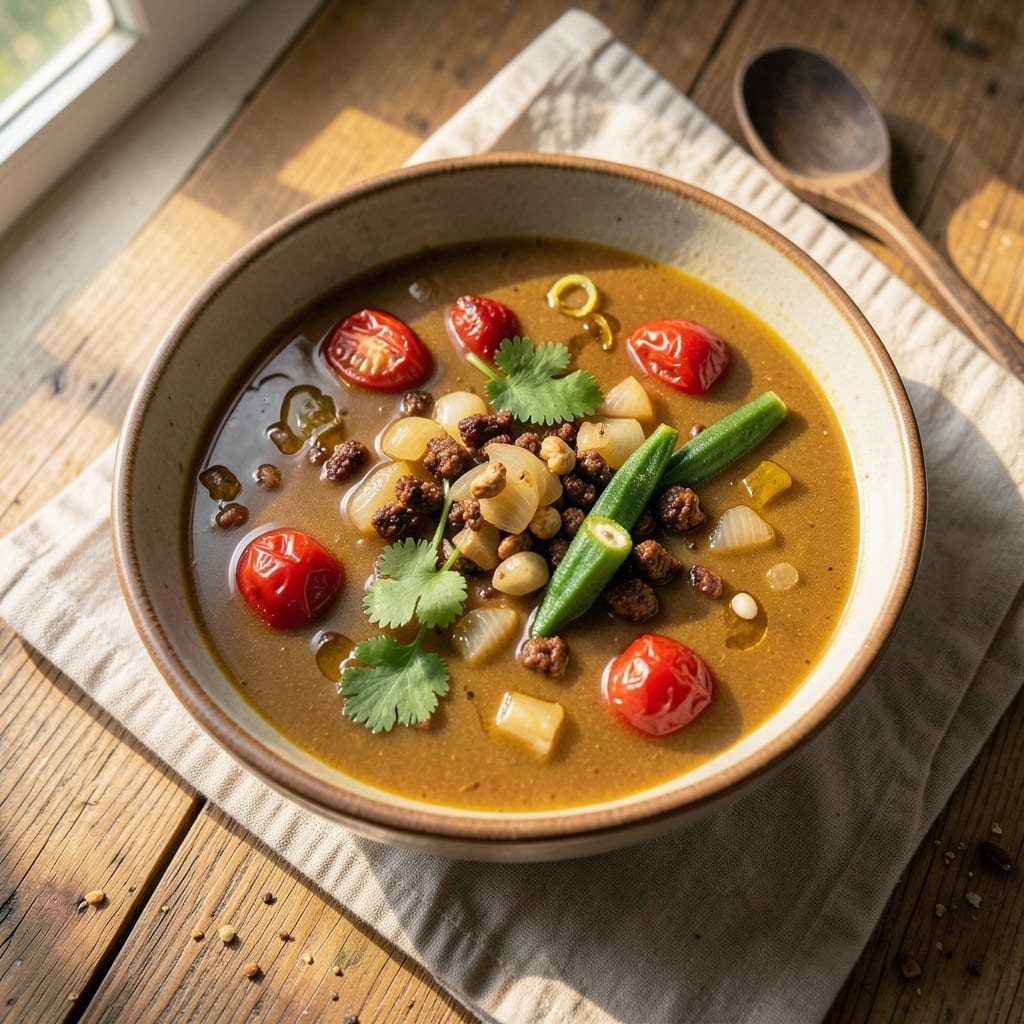
This West African tomato-based vegetable soup transforms simple ingredients into a rich, hearty dish with deep cultural roots. The combination of tender okra, nutty peanut crunch, and aromatic spices creates a flavor profile that's both comforting and complex. I developed this recipe after years of exploring West African cuisine, focusing on traditional techniques that deliver restaurant-quality results at home.
The foundation of this soup lies in its tomato base, simmered with onions, garlic, and ginger to create a fragrant, slightly sweet broth. Okra adds a satisfying texture, while peanuts provide a nutty depth that balances the earthy vegetables. The soup is naturally vegan but can easily accommodate meat or fish if desired, making it versatile for any meal.
What makes this recipe special is the balance of flavors—tangy tomatoes, earthy greens, and creamy peanut notes come together in each spoonful. The slow simmering process allows all ingredients to meld perfectly, resulting in a soup that's both nourishing and deeply satisfying. Whether served as a main dish or alongside rice, it's a meal that brings warmth and tradition to your table.
Ready in about 45 minutes, this soup is perfect for weeknight dinners or meal prep. The ingredients are simple, but the technique ensures maximum flavor extraction, making every bite worth savoring. Let's create this comforting, flavorful dish that captures the essence of West African cooking.
Ingredients for african vegetable soup
Simple ingredients delivering restaurant-quality West African tomato soup with okra and peanut crunch.
| Ingredient | Amount | Notes |
|---|---|---|
| Fresh Tomatoes 🍅 | 4 whole | Roma or vine-ripened preferred |
| Yellow Onions 🧅 | 2 whole | Medium size, diced |
| Garlic Cloves 🧄 | 6 cloves | Peeled, minced |
| Fresh Ginger Root 🌿 | 1 ½ tbsp | Grated, organic preferred |
| Fresh Okra 🌱 | 1 lb | Trimmed, sliced into rounds |
| Peanuts 🥜 | ½ cup | Raw, unsalted, roasted |
| Dried Red Peppers 🌶️ | 2 whole | Ancho or guajillo, stemmed |
| Vegetable Oil 🫒 | ¼ cup | Light or canola preferred |
| Dried Thyme 🌿 | 1 tbsp | Or 1 tbsp fresh thyme leaves |
| Ground Cumin 🌿 | 1 tbsp | Toasted for deeper flavor |
| Salt 🧂 | 1 ½ tsp | Diamond Crystal preferred |
| Black Peppercorns 🌶️ | ½ tsp | Freshly ground |
| Fresh Spinach 🌿 | 4 cups | Chopped, loosely packed |
| Vegetable Broth 💧 | 4 cups | Low-sodium preferred |
| Lemon Juice 🍋 | 1 tbsp | Freshly squeezed |
The tomatoes form the flavor foundation—San Marzano or heirloom varieties bring the most depth. Whole Foods or local farmers markets often carry these in season. Ginger and garlic should be organic if possible—conventional versions can taste bitter. Fresh okra is ideal, but frozen works in a pinch (thaw and pat dry). For the peanuts, raw unsalted from a bulk bin ensures the best flavor profile, though roasted peanuts add a pleasant crunch. The dried red peppers are non-negotiable—they provide that signature West African smokiness. Penzeys or Latin markets carry excellent varieties like ancho or guajillo.
No fresh thyme? Dried at one-third the amount works perfectly. Running low on peanuts? Cashews or almonds can substitute, though texture will differ slightly. The dried peppers can be toasted in a dry pan for 30 seconds to deepen their flavor—worth the extra minute. For the spinach, any leafy green works (kale or Swiss chard), but spinach is traditional. The vegetable broth should be low-sodium—most store-bought versions are far too salty. If you're short on time, canned diced tomatoes (San Marzano preferred) can replace fresh, though they lack the same depth of flavor.
Store fresh okra in a sealed container with a paper towel for up to 3 days. The peanut mixture keeps for 1 week in the fridge once made, though it's best used immediately for peak freshness. The dried peppers maintain their potency for 6-12 months in a cool, dark place. This soup reheats beautifully—simmer gently on the stove for 5-7 minutes to restore its velvety texture. For meal prep, store in airtight containers for 4-5 days or freeze portions for 3 months. The flavors actually improve after the first day as everything melds together.
Why You'll Love This Recipe
- No Chopping Chaos: I swear by this one—just dice the onions and tomatoes, then let the okra and garlic do the work. The ginger? A quick grating, and boom, you’re done. Honestly, my hands stay clean while the flavors build.
- Ginger-Garlic Magic: That fresh ginger and garlic combo? It’s the secret weapon. The tomatoes caramelize into something rich, while the okra adds this just-right bite—smooth but with a little snap. Not too heavy, not too light, just there.
- Leftover Goldmine: This soup only gets better the next day. I’ve reheated it three times and still crave it. The okra thickens just enough to keep it hearty, and the onions deepen in flavor. Perfect for lunchboxes or a quick dinner when you’re too tired to cook.
- Budget-Friendly Powerhouse: Fresh tomatoes, onions, and okra stretch into a whole pot of soup for pennies. Between us, I’ve fed a table of six for under $10. The ginger and garlic might be pricier, but a little goes a long way—and they make everything taste like a celebration.
Step-by-step instructions for West African tomato-okra soup
This method builds rich, layered flavors through precise timing and technique.
Prepare the Base with Tomatoes and Aromatics
Heat the 0.25 cup vegetable oil in a large pot over medium-high heat. Add the 2 whole diced yellow onions and cook for 5 minutes until softened and translucent. Add the 6 cloves minced garlic cloves and 1.5 tablespoons grated fresh ginger root, stirring constantly for 1 minute until fragrant.
Add the 4 whole fresh tomatoes (halved or quartered) and cook for 8-10 minutes until they break down into a thick paste. This step develops the soup's foundational flavor—don't rush it. The mixture should reduce significantly and take on a deep red hue.
Develop the Spice Profile
Stir in the 2 whole stemmed dried red peppers, 1 tablespoon ground cumin, and 1 tablespoon dried thyme. Cook for 2 minutes until the spices are toasted and aromatic. Add the 1 pound sliced fresh okra and cook for 5 minutes, stirring occasionally, until the okra begins to soften.
This is where the soup's characteristic texture begins to form. The okra will release its natural sliminess, which thickens the broth naturally. If the mixture sticks, add 2 tablespoons of vegetable broth to deglaze and keep everything moving.
Build Depth with Broth and Seasoning
Pour in the 4 cups vegetable broth and bring to a gentle simmer. Add the 1.5 teaspoons salt and 0.5 teaspoon freshly ground black peppercorns. Let the soup simmer uncovered for 20 minutes, stirring occasionally, until the okra is tender and the flavors have melded.
Here's the thing—this simmering time allows the spices to infuse fully and the okra to break down just enough to create that signature West African texture. Taste and adjust seasoning if needed, remembering that the peanuts and spinach will add additional flavor layers.
Finish with Spinach and Peanut Crunch
Stir in the 4 cups chopped fresh spinach and cook for 3-4 minutes until wilted. Remove from heat and fold in the 0.5 cup roasted peanuts. Finish with the 1 tablespoon freshly squeezed lemon juice, which brightens the rich tomato base.
For the perfect serving, ladle the soup into bowls and top with an additional sprinkle of peanuts. The contrast between the creamy okra-spinach base and the crunchy peanuts is what makes this dish truly special. Serve immediately while the peanuts maintain their texture.
Pro Tips For Making African Vegetable Soup
- BLANCH OKRA FIRST: I learned this the hard way—raw okra turns slimy and mushy if you toss it in whole. Instead, give it a quick 30-second blanch in boiling water, then shock it in ice water. This softens it just enough to release its texture without falling apart. (Yes, even if you're impatient like me, this step saves you from scraping gunk off the pot later.)
- SAUTÉ GINGER LOW: After burning three batches of soup because of aggressive ginger toasting, I finally figured out: keep the heat low. Once the slices hit the pan, turn it down to medium and let them cook undisturbed for 2-3 minutes. They’ll darken beautifully without turning to ash—no need to babysit the pot.
- SALT THE TOMATOES: My grandmother swore by this, and she was right: salt your diced tomatoes right after adding them to the pot. Let them sit for 5 minutes before stirring. This draws out moisture and deepens their flavor—no more watery base ruining your broth. (Your future self will thank you.)
- SKIP THE PEELING: Sounds weird, but it works: leave the ginger root unpeeled when slicing. The skin adds a subtle earthiness and prevents the slices from turning to mush. Just make sure to wash the root first—dirt hides in those crevices. (I was skeptical until I tried it.)
Regional styles of this recipe
West African Roots
This soup traces back to coastal West African countries like Ghana, Nigeria, and Senegal, where it's traditionally called "okra soup" or "peanut soup." The tomato base reflects the influence of Portuguese traders who introduced tomatoes centuries ago. In Ghanaian cuisine, it's often called "Groundnut Soup" when peanuts are the star, while Nigerian versions might include palm oil for richness. 🌍
Eastern Nigerian Twist
In Eastern Nigeria, this soup is often made with bitter leaf instead of spinach, adding a unique bitter-sweet contrast. The recipe might also include crayfish or dried shrimp for umami depth. For a vegetarian version, omit these and increase the peanut amount to ⅔ cup for extra richness. The region's version also uses utazi leaves (a local herb) for a distinct earthy flavor.
Ghanaian Peanut Focus
Ghanaian chefs elevate this dish by roasting the peanuts until deeply browned, almost caramelized, for a toasted peanut sauce drizzled over the soup. They also incorporate plantains or yams as sides, creating a complete one-pot meal. The Ghanaian version often includes scotch bonnet peppers for heat, balancing the soup's creaminess. 🌶️
Senegalese Okra Special
In Senegal, this soup is called "Thieboudienne" when paired with rice, but the vegetable version stands alone as "Soupe aux Okras." Senegalese cooks use dried fish (like stockfish) for a briny note, but vegetarians can substitute with 1 teaspoon smoked paprika to mimic the depth. The Senegalese style also includes cassava leaves for a starchy, slightly sweet flavor that pairs beautifully with the okra.
Modern Fusion Adaptations
Today, chefs blend traditions with innovation. Try adding sweet potatoes for natural sweetness or black-eyed peas for protein. For a smoky twist, swap dried red peppers for 1 teaspoon smoked paprika. Some modern versions even include avocado slices on top for a creamy contrast. The key is balancing textures—creamy okra, crunchy peanuts, and tender greens. 💫
Regional Spice Blends
West African spice blends vary by region. Nigerian versions rely on ginger, garlic, and thyme, while Ghanaian cooks add nutmeg and cloves for warmth. Senegalese recipes often include fenugreek seeds for a maple-like sweetness. For a shortcut, blend 1 teaspoon each of cumin, coriander, and smoked paprika to mimic these complex profiles. Always toast spices in oil for 30 seconds to wake up their flavors! ⏱️
Nutrition facts
Frequently asked questions
Can I make this African vegetable soup without okra?
Okra adds texture, but you can substitute with 1 cup sliced zucchini or 1 cup diced sweet potatoes for a similar hearty quality. For a more traditional West African flavor, try 1 cup chopped eggplant—it absorbs the spices beautifully. Just reduce the simmering time to 10 minutes to prevent overcooking.
How do I make this soup spicier?
Add 1-2 chopped fresh scotch bonnet peppers (seeds in for extra heat) when cooking the tomatoes, or increase the dried red peppers to 3-4 whole peppers. For a smoky kick, stir in ½ teaspoon smoked paprika with the cumin. Always taste as you go—start with less and adjust!
What's the best way to store leftovers?
Transfer to an airtight container and refrigerate for up to 5 days. The flavors actually improve overnight! To reheat, simmer gently on the stove for 5-7 minutes—never microwave, as it can make the okra mushy. For freezing, portion into meal-sized containers for 3 months of storage.
Can I use canned tomatoes instead of fresh?
Yes, but fresh tomatoes deliver deeper flavor. If using canned, opt for San Marzano or high-quality crushed tomatoes (no sugar added). Simmer them for 15 minutes longer to concentrate the flavor. For extra richness, add 1 tablespoon tomato paste with the spices.
What's the secret to making the peanuts extra crunchy?
Toast the peanuts in a dry skillet over medium heat for 3-4 minutes until golden and fragrant, stirring constantly. Cool completely before adding to the soup. For maximum crunch, store them in the freezer for 30 minutes before serving. The contrast with the creamy soup is what makes this dish special!