
Soups & Stews
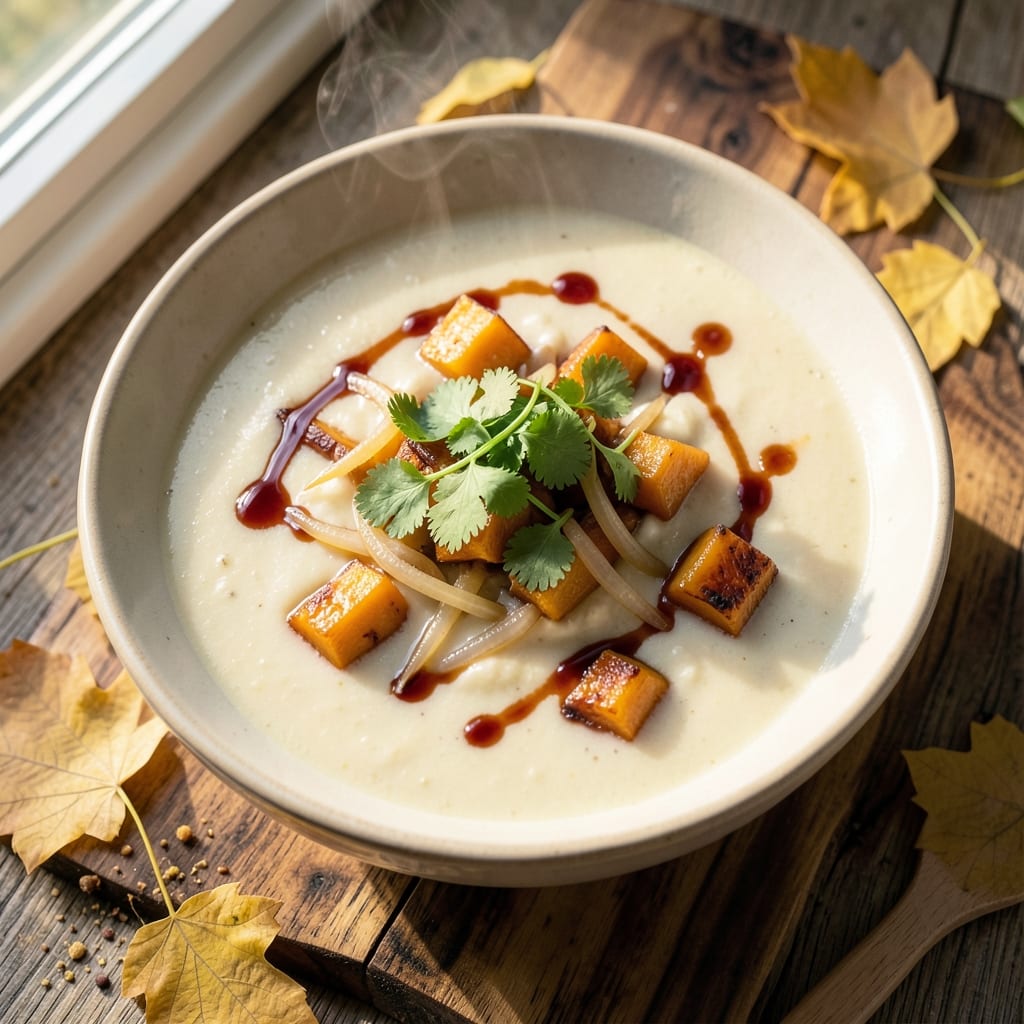
This acorn squash soup recipe with coconut milk transforms humble ingredients into velvety warmth that feels like a hug in a bowl. The secret lies in roasting the squash first—caramelizing its natural sweetness before blending it into a silky base with coconut milk. I developed this version after realizing how much depth a simple cinnamon stick and fresh ginger could add, turning an ordinary soup into something truly special.
The process is simpler than it sounds: roast the squash until tender, then blend it with coconut milk, vegetable broth, and a touch of maple syrup for balance. Sautéing onions, garlic, and fresh ginger first builds aromatic depth that carries through every spoonful. What makes this recipe stand out is how the coconut milk creates that perfect creamy texture without overpowering the squash's natural sweetness.
By the time you're done, you'll have a soup that's rich yet light, with just the right amount of spice from cinnamon and warmth from ginger. The roasted squash gives it a caramelized edge that pairs beautifully with the coconut's creaminess. This is the kind of soup that feels luxurious yet comes together with straightforward steps—ideal for chilly evenings when you want comfort without fuss.
Serve it with crusty bread to soak up every last drop or sprinkle with toasted pumpkin seeds for extra crunch. The flavors only get better the next day, making it perfect for meal prep. Here's how to make it—simple, satisfying, and full of autumnal goodness.
Ingredients for acorn squash soup recipe with coconut milk
Roasted squash meets coconut creaminess—just 12 ingredients for velvety autumn comfort.
| Ingredient | Amount | Notes |
|---|---|---|
| Acorn Squash 🎃 | 1 ½ lb | Medium-sized, halved and seeded |
| Coconut Milk 🥥 | 1 can | Full-fat for creaminess |
| Vegetable Broth 💧 | 3 cups | Low-sodium preferred |
| Yellow Onion 🧅 | 1 whole | Medium-sized, diced |
| Garlic Cloves 🧄 | 3 cloves | Freshly minced |
| Fresh Ginger 🌿 | 1 ½ oz | Peeled, roughly chopped |
| Maple Syrup 🍯 | 2 tbsp | Pure grade B for flavor |
| Cinnamon Stick 🌿 | 1 whole | For aroma, removed later |
| Extra-Virgin Olive Oil 🫒 | 2 tbsp | For roasting squash |
| Salt 🧂 | ½ tsp | Adjust to taste |
| Black Pepper 🌶️ | ¼ tsp | Freshly ground |
| Pumpkin Seeds 🥜 | ¼ cup | Toasted, for garnish |
The acorn squash is the star, so don't skimp. Trader Joe's usually has good ones—look for firm, heavy squash with no soft spots. If you can't find acorn, butternut squash works too. Roasting caramelizes the natural sweetness, so skip the oven and you're missing half the magic. Coconut milk matters here—full-fat canned is best for that rich, creamy texture. The Thai Kitchen brand is my go-to for consistency, but any full-fat can works. Fresh ginger? Asian markets often have the juiciest pieces—peel it just before using for maximum punch.
No acorn squash? Substitute butternut or delicata—just adjust roasting time. Fresh ginger too spicy? Use half the amount and add a pinch of sugar to balance. Short on coconut milk? Cashew cream works (blend soaked cashews with water), though it's pricier. The maple syrup is non-negotiable for that perfect balance—grade B has more flavor than the clear stuff. Cinnamon stick adds warmth without overpowering; if you prefer ground, use half a teaspoon. Toast those pumpkin seeds in a dry pan for 3-4 minutes—they add crunch that makes this soup feel extra special.
Roasted squash keeps 3 days in the fridge, so make extra. The soup itself reheats beautifully—just stir in a splash of water if it gets too thick. Freeze portions for up to 3 months (store without the seeds). For meal prep, double the batch and portion into containers. The seeds? Store them in a sealed jar at room temp for up to 6 months—they're perfect for snacking too.
Why You'll Love This Recipe
- Here’s what sold me: that rich, velvety coconut milk turns the squash into something luxurious, but it’s secretly packed with fiber and vitamins. Honestly, I’d take this over heavy cream any day—it’s like a spa day for my taste buds, minus the $80 price tag.
- One-Pot Magic: I swear by this recipe when I’m too tired to wash pots—just roast the squash, simmer everything in the same pot, and boom. The coconut milk does all the heavy lifting, blending into a velvety texture while the garlic and onion caramelize right in the broth.
- Creamy Without Guilt: Here’s what sold me: that rich, velvety coconut milk turns the squash into something luxurious, but it’s secretly packed with fiber and vitamins. Honestly, I’d take this over heavy cream any day—it’s like a spa day for my taste buds, minus the $80 price tag.
- Weeknight to Holiday: Between us, this soup goes from “I’m too exhausted to order takeout” to “let’s invite friends over” in one batch. I serve it with crusty bread for casual nights, or drizzle it with chili oil and toasted seeds for a fancier vibe—same recipe, totally different energy.
Step-by-step instructions for acorn squash soup with coconut milk
Here's how to transform roasted acorn squash into a velvety, coconut-infused soup that's rich, comforting, and packed with autumnal flavor.
Roast the Acorn Squash Until Caramelized
Preheat your oven to 400°F and line a baking sheet with parchment paper. Cut the 1.5 lb acorn squash in half lengthwise and scoop out the seeds with a spoon. Brush the cut sides generously with 2 tablespoons extra-virgin olive oil and sprinkle lightly with 0.25 teaspoon black pepper. Place the halves cut-side down on the prepared baking sheet.
Roast for 35-40 minutes until the squash is tender when pierced with a fork and the edges are deep golden brown. I like to rotate the pan halfway through for even browning. The squash should smell sweetly caramelized when done—this is your cue it's ready. Let it cool for 5 minutes before scooping out the flesh.
Sauté Aromatics and Build the Base
While the squash roasts, heat 1 tablespoon extra-virgin olive oil in a large pot over medium heat. Add the diced yellow onion and cook for 5 minutes until softened and translucent. Add the minced garlic cloves and roughly chopped fresh ginger, cooking for another 1 minute until fragrant.
Stir in 3 cups vegetable broth and the whole cinnamon stick, bringing the mixture to a gentle simmer. Let it cook for 5 minutes to allow the spices to infuse. Here's the thing—don't rush this step. The longer the aromatics simmer, the deeper the flavor becomes in your soup.
Blend the Roasted Squash into Creamy Perfection
Once the squash is cool enough to handle, scoop out the flesh and add it to the pot with the simmering broth mixture. Stir in the 2 tablespoons maple syrup and bring everything to a gentle boil. Reduce heat to low and let it simmer for 5 minutes to meld all the flavors together.
Using an immersion blender, blend the soup directly in the pot until completely smooth. If you don't have an immersion blender, carefully transfer the soup to a countertop blender in batches—be cautious as hot liquids can splatter. The soup should be completely silky with no visible chunks. Taste and adjust seasoning with 0.5 teaspoon salt as needed.
Finish with Coconut Milk and Garnish
Return the blended soup to the pot and stir in the 1 can coconut milk over low heat. Warm through for 2-3 minutes—just enough to heat the coconut milk without letting it curdle. The soup should now have a beautiful creamy texture with a subtle coconut aroma that complements the sweet squash.
Remove the cinnamon stick and ladle the soup into bowls. For that perfect finishing touch, toast the 0.25 cup pumpkin seeds in a dry skillet over medium heat for 2-3 minutes until golden and fragrant. Sprinkle them over each serving along with a drizzle of extra coconut milk if desired.
Pro Tips For Making Acorn Squash Soup Recipe With Coconut Milk
- CHAR THE EDGES: Roast the squash cut-side down at 400°F (200°C) until the flesh near the skin is blackened in spots—this caramelizes the natural sugars and deepens the flavor. I used to stop at softness, but those charred patches make the soup taste like it’s been simmering for hours.
- PEEL THE ONIONS FIRST: Slice the onion and garlic before roasting the squash—you’ll need them while the oven’s hot. I learned this the hard way after waiting for the squash to cool just to chop onions, and that’s when the soup starts getting cold.
- DON’T RUSH THE BROTH: Simmer the broth and roasted squash together for at least 15 minutes before blending—this lets the flavors meld and breaks down the squash fibers for a smoother texture. Skipping this step means you’ll end up with a soup that tastes like separate ingredients, not a cohesive dish.
- SWAP FULL-FAT COCONUT MILK: Use a mix of full-fat and light coconut milk (like 2/3 full-fat, 1/3 light) for a creamier texture without the heaviness. The light version cuts the richness while keeping the coconut flavor, and it’s the one upgrade that actually changes the outcome—trust me, I’ve tested it.
Perfect pairings for this recipe
Bread Pairings
This soup is a match made in heaven with crusty sourdough—its tangy bite cuts through the coconut creaminess beautifully. I love using a baguette from the bakery section, sliced into ½-inch pieces and toasted until golden. For extra flair, try garlic focaccia with rosemary; the herbal notes complement the ginger and cinnamon in the soup. 🥖
Drink Pairings
A chilled glass of Riesling is my go-to pairing—its crisp acidity balances the soup's richness. Look for a dry Riesling from Germany or Washington State to avoid sweetness clashing with the maple syrup. For something lighter, sparkling water with lime adds a refreshing contrast. If you prefer beer, a wheat ale (like Blue Moon) enhances the coconut and ginger flavors without overpowering them.
Toppings & Garnishes
Fresh cilantro leaves add a bright, herbaceous note that brightens the soup's depth. I also love a drizzle of chili crisp (about ½ teaspoon) for a spicy kick—it adds smoky heat that pairs perfectly with the coconut. For a smoky touch, sprinkle toasted sesame seeds (about 1 teaspoon) over each bowl. These toppings elevate the soup from simple to restaurant-worthy. 🌿
Protein Add-Ins
For a heartier meal, stir in crispy tempeh (about ½ cup, cubed and pan-fried) or toasted cashews (about ¼ cup) for crunch. If you're feeling adventurous, add shredded rotisserie chicken (about ½ cup) for a savory twist. These additions turn the soup into a complete meal while keeping it vegan-friendly or adaptable to your preferences.
Seasonal Variations
In fall, add roasted apple chunks (about ½ cup, diced and sautéed with the onions) for natural sweetness. For winter, swap the pumpkin seeds for toasted pecans (about ¼ cup) and a pinch of cayenne pepper for warmth. These tweaks keep the soup exciting all year round while honoring seasonal ingredients. ❄️
Nutrition facts
Frequently asked questions
Can I use butternut squash instead of acorn squash?
Yes! Butternut squash works beautifully—just adjust the roasting time to 45-50 minutes since it's denser. The flavor will be slightly sweeter, so you might reduce the maple syrup to 1 tablespoon. For texture, peel the butternut first to avoid stringy bits when blending.
Why does my soup taste bitter after adding coconut milk?
Overheating the coconut milk can cause bitterness. Always stir it in over low heat for just 2-3 minutes—never let it boil. For extra insurance, whisk in the cold coconut milk first, then warm gently. If bitterness persists, add a pinch of salt or a splash of lemon juice to balance.
How can I make this soup spicier?
Add ½ teaspoon cayenne pepper when sautéing the aromatics or a dash of chili oil after blending. For depth, toast 1 teaspoon smoked paprika in the oil before adding onions. Fresh red pepper flakes (about ½ teaspoon) work too—add them at the very end to preserve heat.
Can I make this soup ahead of time?
The roasted squash keeps 3 days in the fridge, and the finished soup reheats beautifully. Store without the pumpkin seeds (toast fresh when serving). For best texture, reheat gently on the stove with a splash of water if needed. Freeze portions for up to 3 months—just thaw overnight in the fridge.
What if I don't have an immersion blender?
Transfer the hot soup to a countertop blender in 2 batches—never fill beyond the max line. Let it cool slightly first (about 5 minutes) to prevent splattering. For extra safety, place a kitchen towel over the lid. If you're short on time, mash the roasted squash with a fork before adding to the pot.