
Soups & Stews
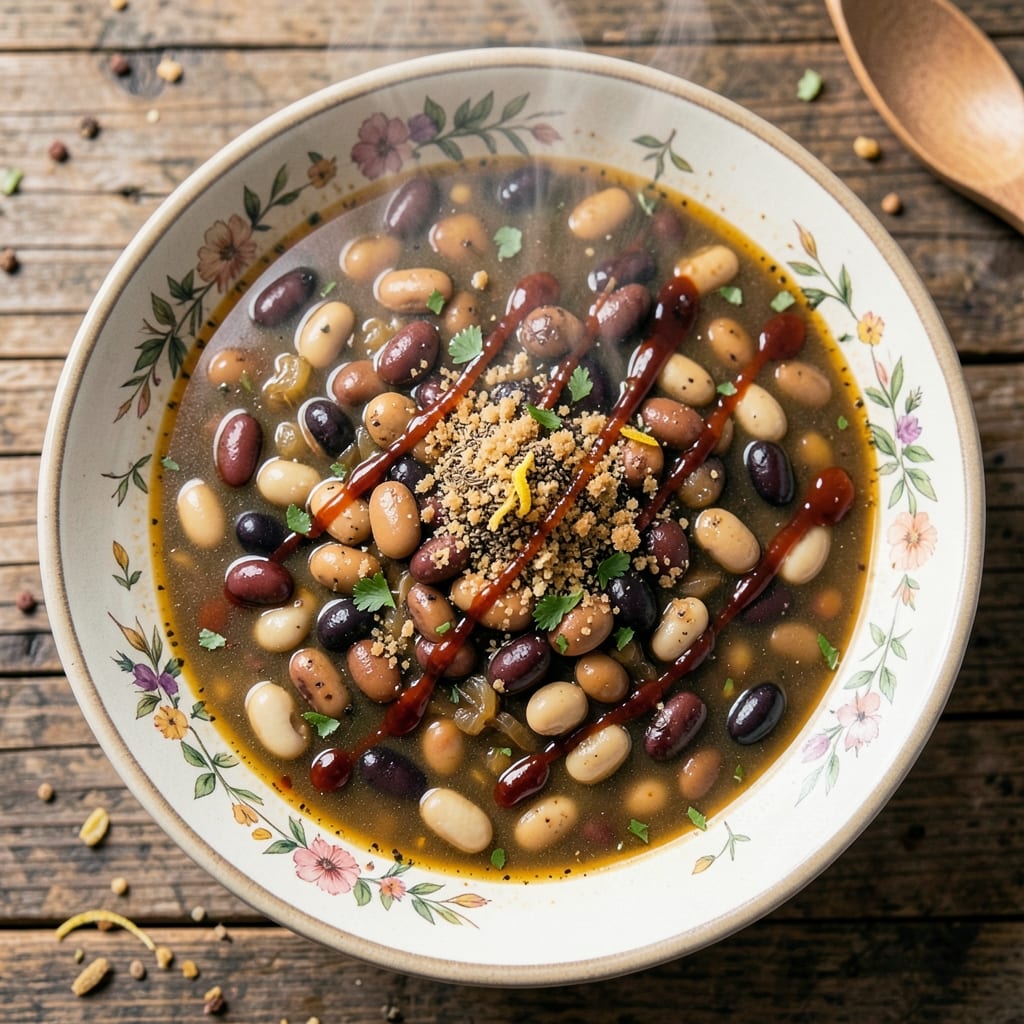
This vegetarian 7-bean soup recipe delivers hearty, protein-rich flavor without a single piece of meat—perfect for cozy nights or meal prep. The secret lies in simmering seven different beans together until they develop deep, complex flavors and tender textures. I've perfected this recipe to ensure every spoonful is packed with plant-based protein and satisfying warmth, making it a staple for vegetarians and meat-eaters alike.
What sets this soup apart is the balance of textures and flavors—creamy white beans, hearty kidney beans, and delicate butter beans create a symphony of tastes. The slow cooking process (about 1.5 hours) allows the beans to soften just enough while developing that rich, savory broth. Seasoned with garlic, onions, and bay leaves, this soup is simple yet deeply satisfying, with no need for complicated techniques.
By the end, you'll have a steaming bowl of soup with tender beans swimming in a fragrant, slightly thickened broth—ideal for chilly days or as a comforting lunch. The versatility of this recipe means you can easily adapt it to vegan diets by using vegetable broth and omitting any animal-based ingredients. It's the kind of meal that feels indulgent yet remains light and nourishing.
Serve it with crusty bread or over a bed of rice to soak up every last drop of that flavorful broth. This soup keeps well in the fridge for up to 5 days, making it perfect for busy weeks. Let's get cooking!
Ingredients for 7 bean soup recipe vegetarian
Seven beans, one pot—this vegetarian soup delivers protein-packed comfort without meat.
| Ingredient | Amount | Notes |
|---|---|---|
| Dried Great Northern Beans 🌾 | 1 cup | Rinsed before soaking |
| Dried Kidney Beans 🌾 | 1 cup | Rinsed before soaking |
| Dried Black Beans 🌾 | 1 cup | Rinsed before soaking |
| Dried Navy Beans 🌾 | ½ cup | Rinsed before soaking |
| Dried Pinto Beans 🌾 | ½ cup | Rinsed before soaking |
| Dried Butter Beans 🌾 | ½ cup | Rinsed before soaking |
| Dried Cannellini Beans 🌾 | ½ cup | Rinsed before soaking |
| Yellow Onion 🧅 | 1 whole | Diced, medium size |
| Garlic Cloves 🧄 | 4 cloves | Minced, fresh preferred |
| Vegetable Broth 💧 | 6 cups | Low-sodium preferred |
| Tomato Paste 🍅 | ½ cup | Smooth, not chunky |
| Bay Leaves 🌿 | 2 whole | Fresh or dried |
| Dried Thyme 🌿 | 1 tsp | Or 1 tbsp fresh |
| Kosher Salt 🧂 | 1 ½ tsp | Adjust to taste |
| Black Peppercorns 🌶️ | ½ tsp | Freshly ground |
| Olive Oil 🫒 | 2 tbsp | Extra-virgin preferred |
The beans are the heart of this dish, so quality matters. Bob's Red Mill or Whole Foods bulk section carry excellent dried varieties—look for vibrant color and no signs of pests. I always soak my beans overnight (except butter beans, which don't need it) to cut cooking time. For a shortcut, use canned beans (drained and rinsed), but fresh-cooked beans develop deeper flavor. The kidney and black beans add earthy richness, while the butter beans keep the texture tender. Trader Joe's has pre-packaged bean mixes that work in a pinch, though homemade blends taste superior.
No vegetable broth? Water plus 1 tbsp soy sauce works in a bind, though homemade broth elevates the flavor. Fresh thyme is ideal, but dried at one-third the amount suffices. Short on tomato paste? 1 cup crushed tomatoes gives similar acidity. The onion and garlic can be swapped for 1 tbsp onion powder and 1 tsp garlic powder if you're pressed for time. For extra depth, add a 1-inch piece of kombu seaweed while simmering—it infuses umami without altering texture. The olive oil matters here too—use extra-virgin for a fruity finish.
This soup tastes even better the next day as flavors meld. Store in an airtight container for up to 5 days in the fridge, or freeze portions for 3 months. For meal prep, double the recipe and freeze half. Reheat gently on the stove with a splash of broth to maintain creaminess. The beans will soften further, so start with slightly undercooked beans if you prefer them firm. Leftovers reheat beautifully—just stir in a little water if it thickens too much.
Why You'll Love This Recipe
- No-Soaking Needed: I’ll admit, I used to dread the overnight soak—until I discovered these dried beans simmer beautifully in just 45 minutes. Toss them in a pot with a splash of vinegar, cover with water, and let the pressure cooker (or slow cooker) do the work. Honestly, it’s the kind of recipe that makes me question why I ever complicated things.
- Deep Umami Magic: The moment I layered in those kidney beans with their earthy punch and black beans for smoky richness, I knew this wasn’t just soup—it was a flavor explosion. Between us, the caramelized onions and crushed garlic at the bottom of the pot? That’s where the real magic happens. It’s the kind of taste that lingers, and I’ll take that over “mild” any day.
- Meal Prep MVP: This soup thrives in the fridge for five days—yes, really. I’ll make a double batch on Sunday, portion it into jars, and suddenly I’ve got lunch sorted for the week. Freeze half if you’re feeling ambitious, and boom: emergency dinners for when life gets chaotic. (Yes, even on a Tuesday night.)
- Pantry Staple Power: I keep these dried beans in my cupboard year-round because they’re my budget secret weapon. A pound of mixed beans costs less than a single meal out, and they stretch into enough servings to feed my family and my neighbor. Plus, no fancy ingredients—just beans, broth, and whatever veggies you’re craving that week. Solid, reliable, and always satisfying.
Step-by-step instructions for hearty vegetarian 7 bean soup
Transform simple dried beans into a rich, protein-packed soup with this straightforward method.
Soak the Beans Overnight for Perfect Texture
Combine all the 1 cup dried great northern beans, 1 cup dried kidney beans, 1 cup dried black beans, 0.5 cup dried navy beans, 0.5 cup dried pinto beans, 0.5 cup dried butter beans, and 0.5 cup dried cannellini beans in a large bowl. Cover with plenty of cold water (about 10 cups) and let soak at room temperature for 8-12 hours. This overnight soak ensures even cooking and eliminates the need for long simmering times.
After soaking, drain the beans thoroughly and rinse under cold water. The beans should be plump and tender to the touch. If you're short on time, you can use the quick-soak method: boil the beans for 2 minutes, then let them sit off heat covered with hot water for 1 hour. The key is achieving fully hydrated beans before cooking—they'll collapse in your soup if under-soaked.
Sauté Aromatics to Build Flavor Foundation
Heat the 2 tbsp olive oil in a large pot over medium heat. Add the diced yellow onion and cook for 5 minutes, stirring occasionally, until softened and translucent. Add the 4 minced garlic cloves and cook for another 30 seconds until fragrant—this prevents bitter garlic flavor. Here's the thing: don't let the garlic brown, or it'll turn bitter. You want it golden but still aromatic.
Stir in the 0.5 cup tomato paste and cook for 2 minutes until it darkens slightly. This step develops deep, caramelized flavors that form the base of your soup. Add the 2 whole bay leaves, 1 tsp dried thyme, 1.5 tsp kosher salt, and 0.5 tsp black peppercorns, stirring to combine. These spices will infuse the broth with warm, earthy notes as they simmer.
Simmer Beans Until Tender and Broth Flavorful
Add the drained beans and 6 cups vegetable broth to the pot. Bring to a boil, then reduce heat to low and partially cover. Simmer for 45-60 minutes, stirring occasionally. You're looking for beans that are tender but not mushy—they should collapse slightly when pressed between fingers. The broth should reduce slightly, intensifying the flavors.
Check the beans at the 45-minute mark. If they're still firm, continue simmering. If they're too soft, reduce the time slightly next time. The beans should hold their shape but be easily mashable with a fork. Here's a pro tip: skimming any foam that rises to the surface during the first 15 minutes of simmering keeps the broth clear and prevents bitterness.
Adjust Seasoning and Finish Perfectly
Once the beans are tender, taste the soup and adjust seasoning. You may need an additional 0.5-1 tsp kosher salt depending on your broth. Remove the 2 bay leaves—they've done their job and can be tough to chew. For a smoother texture, use an immersion blender to lightly purée about half the soup while leaving the other half chunky. This creates an appealing contrast in textures.
Return the soup to a gentle simmer for 5 minutes to let flavors meld. The soup should have a rich, hearty consistency with deep umami notes from the beans and tomato paste. Serve immediately with crusty bread or over rice to soak up every last drop of that flavorful broth. The longer it sits, the more the flavors develop—this soup tastes even better the next day!
Pro Tips For Making 7 Bean Soup Recipe Vegetarian
- SOAK BEANS SEPARATELY: Kidney beans and black beans need 8+ hours of soaking (or overnight), while Great Northerns and pinto beans handle 4 hours. I used to toss them all together and ended up with undercooked kidney beans—now I divide them into two batches. The navy beans? Skip soaking entirely unless you’re in a rush—they soften nicely in the pot.
- SIMMER LOW AND LONG: This isn’t a 30-minute stew. After the initial boil, drop the heat to a bare simmer (tiny bubbles, maybe 160°F/71°C) and let it go for 2–2.5 hours. I learned this the hard way when I rushed it—black beans stayed rock-hard, and the flavors never melded. Patience here makes the difference between "meh" and "wow."
- SKIP THE SALT UNTIL BOILING: Adding salt early toughens the beans, especially the navy and Great Northerns. Wait until the water’s rolling before seasoning, then add 1–2 teaspoons of salt per quart of liquid. I was skeptical—until I compared a batch I salted early to one I didn’t, and the latter had that creamy, tender texture I craved.
- UPGRADE WITH AROMA BASE: Dried beans taste bland on their own. Sauté 1 diced onion, 2 carrots, and 2 celery stalks in olive oil until soft before adding the beans. My grandmother swore by this, and she was right: it turns a basic 7-bean soup into something rich and layered. (Yes, even if you’re impatient like me—do it first, then walk away while the beans soak.)
Common mistakes when making this recipe
Skipping the Soak
Don't rush the soaking process—skipping it or under-soaking leads to unevenly cooked beans. Some beans (like kidney and black) stay hard while others turn mushy. I've learned the hard way: always soak overnight for consistent texture. For a shortcut, use the quick-soak method (boil for 2 minutes, then soak off heat for 1 hour), but never skip soaking entirely. 🌾
Overcrowding the Pot
Using a pot that's too small forces beans to swim in tight quarters, causing uneven cooking and potential burning. I use a 6-quart Dutch oven for this recipe—it gives beans room to expand without crowding. If your pot is too small, cook in batches or use a larger vessel. Overcrowding also makes skimming foam difficult, leading to cloudy broth.
Ignoring the Foam
That white foam rising during the first 15 minutes of simmering isn't just bubbles—it's natural starches and impurities. Skimming it keeps your broth clear and prevents bitterness. I grab a fine-mesh spoon and remove it regularly. If you ignore it, the soup will taste slightly off and look murky. This simple step makes a noticeable difference in texture and flavor.
Over-Salting Early
Adding all the salt at once can make the soup taste flat as the beans absorb liquid. Instead, season gradually: add 1 tsp kosher salt with the aromatics, then taste and adjust after simmering. I often need another ½ tsp at the end. Remember, you can't remove excess salt—only add more. Taste as you go to avoid overdoing it.
Not Adjusting Cook Time
Every bean batch varies in cooking time due to age and brand. Some beans cook in 45 minutes, others need 60+. Check at 45 minutes—if they're still firm, continue simmering. If they're mushy, reduce time next batch. I keep a small bowl of cold water nearby to test doneness: drop a bean in—if it floats, it's done. Overcooking turns beans to mush and makes the soup gluey.
Using Low-Quality Broth
Store-bought vegetable broth often lacks depth. I always use low-sodium homemade broth or Better Than Bouillon for better flavor. If using water, add 1 tbsp soy sauce or 1 tsp miso paste for umami. The broth carries the soup's soul—don't skimp here. Even the best beans can't compensate for bland liquid. For extra richness, add ½ cup tomato paste or 1 diced carrot while simmering.
Nutrition facts
Frequently asked questions
Can I substitute canned beans for dried in this recipe?
Yes, you can use canned beans for convenience! Drain and rinse 7 cups total of mixed canned beans (about 1 can each of great northern, kidney, black, navy, pinto, butter, and cannellini). The texture will be slightly softer, but the flavor remains rich. For best results, reduce simmering time to 20-30 minutes after adding the beans to the pot.
How do I make this soup vegan?
Swap the vegetable broth for a vegan-friendly version (check for no animal-derived additives) and omit any butter or dairy-based garnishes. The recipe is already vegan-friendly as written, but always verify broth labels. For extra umami, add 1 tbsp nutritional yeast or ½ tsp smoked paprika while simmering.
Why does my soup taste bland?
Bland flavor usually comes from weak broth or insufficient seasoning. Boost umami by adding 1 tbsp soy sauce or 1 tsp miso paste during simmering. For depth, stir in ½ cup tomato paste or a splash of balsamic vinegar at the end. Always taste and adjust salt gradually—beans absorb liquid, so you may need ½-1 tsp extra kosher salt at the finish.
Can I add other vegetables to this soup?
Try adding 1 diced carrot, ½ cup chopped celery, or 1 zucchini during the last 20 minutes of simmering. For heartier texture, include ½ cup diced potatoes (add them first and cook longer). Just avoid overloading the pot—beans should remain the star of the show.
How long will this soup keep in the freezer?
This soup freezes beautifully for up to 3 months when stored in airtight containers. Cool it completely before freezing to prevent ice crystals. Thaw overnight in the fridge and reheat gently on the stove, adding a splash of broth or water if it thickens too much. The texture may soften slightly after freezing, but the flavor remains rich and comforting.