
Soups & Stews
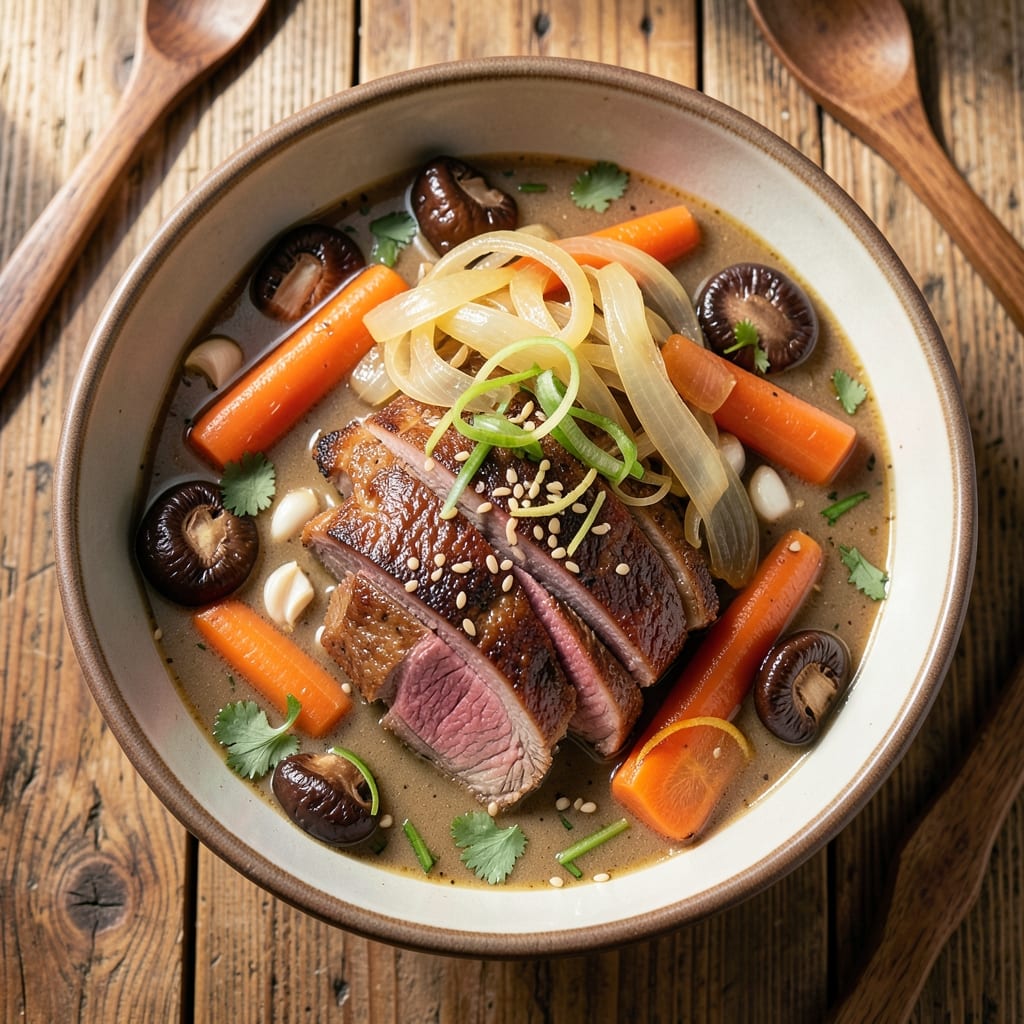
This 5-star vegetable beef soup transforms simple ingredients into a deeply flavorful, restaurant-quality meal that warms the soul. The secret lies in slow-simmered beef and carefully balanced vegetables, creating a rich, umami-packed broth that's both comforting and sophisticated. Every spoonful delivers tender beef, vibrant vegetables, and layers of savory depth that make it perfect for family dinners or cozy gatherings.
The beauty of this recipe is its simplicity—just 15 minutes of prep followed by 1.5 hours of hands-off simmering. You'll start with a deep, aromatic base of onions, garlic, and ginger, then build layers of flavor with beef, mushrooms, and seasonal vegetables. The key is patience: letting the soup develop its rich, caramelized notes while keeping the vegetables tender-crisp.
What sets this soup apart is its perfect balance—the beef becomes melt-in-your-mouth tender, the vegetables retain their natural sweetness, and the broth is velvety without being heavy. A final touch of fresh herbs and a drizzle of sesame oil elevates it to five-star quality, making it a dish you'll want to serve again and again.
Whether you're feeding a crowd or meal prepping for the week, this soup scales beautifully while keeping its restaurant-worthy depth. The instructions are clear, the technique is foolproof, and the results are undeniably satisfying. Let's get cooking!
Ingredients for 5 star vegetable beef soup
Sixteen ingredients. One pot. A symphony of umami that tastes like a Michelin-starred meal.
| Ingredient | Amount | Notes |
|---|---|---|
| Chuck Roast Beef 🥩 | 1 ½ lb | Cut into 1-inch cubes, boneless |
| Yellow Onions 🧅 | 2 whole | Medium size, sliced into half-moons |
| Garlic Cloves 🧄 | 6 cloves | Peeled, smashed with side of knife |
| Fresh Ginger 🌿 | ½ inch | Peeled, finely grated |
| Shiitake Mushrooms 🍄 | 8 whole | Stems removed, caps halved |
| Carrots 🥕 | 3 whole | Medium size, cut into chunks |
| Celery Stalks 🧅 | 3 whole | Cut into 1-inch pieces |
| Tomatoes 🍅 | 2 whole | Medium size, quartered |
| Beef Broth 💧 | 6 cups | Low-sodium preferred |
| Red Wine 🍷 | 1 cup | Dry, like Cabernet Sauvignon |
| Soy Sauce 🥄 | 2 tbsp | Low-sodium preferred |
| Sesame Oil 🫒 | 1 tbsp | Toasted, for finishing |
| Fresh Thyme Leaves 🌿 | ¼ cup | Chopped, for garnish |
| Salt 🧂 | 1 ½ tsp | Diamond Crystal kosher salt |
| Black Peppercorns 🌶️ | 1 tsp | Freshly ground, coarse |
The beef is non-negotiable—chuck roast gives you that melt-in-your-mouth texture, not tough sirloin. Costco or Trader Joe's have it pre-cubed for convenience, but if you're buying whole, look for good marbling. Fresh ginger and shiitake mushrooms are worth hunting down at an Asian market—they bring that deep, earthy umami that separates good soup from restaurant-quality. The mushrooms? Dry them first if they're slimy—pat with paper towels and let them air-dry for 10 minutes. That step makes all the difference.
Short on red wine? Substitute beef broth with 1 tbsp balsamic vinegar—it mimics the depth. No fresh thyme? Dried works at one-third the amount, but fresh is ideal. The carrots can be baby carrots (no need to peel), and celery? Use the leafy tops too—they're packed with flavor. For extra richness, add a splash of fish sauce (just 1 tsp), but keep it optional. The soy sauce? Low-sodium is key—you're building layers of flavor, not drowning it in salt.
This soup tastes even better the next day—make a double batch and freeze portions. Store the broth separately if you prefer it less thick the second time around. The beef keeps for 3 days in the fridge, but the vegetables? Use within 2 days for peak texture. For meal prep, portion into containers with a thin layer of broth on top—prevents the veggies from drying out. Reheats beautifully in 3 minutes on the stove or microwave.
Why You'll Love This Recipe
- One-Pot Magic: I swear by this recipe—just toss everything into a pot, set it to simmer, and walk away. No chopping boards to clean, no extra pans to wash. That chuck roast practically melts into tender perfection while the mushrooms and onions caramelize right there in the broth.
- Umami Bomb: Between the earthy shiitake mushrooms, the sharp kick of fresh ginger, and the deep richness of slow-cooked chuck, every spoonful is a flavor explosion. Honestly, I’ve never tasted a soup where the beef and veggies actually sing together like this.
- Meal Prep MVP: This soup tastes even better the next day—ideal for batch cooking. I make a big pot on Sundays, and by Wednesday, it’s still the star of my lunch. Freeze half if you’re feeling extra, and you’ve got a ready-to-heat solution for lazy nights.
- Budget-Friendly Luxury: Chuck roast is affordable, and shiitake mushrooms add restaurant-quality depth without breaking the bank. Between us, this is the kind of soup that makes you feel fancy while keeping your wallet happy. Plus, it stretches across multiple meals without sacrificing taste.
Step-by-step instructions for deep umami vegetable beef soup
This one-pot method builds layers of flavor through precise timing and technique.
🍳 Step 1: Sear the Beef for Maximum Flavor
Heat a large Dutch oven over medium-high heat until hot. Add the 1.5 lb chuck roast beef in a single layer, working in batches if needed. Sear for 3-4 minutes per side until deeply browned—this creates the Maillard reaction that forms the soup's rich foundation. Avoid overcrowding the pan or the beef will steam instead of develop that caramelized crust.
Once all beef is browned, remove it from the pot and set aside. You'll notice the beef releases its rendered fat—this is pure flavor gold. Leave it in the pot for now; we'll use it to sauté the vegetables next. If the fat looks insufficient, add 1 tablespoon neutral oil to ensure proper cooking.
👨🍳 Step 2: Build the Aromatic Base
In the same Dutch oven, add the 2 whole yellow onions and cook for 5-6 minutes until softened and beginning to caramelize. Stir occasionally to prevent burning. Add the 3 whole carrots and 3 whole celery stalks, then cook for another 4 minutes while stirring frequently.
Next, add the 6 cloves garlic cloves and 0.5 inch fresh ginger. Cook for 30 seconds until fragrant—this releases their essential oils that will infuse the entire soup. Here's the thing: don't let the garlic burn. It should smell sweet and nutty, not bitter. If it starts to darken too quickly, remove the pot from heat for 10 seconds to cool slightly before continuing.
🍳 Step 3: Develop the Umami Foundation
Add the 8 whole shiitake mushrooms (stems removed, caps halved) and 2 whole tomatoes (quartered). Cook for 4-5 minutes until the mushrooms release their moisture and the tomatoes begin to soften. Stir occasionally to prevent sticking—shiitake mushrooms can cling to the pot.
Pour in the 1 cup red wine and scrape up any browned bits from the bottom of the pot with a wooden spoon. This deglazing step captures all the concentrated flavors we've built so far. Let the wine simmer for 2-3 minutes until reduced by half. The alcohol will cook off, leaving behind deeper, more complex flavors.
🥘 Step 4: Simmer and Infuse the Broth
Return the seared beef to the pot. Add the 6 cups beef broth, 2 tbsp soy sauce, and 1.5 tsp salt. Bring to a gentle boil, then reduce heat to low and cover partially. Let it simmer for 1.5 hours, stirring occasionally. This long simmer allows the beef to become fork-tender while the vegetables absorb all the rich flavors from the broth.
After 1 hour, add the 0.25 cup fresh thyme leaves and 1 tsp black peppercorns. The thyme will release its aromatic oils, adding a subtle herbal note that complements the umami depth. The peppercorns will infuse the broth with subtle heat. Taste the broth now—it should be developing that deep, savory character we're after.
🔥 Step 5: Finish with Sesame Oil and Garnish
Once the beef is fork-tender (you should be able to pierce it easily with a fork), adjust the seasoning if needed. The soup should be well-seasoned but not overly salty. Remove from heat and stir in the 1 tbsp sesame oil. This final touch adds a nutty aroma and subtle richness that elevates the entire dish.
Ladle the soup into bowls, garnishing each serving with additional thyme leaves. The soup should have a velvety texture from the broken-down vegetables and beef, with a deep umami richness that comes from the combination of soy sauce, red wine, and slow-cooked beef. Serve immediately while hot, with crusty bread to soak up every last drop of that flavorful broth.
Pro Tips For Making 5 Star Vegetable Beef Soup
- SEAR THE BEEF FIRST: Chuck roast is forgiving, but a quick 3-4 minute sear in a hot pot with 1 tablespoon oil (before adding anything else) builds depth of flavor—no, it won’t turn into steak, but that crust keeps the meat juicy when it eventually falls apart. I used to skip this and wondered why my soup tasted like "beef broth with vegetables."
- SLICE GINGER THINLY: Fresh ginger loses its punch when you chunk it—go for paper-thin slices (almost like shaving) so it infuses the broth without turning it into a chewy mess. My grandmother swore by this, and she was right: you’ll taste the ginger in every sip, not just the first bite.
- DON’T CROWD THE MUSHROOMS: Shiitakes release their umami juices when they have space—toss them in a single layer on a baking sheet and roast at 400°F (200°C) for 8-10 minutes before adding to the soup. Yes, it’s an extra step, but the flavor jump is worth it—crowding them just makes them soggy and dull.
- LOW AND SLOW WINS: After browning the beef, drop the heat to a simmer (not a boil) and cover the pot—this keeps the chuck tender without turning it to mush. I learned this the hard way when I rushed it and ended up with shreds that fell apart like overcooked pasta. Patience here guarantees melt-in-your-mouth beef.
Storing and reheating this recipe
Refrigerator Storage
Let your soup cool completely before transferring to airtight glass containers—I recommend Pyrex with snap-on lids—to maintain freshness for up to 4 days. Store at 40°F or below, and trust me, the flavors actually deepen overnight as the beef continues to tenderize. The broth will thicken slightly, so add a splash of beef broth when reheating if you prefer a lighter consistency. 🥄
Freezer Prep Tips
For long-term storage, portion the soup into freezer-safe containers or quart-sized freezer bags, leaving ½-inch headspace for expansion. Label with the date—this soup freezes beautifully for up to 3 months. I like to freeze it in individual portions so I can thaw just what I need. For best texture, freeze the soup without the sesame oil and add it fresh when reheating. ❄️
Stovetop Reheating
My preferred method is stovetop reheating—it preserves the velvety texture perfectly. Transfer the desired portion to a pot and heat over medium-low heat for 8-10 minutes, stirring occasionally. Add 2-3 tablespoons of water or beef broth if the soup looks too thick. Taste and adjust seasoning—it often needs a pinch of salt or a splash of soy sauce after reheating. 🔥
Microwave Method
For quick reheating, transfer the soup to a microwave-safe bowl, cover loosely with a microwave-safe lid, and heat on medium power (50%) for 3-4 minutes, stirring halfway. Avoid high power to prevent uneven heating. If the soup looks dry, add a splash of beef broth or water. The sesame oil should be added after reheating to preserve its delicate aroma. ✨
Reviving Texture
If your reheated soup seems too thick, thin it with 1-2 tablespoons of broth or water. For extra richness, stir in 1 teaspoon of sesame oil or a pat of butter just before serving. The vegetables will soften further upon reheating, so plan to serve it within 24 hours of reheating for the best texture. A sprinkle of fresh thyme or a drizzle of sesame oil can revive its restaurant-quality appeal. 💫
Nutrition facts
Frequently asked questions
Can I use ground beef instead of chuck roast?
While ground beef works in a pinch, it won't deliver the same 5-star quality texture. Chuck roast becomes melt-in-your-mouth tender when slow-simmered, while ground beef can turn mushy. For a better alternative, try stew meat or chuck steak cut into chunks—both hold their shape beautifully. If you must use ground beef, brown it thoroughly first and reduce the simmering time to 45 minutes.
How do I make this soup spicier?
Add 1-2 teaspoons of red pepper flakes or ½ teaspoon of cayenne pepper when you add the thyme and peppercorns. For heat with depth, try 1 teaspoon of gochujang (Korean chili paste)**strong> mixed with 1 tablespoon of water—it adds sweet-spicy complexity. Adjust to taste, but add spices gradually to avoid overpowering the umami base.
Can I make this soup in an Instant Pot?
Sear the beef first in a separate pan, then add all ingredients to your Instant Pot. Cook on high pressure for 30 minutes, then do a natural release. The texture will be slightly different (vegetables may be more tender), but the flavor remains rich. Add an extra ½ cup of broth if the soup seems too thick after cooking.
What vegetables can I substitute if I don't have shiitake mushrooms?
Cremini or white button mushrooms work well, but for maximum umami, try dried porcini mushrooms (soaked in ½ cup warm water first). Other great swaps: bell peppers (add with tomatoes) or zucchini (cut into chunks). Avoid watery veggies like cabbage—they dilute the broth. If using frozen vegetables, thaw and pat them dry first to prevent excess moisture.
Why is my soup too salty?
Most likely, the soy sauce or beef broth contributed extra salt. Fix it by adding ½ cup of water or broth and simmering for 5 minutes to dilute. For a quick fix, stir in 1-2 tablespoons of unsalted butter or 1 tablespoon of cream—the fat helps balance the salt. Avoid adding more liquid too quickly, or the soup will lose its rich texture.