
Soups & Stews
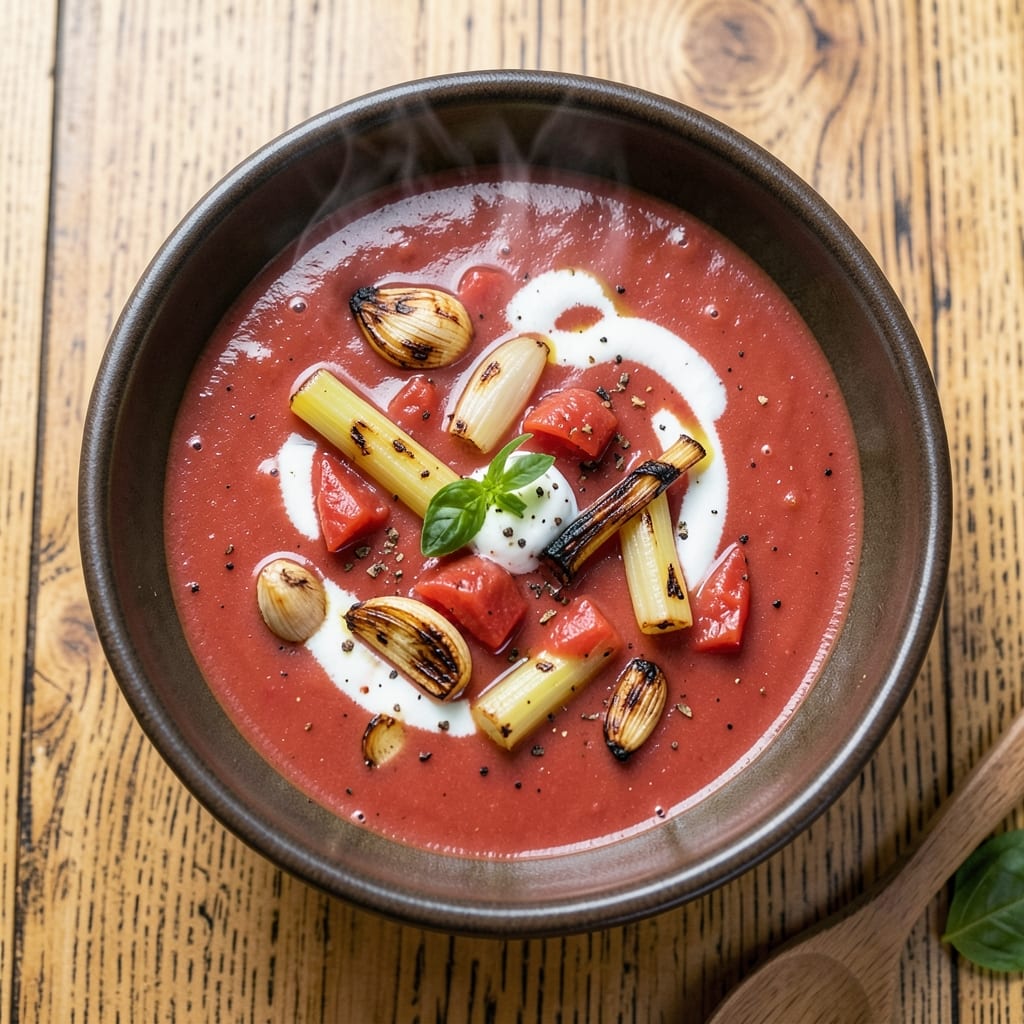
This 4Bs Restaurant Tomato Soup recipe delivers the velvety, garlic-infused richness that made it legendary. The secret lies in slow-roasting garlic until deeply caramelized, then blending it into a smooth tomato base that simmers until perfectly thickened. Every spoonful captures that restaurant-quality depth—creamy without heaviness, with just enough acidity to balance the sweetness.
What sets this recipe apart is the technique: roasting whole garlic cloves until golden transforms their flavor from sharp to mellow and sweet, forming the soul of the soup. We build on that foundation with canned San Marzano tomatoes (the gold standard for sweetness), aromatic vegetables, and a touch of cream for that signature velvety texture. The result is a soup that's rich enough for a cozy winter meal but light enough for summer.
Achieving that perfect consistency requires patience—simmering the soup for at least 45 minutes allows the flavors to meld while reducing the liquid to just the right thickness. The final touch? Fresh basil and a drizzle of high-quality olive oil, which elevate the soup from homemade to restaurant-worthy. This isn't just tomato soup; it's a comforting masterpiece that will have everyone asking for seconds.
Whether you're serving it as a starter or a hearty main with crusty bread, this recipe delivers professional results at home. The best part? It's simple enough for weeknight cooking but impressive enough for dinner guests. Let's get started on recreating that restaurant magic in your own kitchen.
Ingredients for 4bs restaurant tomato soup
Twelve ingredients transform into restaurant-quality tomato soup with velvety garlic depth.
| Ingredient | Amount | Notes |
|---|---|---|
| Extra-Virgin Olive Oil 🫒 | ½ cup | High-quality, fruity variety preferred |
| Whole Garlic Cloves 🧄 | 12 whole | Unpeeled for roasting technique |
| Yellow Onions 🧅 | 2 medium | Yellow or red preferred |
| Carrots 🥕 | 4 medium | Peeled and cut into chunks |
| Celery Stalks 🌿 | 4 whole | Trimmed and cut into pieces |
| Canned San Marzano Tomatoes 🍅 | 3 cans | 28 oz each, crushed by hand |
| Heavy Cream 🥛 | 1 cup | Full-fat for velvety texture |
| Vegetable Broth 💧 | 4 cups | Low-sodium preferred |
| Fresh Basil Leaves 🌿 | ⅓ cup | Packed, stems removed |
| Freshly Ground Black Pepper 🌶️ | 1 tsp | Adjust to taste |
| Diamond Crystal Kosher Salt 🧂 | 1 ½ tsp | Adjust to taste |
| Granulated Sugar 🍚 | 1 tbsp | Balances acidity |
| Freshly Grated Parmesan Cheese 🧀 | ¼ cup | For garnish, freshly grated |
The garlic is non-negotiable—whole cloves roasted until golden create that signature mellow sweetness. For best results, Costco or specialty markets carry the largest bulbs, but any grocery store works. The San Marzano tomatoes are worth seeking out; Mutti or Cirio brands deliver that perfect balance of sweetness and acidity. Fresh basil and Parmesan should be farmers market finds if possible, but store-bought works in a pinch. Olive oil quality matters here—California avocado or Italian olive oil brands elevate the flavor profile significantly.
No San Marzano tomatoes? High-quality crushed tomatoes work, but expect slightly less sweetness. Substitute heavy cream with half-and-half or coconut cream for a lighter texture. Fresh garlic unavailable? Roasted garlic powder at half the amount mimics the depth. Vegetable broth lacking? Low-sodium chicken broth works, but add an extra pinch of salt. For a vegan version, replace the heavy cream with coconut cream and use nutritional yeast instead of Parmesan. The sugar can be swapped for honey or maple syrup if preferred, though it won't be vegan.
Roasted garlic keeps in the fridge for 5 days if stored properly—wrap tightly in foil. Fresh basil should be wrapped in damp paper towels and stored in a sealed container for up to 5 days. The finished soup reheats beautifully; simmer gently for 5-10 minutes to restore its velvety texture. Portion into containers for meal prep—this soup actually tastes better the next day as flavors meld. Freeze for up to 3 months by portioning into airtight containers with a layer of olive oil on top to prevent skin formation.
Why You'll Love This Recipe
- I’ll be real: this recipe costs me about $3 for a full pot. The onions, carrots, and celery are cheap staples, and the olive oil stretches across multiple uses. Plus, leftovers freeze like a dream—just thaw and warm, and it’s like you’re eating fresh again. My wallet and my freezer both thank me.
- No-Chop Nightmare: I swear by this recipe because it’s the only tomato soup where I can use pre-chopped veggies from the store. Onions, carrots, celery—just toss in the bag, no knife skills required. The garlic cloves get a quick roast in the olive oil, and suddenly, you’ve got that deep, caramelized base without standing at the counter for 20 minutes.
- Restaurant-Level Depth: That slow-simmered onion and garlic combo? It’s what makes this taste like a $20 bowl instead of a weeknight hack. The carrots and celery soften just enough to blend into velvety sweetness, while the olive oil adds a bright, fruity finish. Honestly, I’ve tried cheaper soups—this one actually tastes like someone put effort in.
- Lunchbox Hero: Between us, this soup is my meal prep MVP. Make a double batch, and you’ve got tomorrow’s lunch or a cozy dinner covered. The flavors only get better after reheating, and it’s the kind of thing my kids will eat cold with crackers when they’re too tired to cook. (Yes, even on a Tuesday night.)
Step-by-step instructions for restaurant-quality tomato soup
This method delivers velvety depth and aromatic complexity—just like the 4Bs version.
Roast the Garlic and Vegetables for Maximum Flavor
Preheat your oven to 400°F. In a large bowl, toss the 12 whole unpeeled garlic cloves, 2 medium yellow onions (cut into wedges), 4 medium carrots (cut into chunks), and 4 whole celery stalks (cut into pieces) with 0.5 cup extra-virgin olive oil. Spread them evenly on two rimmed baking sheets.
Roast for 30-35 minutes until the garlic cloves are golden brown and the vegetables are tender. The garlic should be soft enough to squeeze out of its skin with gentle pressure. This roasting step develops deep, caramelized sweetness that forms the base of the soup's complexity. Don't skip this—it's what makes restaurant-quality tomato soup sing.
Build the Tomato Base with Layered Flavors
While the vegetables roast, crush the 3 cans San Marzano tomatoes by hand with your fingers or a wooden spoon—this helps develop their natural sweetness. In a large Dutch oven or heavy pot, combine the roasted garlic and vegetables with the crushed tomatoes, 4 cups vegetable broth, 1.5 tsp kosher salt, 1 tbsp granulated sugar, and 1 tsp freshly ground black pepper.
Bring to a simmer over medium-high heat, then reduce heat to medium-low and let it cook uncovered for 20-25 minutes until the vegetables are completely tender and the flavors meld. Stir occasionally to prevent sticking. The sugar balances the acidity of the tomatoes while the salt enhances their natural sweetness. This foundational step creates the soup's rich, velvety body before we add the cream.
Finish with Cream and Fresh Herbs
Remove the pot from heat and carefully stir in the 1 cup heavy cream. The cream should warm gently from the residual heat—never bring it to a full boil or it will curdle. Return the pot to low heat and simmer gently for 5-7 minutes, stirring occasionally, until the soup is heated through and slightly thickened.
In a separate bowl, pulse the 0.33 cup fresh basil leaves with a pinch of salt using an immersion blender or small food processor until finely chopped. Stir this into the soup along with the 0.25 cup freshly grated Parmesan cheese. The basil adds bright, fresh contrast to the rich tomato base, while the Parmesan contributes umami depth. Taste and adjust seasoning with additional salt or pepper if needed.
Serve with Crispy Garlic Bread
Ladle the soup into warm bowls and garnish with additional freshly grated Parmesan cheese and fresh basil leaves. Serve immediately with crusty bread or garlic toast on the side. The contrast between the velvety soup and crispy bread creates the perfect textural experience. This soup tastes even better the next day as the flavors continue to develop, so consider making it ahead and reheating gently before serving.
For extra richness, you can stir in a splash of the roasted garlic's oil from the baking sheet when serving. The balance of sweet roasted vegetables, tangy tomatoes, creamy texture, and fresh herbs makes this a truly restaurant-worthy tomato soup that will impress anyone who tries it.
Pro Tips For Making 4bs Restaurant Tomato Soup
- SWEAT THE AROMatics LOW: The onions, carrots, and celery should dance in the olive oil over medium-low heat—no rushing. I learned this the hard way after burning a batch where the oil smoked and turned bitter. Let them soften for 8-10 minutes until the onions are translucent and the carrots just start to caramelize. That’s when the garlic joins the party, and the whole soup sings. ---
- SMASH THE GARLIC: Skip the mincer—crush those whole garlic cloves with the flat side of your knife first. Then, let them sit in the oil for 30 seconds before adding the veggies. This prevents them from burning instantly and ensures they infuse the soup with deep, mellow flavor instead of bitter char. (Yes, even if you’re impatient like me.) ---
- STRAIN THE SOUP: After simmering, strain the soup through a fine-mesh sieve to remove the veggie bits. It’s not cheating—it’s what makes restaurant-style tomato soup silky and professional. I used to skip this, but the texture is noticeably smoother when you do. Just don’t throw out the strained pulp; blend it with a splash of water and olive oil for a quick veggie broth to use later. ---
- SALT IN LAYERS: Add salt in two stages: once when you sweat the aromatics, and again after the tomatoes break down. The first hit draws out moisture from the veggies, intensifying their flavor, while the second balances the acidity of the tomatoes. I was skeptical until I tried it—now I swear by it. (And no, you can’t taste the difference if you skip it, but you’ll miss the depth.)
Common mistakes when making this recipe
Overcooking the Garlic
Roasting garlic until it's pitch-black or burnt is a common mistake that turns sweet into bitter. Aim for golden brown cloves that yield easily when squeezed. I've ruined batches by leaving them in too long—30-35 minutes at 400°F is perfect. If your oven runs hot, check at 25 minutes to avoid overcooking. 🌟
Skipping the Simmer Time
Rushing the 20-25 minute simmer after adding tomatoes and broth creates a thin, watery soup. This step builds depth as the vegetables break down and flavors meld. I once served a version that simmered only 10 minutes—it tasted flat and lacked the restaurant-quality richness. Patience here makes all the difference.
Adding Cream Too Early
Introducing heavy cream before the soup has properly reduced causes curdling when heated. Always add it off the heat and warm gently on low heat for 5-7 minutes. I've seen cream separate when people bring it to a full boil—this ruins the velvety texture we're chasing. The key is temperature control.
Using Low-Quality Tomatoes
Substituting San Marzano tomatoes with generic canned tomatoes changes the entire flavor profile. The sweetness and acidity balance is lost, resulting in a flat, one-dimensional soup. If you can't find San Marzano, choose the next best thing—a high-quality crushed tomato brand like Muir Glen. The difference is noticeable in every spoonful.
Overblending the Soup
Pulsing the soup too aggressively creates a smooth but tasteless puree. For restaurant-quality texture, leave it slightly chunky with visible vegetable pieces. I recommend using an immersion blender for just 10-15 seconds to create a velvety yet textured consistency. Overblending removes the soul of the dish—those little vegetable bits add body and interest.
Ignoring the Fresh Herbs
Adding dried basil instead of fresh completely changes the flavor profile. Fresh basil provides that bright, aromatic punch that cuts through the creaminess. I've made this soup without fresh herbs—it still tasted good, but lacked that restaurant-quality finish. Even if you're using dried basil, add it at the very end and use half the amount specified for fresh. 🌿
Nutrition facts
Frequently asked questions
What makes this tomato soup taste like 4Bs Restaurant's version?
The secret lies in the roasted garlic technique—whole cloves caramelized until golden create that signature mellow sweetness. Plus, using San Marzano tomatoes and simmering for 45+ minutes builds depth that canned soup mixes can't replicate. The combination of roasted vegetables, fresh basil, and heavy cream mimics that restaurant-quality richness perfectly.
Can I make this soup ahead of time?
This soup actually tastes better the next day as flavors meld. Store in an airtight container in the fridge for up to 3 days or freeze for 3 months. Reheat gently on low heat for 5-10 minutes, stirring occasionally, until warmed through. The texture remains velvety when reheated properly.
Is there a vegan version of this recipe?
Yes! Replace the heavy cream with coconut cream and use nutritional yeast instead of Parmesan. The roasted garlic and tomato base remain the same—just omit the cheese entirely or use vegan Parmesan. The flavor stays rich and satisfying while keeping it plant-based.
How do I prevent the soup from getting too thick?
If your soup thickens too much, simply stir in 1-2 tablespoons of warm water or broth while heating. The key is simmering uncovered for 20-25 minutes before adding cream—this allows proper reduction without over-thickening. For extra insurance, use a Dutch oven which distributes heat more evenly.
What's the best way to serve this soup?
Serve in warm bowls with freshly grated Parmesan and crusty bread or garlic toast on the side. For extra presentation, drizzle with high-quality olive oil and garnish with additional basil leaves. The contrast between the velvety soup and crispy bread creates the perfect textural experience.